L'Oreal Refillable Cosmetics
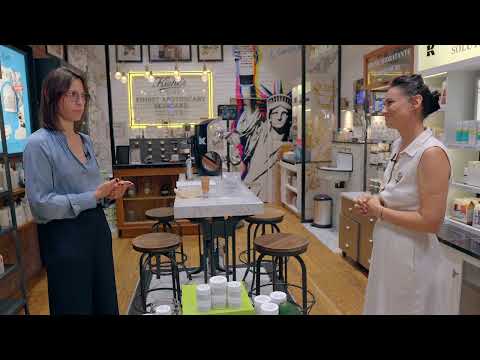
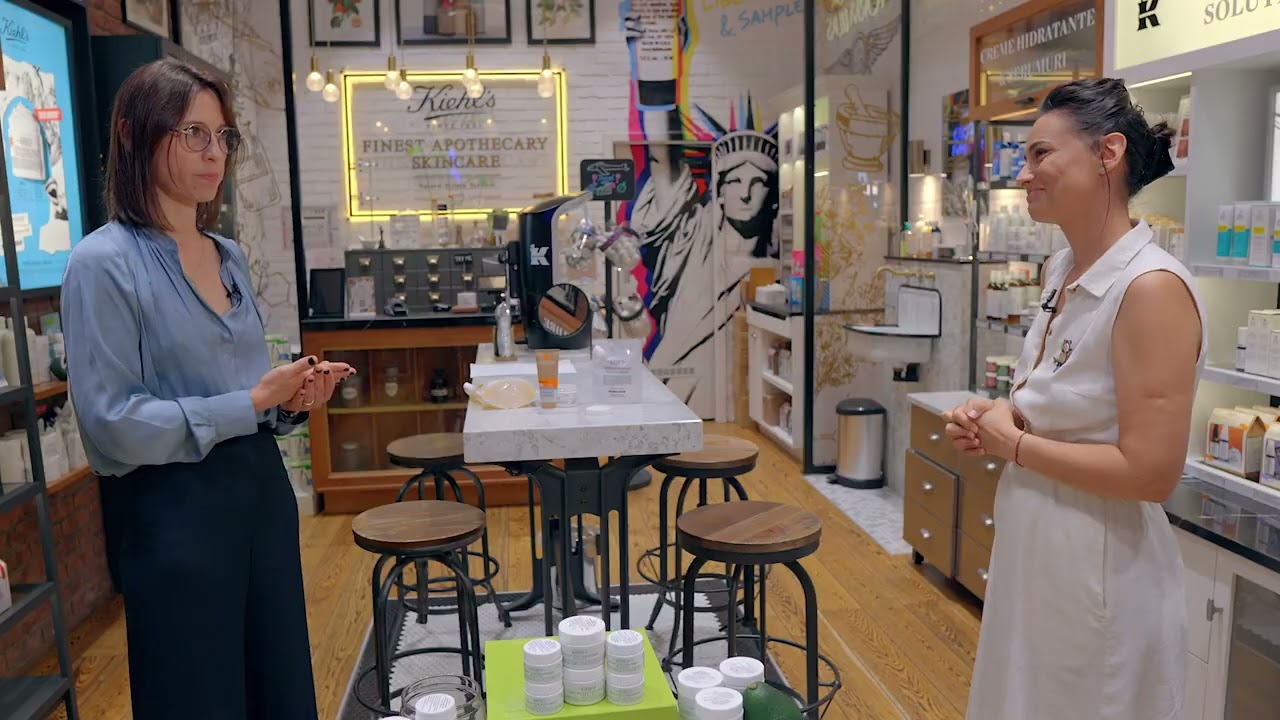
One of the largest cosmetics companies in the world, present in Romania with 22 brands, is opening a perfume refill station inside a cosmetics store in a mall in Bucharest.
Refilling a perfume bottle costs 20-50% less than buying a new bottle of the same size and quality. At first glance, you might think this is to the company's disadvantage. But no. The company doesn't lose money because it recovers on the production side. Each refilled perfume bottle actually saves 44% glass, 67% plastic, 100% metals, and 61% cardboard.
This is why not only perfumes have entered this program called Refill. All 37 global brands of the group now have at least one product that can be refilled with reserves: shampoos, conditioners, shower gels, lipsticks, creams, for all product categories: luxury, mass-market, professional, or dermatological. A move that is part of a broader strategy by the company to reduce the amount of virgin plastic in packaging.
Why doesn't L'Oreal completely give up plastic?
One of the main challenges in this change is, of course, consumer mentality. Especially luxury product consumers. They have a certain affinity for how a cosmetic product is packaged, not just for the product itself. L'Oreal's efforts in this direction are essentially to redefine luxury and show people that nothing is lost in product quality or experience if you choose the refill option instead of always buying a new product.
However, there is another category of customers, at the opposite end, the so-called eco-conscious. Those consumers who are already educated and informed about sustainability, whose goal is to completely eliminate single-use plastic, those who are moving towards Zero Waste. And so they might reject this Refill option because it's still plastic. Less, lighter, with a smaller carbon footprint, but still plastic. Sometimes even harder to recycle, at least here in Romania. I asked the communication director of L’Oreal Romania how they attract these consumers and what they say when they might reject the refill option.
Here is Simona Fîrtat's response:
"We also have packaging that contains no plastic at all. We have developed cardboard packaging in our laboratories. They only have plastic in the cap, for example, which can be recycled. We show them the alternatives. And with them, it's important to have a dialogue about the safety of cosmetic products and the limits to which we can go.
In L'Oreal laboratories, many alternative solutions have been and are being researched. Not all are viable. Because a cosmetic product is one that degrades if not kept in optimal conditions. And being a product that comes into contact with the skin, its safety is a primordial, extremely important element, it is the foundation from which we start. We cannot offer consumers products that are not safe for them. And the packaging matters a lot because it protects the formula from external agents."
What sustainable ingredients mean for cosmetics
The circular transformation in the beauty industry is not limited to rethinking packaging. Circularity begins with rethinking the ingredients from which cosmetic products are made.
Simona Fîrtat, communication director of L’Oreal Romania: "Regarding the ingredients in our products, we ensure they come from abundant or renewable sources. This means that when we extract an ingredient from nature, we ensure that the land or plantation is not depleted by our need for that ingredient and that we allow the plant or land the possibility to regenerate in a natural cycle. We do not force plants to produce more than they naturally would in that environment."
Through all these circular economy measures implemented at the group level since 2020, the company has actually changed its business model. And the transformation has not affected the business.
How the company managed to become more circular and at the same time more profitable can be found in episode 13 of the campaign "Second Life. Circular Economy Models", produced by Asociația Soluții Sustenabile with the help of the environmental consultancy company Stratos. A project initiated to accelerate Romania's green transition by providing examples of good practice from the business environment.
You can see the other 12 episodes of the campaign in the Good Practices section.