Magnifying Glass on CO2 and Year 2050
What are the key future skills related to sustainability in a company? Regardless of its size. This is a common question in the business environment, especially in the context where Artificial Intelligence is developing at a speed and unpredictability that makes it difficult to forecast beyond six months.
A KPMG study conducted in 2024 on 550 companies worldwide about the gap between strategy and execution in sustainability reporting offers us a possible answer. 37% of the companies surveyed believe that carbon emissions management and reporting are rapidly becoming a key skill.
The Problem
Why? Probably because these companies have understood that to implement sustainability measures, they first need to measure where they have the greatest negative impact. And when they started measuring, they realized at least three major problems:
1. Data is difficult to manage because it comes from many different departments
2. Information is unclear or uncertain, especially from suppliers and customers, which is where the largest carbon footprint comes from
3. Information is often collected manually, and there are no integrated systems
Sustainability consultants confirm:
Sustainability data does not originate from a single department and is often not stored in a single system. Fleet data comes from logistics. Procurement data comes from procurement. Travel data comes from HR or directly from employees. Moreover, sustainability standards guide us to collect data that was not previously used in other analyses, for which there is practically no history. Data on purchased energy was previously recorded only from a financial perspective, not quantitatively in kWh. Each source has its format, update frequency, and responsible party. Gathering all this into a unified logic, methodologically validating it, and obtaining a carbon emissions calculation that passes audit is the real challenge. Not writing the report, but building the calculation and data collection process behind it. (Oana Vîlceanu, Sustainability Manager at Stratos Management)
The same cited study confirms this. Many organizations still rely on manual processes, tables, and spreadsheets for managing sustainability-related data, and managing this data remains a major challenge. In the manufacturing industry, for example, 49% of companies still use spreadsheets for managing ESG (Environmental, Social, Governance) data.
What ESG Means
ESG data refers to both the carbon footprint and measurable information through which a company evaluates its impact on the environment (Environment), society (Social), and how it is governed (Governance).
The environmental impact is the impact on nature; this can mean both carbon dioxide emissions (carbon footprint), pollution, and energy and resource consumption, water consumption, or waste generated.
The social impact refers to society as a whole, whether we are talking about the company's own employees, the community, or customers. It concerns how the company treats people in general. Relevant data here usually means information related to health and safety at work, diversity and inclusion, pay equality, working conditions in the supply chain, or community impact.
And how the company is governed means the board structure, ethics and anti-corruption policies, compliance, transparency, management remuneration. Data that shows how responsibly and sustainably business is conducted.
Thus, in practice, ESG data translates into performance indicators (e.g., tons of CO₂/year), percentages (e.g., % of women in leadership), scores/ratings, and other data collected from operations.
They are used for reporting, auditing, evaluation by investors, and/or strategic decisions.
It is true that recent proposals to simplify reporting through the Omnibus package postpone obligations for smaller companies, but the pressure to measure, have clear data, and traceability does not disappear, because supply chains continue to demand these ESG data, banks and investors require such data, partners also demand them to report further. And ESG data usually starts with the carbon footprint.
However, beyond who demands this information, starting when and according to which law, collecting ESG data helps any company create a better business strategy, anticipate risks, and more clearly see development opportunities.
The Solution
The good news is that there are technical solutions that address the most common measurement and reporting issues, from dispersed data in multiple sources, manual collection, hard-to-correlate files, to low traceability.
Such is the most recent product for carbon footprint calculation and sustainability reporting, launched by Stratos Management, a Romanian environmental and sustainability consultancy, on the occasion of its ten-year anniversary.
StratoScope is a SaaS (Software as a Service) platform built around two modules that can be used together or separately.
The first module is dedicated to carbon footprint calculation and supports the collection, justification, structuring, and calculation of emissions according to the GHG Protocol, using emission factors from recognized databases such as DEFRA and EXIOBASE.
The second module is intended for sustainability reporting and helps companies collect and organize information in a framework aligned with CSRD/ESRS requirements.
What CSRD/ESRS Means
CSRD (Corporate Sustainability Reporting Directive) is the European law that requires companies to report ESG information.
And ESRS (European Sustainability Reporting Standards) refers to the technical standards by which reporting is done. Standards that show concretely what you need to report and how, according to which indicators, methodologies, and structure.
The StratoScope platform also includes AI functionalities for content structuring and generation, what-if scenario analyses for building decarbonization strategies, and an architecture built in accordance with benchmarks such as ISO 27001, ISO 14064-1, and IFGICT.
Everything integrated.
Instead of having an ad-hoc process for each client, we have a common logic: structured data collection from sources, application of methodologically recognized emission factors, transparent calculation on Scopes, and a flow that allows review and audit. When we start a new project with a client, we don't start from scratch. We start from a framework that has been built and refined using the experience and expertise accumulated in dozens of previous projects. This significantly compresses implementation time and increases the quality of results. (Simona Anghel, Sustainability Department Manager at Stratos Management)
How the New CO2 Measurement and Reporting Tool is Different
According to the company, StratoScope's differentiator lies in the experience of the team of specialists who worked on the product. The platform was not designed as a generic software but was developed based on practical experience accumulated in real projects. Thus, the solution combines the digital component with the technical expertise necessary for the correct configuration of the process, especially in the initial stages when companies need to establish methodology, reporting boundaries, and data collection logic.
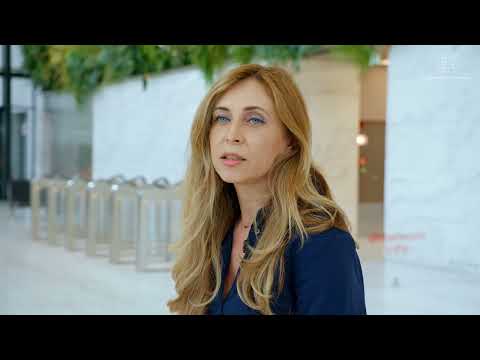
We created StratoScope starting from a reality we repeatedly encountered in client projects: data spread across multiple sources, hard-to-track processes, and a lot of manual effort. The platform helps companies bring more order to data, simplify the collection and consolidation of information, and obtain results that are easier to verify and use in decision-making, reporting, and audit. (Luminița Roșca, General Director at Stratos Management)
Who the Product is For
StratoScope can be a useful tool for at least three categories of organizations:
1.
Companies that already have an internal sustainability officer or an ESG team but are still working with manual processes and losing a lot of time in consolidation and review
2.
Firms receiving supply chain requests for verifiable carbon data and lacking a structured response
3.
Organizations choosing to report voluntarily or knowing they have CSRD reporting in the next 1-2 years and wanting to build their process correctly from the start, not to correct an improvised system later.
Additionally, the platform can be used by public institutions and organizations needing a solid methodological basis for voluntary reporting or compliance.