Migraines in the Workplace
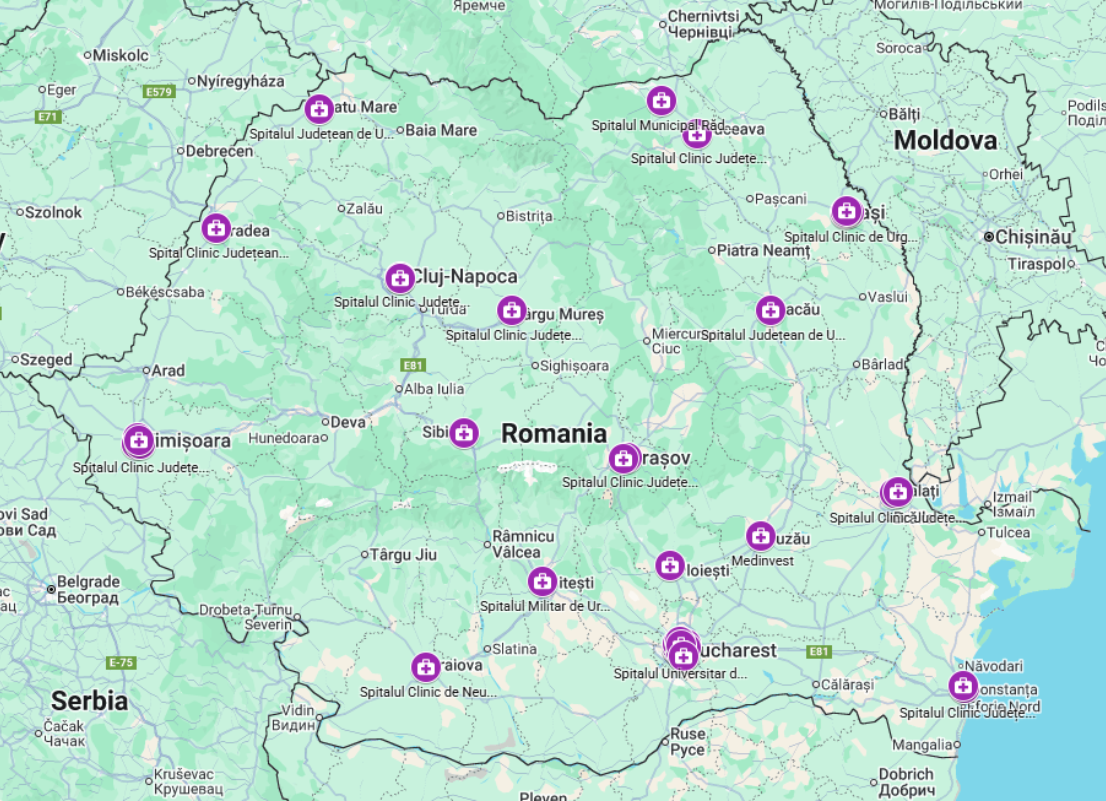
The first map of neurologists who take migraines seriously has been released. There are 70 doctors identified so far by the Brain Health Association, but it's a living map. More can join at any time. If you know neurologists who specialize in this pathology, you can invite them to list their practice. There is a form at the bottom of the map. The more, the better. We need them all.
What does it mean for doctors to take migraines seriously? It means they don't send you home with just a prescription for Paracetamol or Nurofen, telling you that you're being delicate, that everyone gets headaches, that "if it doesn't hurt, you don't have it," etc. Because unfortunately, this is a sad reality faced by patients in Romania and beyond.
Migraine at Work
The emergence of such a map is extremely useful not only from a social point of view but also from a professional and even economic one. Because headaches affect the labor market. A lot.
Migraine is the second most frequent cause of employee absenteeism. Which translates into lost money.
In the EU, the total annual cost of migraine was estimated at over 100 billion euros. Of course, we don't have figures for Romania; who would do such calculations? But, considering that an estimated 2.3 million Romanians suffer from migraines, the costs here are probably also significant. Not just because people don't come to work, because, let's face it, who dares to say they need a day off because they "have a headache"? It's shameful... So you come in, but you can't do much. You clock in, but you're not productive. Few patients know that family doctors can actually issue medical leave for migraines.
Beyond money and productivity, however, it's about people. And a lot of suffering. Invisible suffering. Migraine is the second most disabling disease in the world. And the first among young women. Because it takes you out of commission. For a few hours or even a few days. A migraine attack can last up to 72 hours. And you can have several attacks per month.
That's why it's more than just a simple ailment; it's classified as a disease in the Tabular List of Diseases.
Over 100,000 Romanians are newly diagnosed every year with "headaches," according to the National Institute of Public Health and data collected between 2019-2023. So many people have sought medical attention for all sorts of headaches.
Many, however, have not seen a specialist, do not know the difference between a headache and a migraine. So such a map, with neurologists who take you seriously and are up-to-date with the most modern treatments that can make you functional, including at work, needs to reach all those who suffer. And who perhaps don't even know that what they have is called migraine, that there are treatments and therapies that could work for them.
Migraine and Sustainable Development Goals
Let's put people at the center of our sustainability efforts! Because health, well-being, and decent work are also important Sustainable Development Goals. If we only refer to Goals 3 and 8.
However, EMHA (European Migraine & Headache Alliance), in their letter to the European Commission, trying to convince officials to include migraine in the top public health policy priorities, spoke about 6 of the 17 Sustainable Development Goals that greater attention to migraine would contribute to:
- SDG 1 - No poverty
- SDG 3 - Good health and well-being
- SDG 4 - Quality education
- SDG 5 - Gender equality
- SDG 8 - Decent work and economic growth
- SDG 10 - Reduced inequalities
Because that's what migraine does. It takes people out of activity, out of school, out of the workforce. Women more than men, as migraine is directly related to hormonal fluctuations. Those under 50 more than the rest, precisely people in their prime professional competence.
So let's better understand migraine, include the topic in employee well-being programs, and conduct awareness workshops if we are HR managers, because this will actually help us increase productivity as well. Which, of course, translates into money earned. For companies, for society, and for all of us.