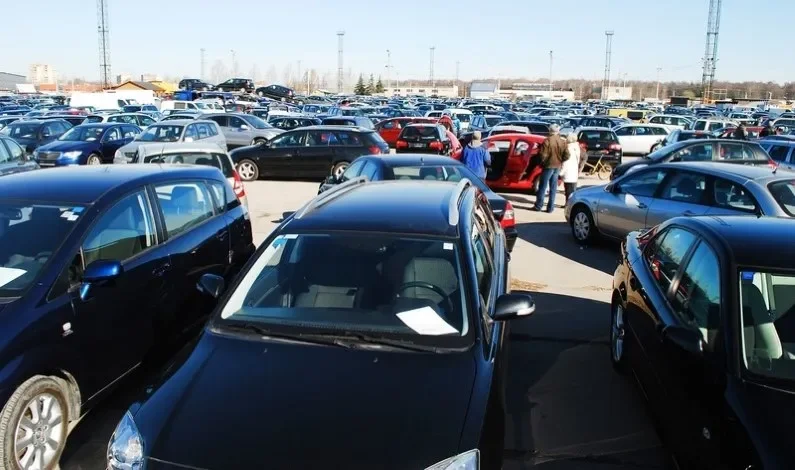
Solutions for Importing Polluting Cars
2Celsius has launched the report "Solutions to the problem of importing polluting second-hand cars in Romania,” an analysis and public policy recommendations document proposing a package of concrete measures: a dynamic environmental tax based on real emissions, a minimum internal standard for imported second-hand cars, and rigorous physical inspections at entry.
Context: an aging car fleet and a market without clear rules
Romania has the second oldest car fleet in the European Union, with an average vehicle age of 16.5 years. Each year, hundreds of thousands of old and polluting second-hand cars are registered in the country, in the absence of effective taxes or discouraging measures. The ratio of imported second-hand cars to newly purchased ones is 3 to 1, and almost half of the vehicles registered in 2024 did not meet the higher Euro 4 pollution standards.
Romania is at the receiving end of an internal flow of used vehicles moving from western states to Central and Eastern Europe. Emissions are not externalized globally—they are relocated within the European single market, with public health and environmental costs borne by Romanian citizens.
"Romania has the legislative tools to act within the single market. A non-discriminatory tax, based on real emissions and applied uniformly to all vehicles regardless of origin, is not only feasible but also urgent,” declares Raul Cazan, president of the 2Celsius Association.
Main conclusions of the report
The report identifies three main structural problems:
- Lack of effective environmental taxes. Romania does not have a registration tax correlated with the real emissions of vehicles. The pollution tax, eliminated in 2017 due to incompatibility with EU law, has not been replaced with an equivalent, non-discriminatory mechanism.
- Insufficient technical checks at import. The current vehicle inspection procedure does not include real exhaust emissions tests and does not verify the integrity of pollutant control systems (catalyst, particulate filter).
- Absence of complete data. The Romanian state does not systematically collect data on the brands, models, age, and tested emissions of imported second-hand vehicles, making a well-founded public policy impossible.
- Public policy recommendations
The report proposes three action directions for Romanian authorities:
- A dynamic environmental tax based on real emissions (NOx and CO₂ in g/km), with significant penalties for diesel vehicles below the Euro 6 standard. International research shows that exported cars emit 53% more NOx than those scrapped in the countries of origin.
- Rigorous physical inspections at the country's entry point, conducted by RAR, with the mandatory inclusion of a real emissions test and verification of the presence of anti-pollution devices.
- A mandatory minimum standard for imported vehicles, with gradual implementation: at least Euro 6 for diesel and Euro 4 for gasoline by 2027, with a clear transition calendar. The collected funds can support an expansion of the Rabla scheme for scrapping polluting vehicles, taking into account the real information of the national car fleet.
The report "Solutions to the problem of importing polluting second-hand cars in Romania” is part of the 2Celsius Policy Papers series and was developed by Tudor Măcicășan, Matei Trifescu, and Raul Cazan. The research was conducted with the support of the European Climate Foundation and in partnership with the Bulgarian organization Za Zemiata.
For more topics and projects, visit the 2Celsius page.