EU Day for the Victims of Climate Crisis
"Why don't we talk DAILY about climate change, just as we talk about the wars around us or the political crisis? Climate change has a more devastating potential than these ephemeral events because they have been unfolding for many years, and the effects are cumulative, even accelerated," a question posed by one of the young ambassadors of the European Climate Pact, Reese Stoica, on the occasion of the European Day of Victims of the Climate Crisis.
On Wednesday, July 15, ambassadors and partners from Romania of the European Climate Pact organized a series of events aimed at drawing attention to the victims of the climate crisis and, especially, urging citizens to learn how to protect themselves from the effects of climate change, to avoid becoming victims themselves.
The actions were particularly addressed to young people and children, who are the most vulnerable to the effects of climate change but also the most receptive to behavior change. Additionally, participants in the debates expressed clear messages to the authorities, urging them to be more active in explaining the phenomena, to collaborate more closely with the academic, scientific, and civil society organizations in the field in forming skills that protect citizens from the adverse impact of climate change.
Starting from the recent modification of the baccalaureate exam schedule (when an exam was rescheduled due to the red heatwave warning on June 30), the first two events of the day challenged young people to argue whether their generation deserves the title of "Heatwave Generation" and to imagine possible ways to approach this new paradigm – with the support of SNSPA, through the Climate Evenings program and the Master's in Environmental Studies and Sustainable Development.
During the evening debate, discussions focused on why excessive heatwaves have a greater impact on children and young people, how this is documented, the role of different social actors in managing the climate emergency (such as the network of public libraries), and ways to promote community resilience solutions. Participants included, besides the ambassadors of the European Climate Pact, students, young people, and environmental and youth NGOs (Infoclima, FNT, GEYC, and Future for YOUth), UNICEF Romania, representatives of libraries across the country, public authorities (Erasmus+ National Agency ANPCDEFP), and representatives of communities particularly affected by climate change: Călărași, Valea Jiului.
Following these actions, young people organized themselves to draft a Manifesto "The Voice of Youth on Heatwaves" and a series of short videos containing practical advice, from young people to young people, offering strategies – both individual and group – for managing the effects of extreme phenomena (extreme heatwaves, prolonged droughts, sudden violent storms, or wildfires). This video series will be the subject of a future information and education campaign, created by young people and addressed to their peers.
Ambassadors of the European Climate Pact participating in the events: Adina Croitoru, Reese Andrei Stoica, Elena - Alexandra Miron, Laura Soroceanu, Ana Maria Todoran, Mihail Caradaica.
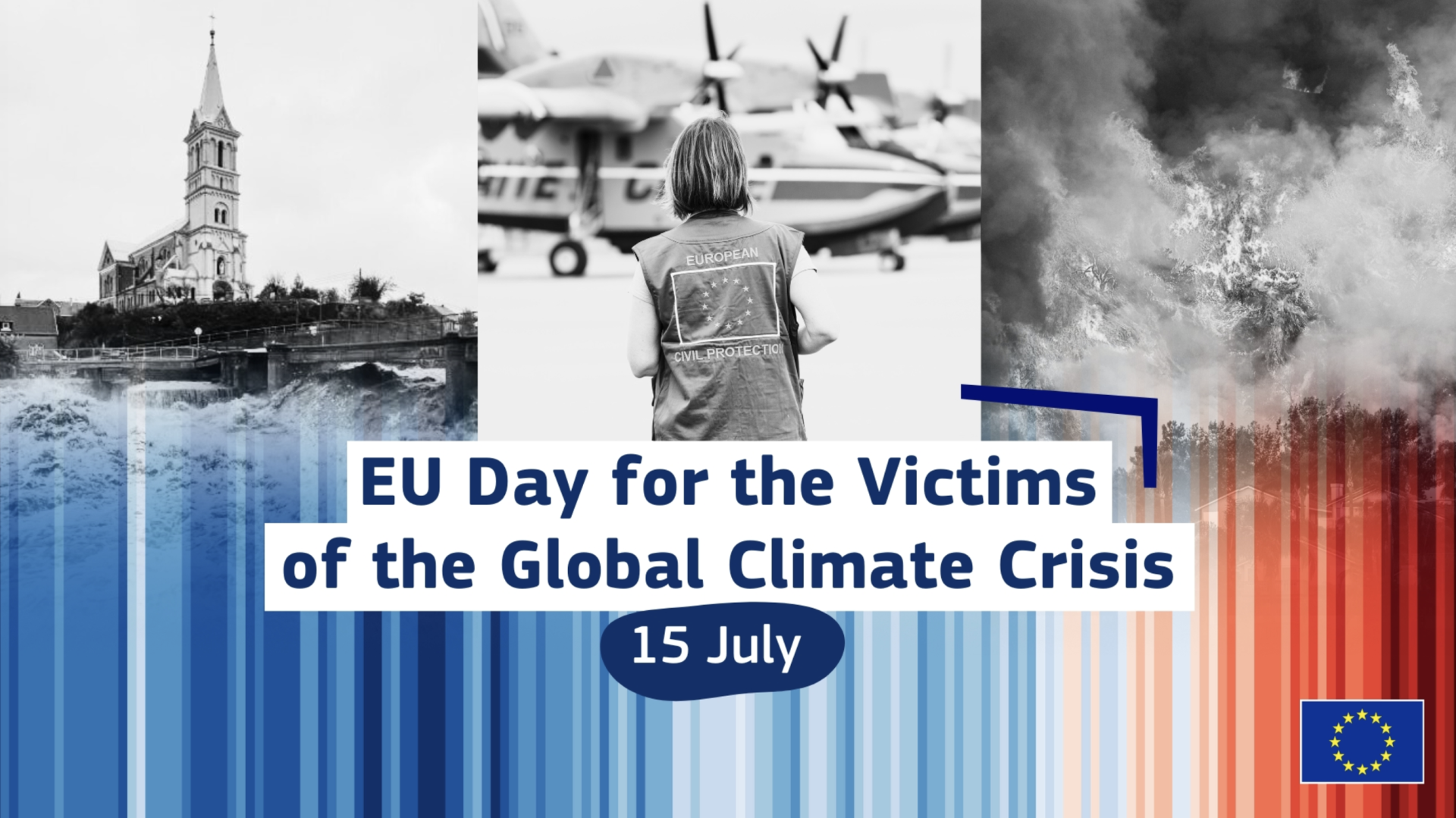
The European Day of Victims of the Climate Crisis is commemorated annually starting in 2023 on July 15, marking the date of July 15, 2021, when catastrophic floods in Europe led to loss of life and massive destruction. The actions organized on this day across the continent aim to increase public understanding, encourage people to be aware of these phenomena, and seek solutions to protect themselves. Such a day should be seen not only as an opportunity to commemorate tragedies that could have been avoided but also as a chance to recognize the risks associated with climate change and imagine the most feasible resilience measures.
The events were organized under the aegis of the European Climate Pact - a framework for climate awareness and action for European citizens, with the perspective of transforming the European Union into a modern, competitive, and resource-efficient economy, where:
- we achieve net-zero greenhouse gas emissions by 2050;
- economic growth is decoupled from resource use;
- no person and no place is left behind.
More about the European Climate Pact: https://climate-pact.europa.eu/index_en
The Secretariat of the European Climate Pact is coordinated at the European level by the Directorate-General for Climate Action of the European Commission and coordinated in Romania by REPER21. The activities of the European Climate Pact are communicated in Romania by DC Communication.
Additional details: ro@euclimatepact.eu