Skip to content
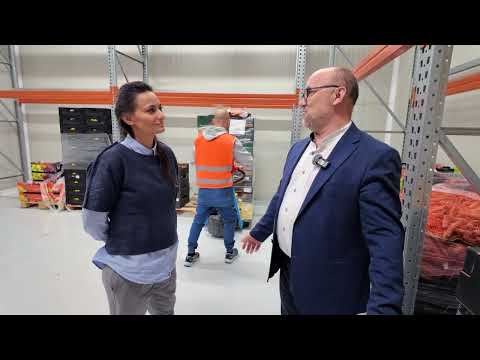
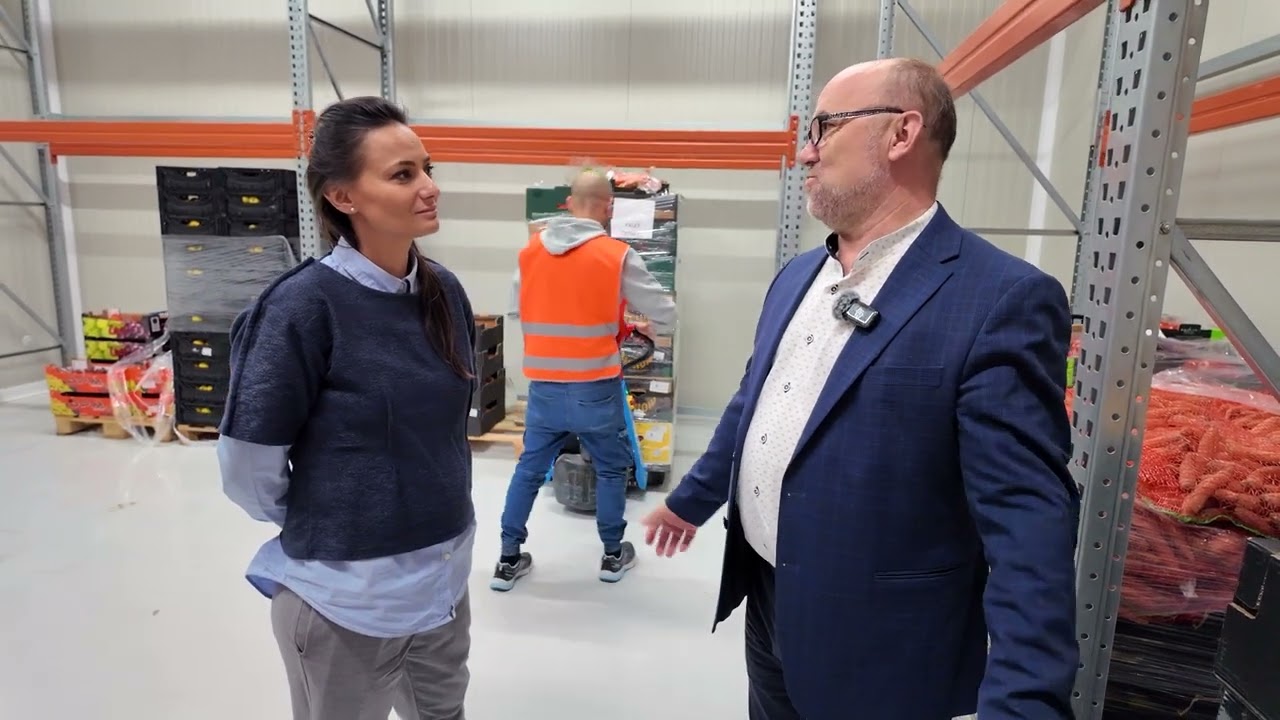
Two people discuss food donation in a warehouse, with rescued food in the background.

Food Saved from Waste

How can food be donated so it doesn't end up in the trash

3 December 2024 Teodora Ghenciu
Food Saved from Waste

Discussion on Food Donation

share

Every day in Romania, 6,000 tons of good consumable food ends up in the trash. 60% of this amount comes from the industry. Producers, distributors, retailers, everyone involved in the supply and processing chain.

However, there are solutions to avoid this waste. The most effective and impactful is food donation.

Macromex is a company that has been operating for 30 years as a distributor in the frozen and refrigerated industry, which started donating food four years ago. In this time, it has saved 3,000 portions of food from destruction. These are good consumable products but are nearing their expiration date, which is why stores no longer accept them. Therefore, they can no longer be sold.

Roxana Maxim, a manager within the company, explains how the products to be donated are selected: "Since we live in the digital age, the system helps us identify products with a short shelf life and know them in real-time. There is a report that makes a proposal for products with a short shelf life, a proposal accessed by our colleagues who handle donations, who decide which products and to which beneficiary they should go, and then we, the warehouse, prepare and deliver it to partners." One of the partners is Food Bank, an association that takes the food, brings it to its own warehouse, and from there, distributes it to another 165 partner NGOs. These, in turn, pass on the packages to their own beneficiaries, children, the elderly, vulnerable people, for whom food is often a challenge.

Since 2017, when this association was founded, until now, the Food Bank has saved 18,000 tons of food and fed over 200,000 needy people.

"Any product donation is a gain for the company"

But beyond helping people in need, food donation is also an opportunity for companies in the industry to get rid of the costs of destroying products.

"When you throw away, you have purchased a product, you have paid, you pay again a fee for destruction. The more expensive or select the product, the higher those fees are. Because it's one thing to throw away bread and another to throw away meat. So any product donation is a gain for the company. Because when you have donated, you have gotten rid of any fee you had in the destruction area. If you have donated the products and can do it as sponsorship, you deduct their entire value through the sponsorship contract. If you give them under the food waste law, you immediately deduct the VAT because you have not carried out a commercial activity. You can put the value of the products as an expense in the company's budget and have some advantages," Gabriel Sescu, president of the Food Bank, told us.

Although there is still much to be resolved legislatively to stop food waste, even with the current laws, there are already three ways companies can donate food:

    1. Through product sponsorship, for companies that pay profit tax. The value of the products must not exceed 20% of the tax.

Through donation based on the food waste law, for products that expire in a few days.

Through simple donation, for products not exceeding 5,000 euros. The easiest option, with the least bureaucracy.

A film showing how this donation system works and how food can be recovered, at 12:00 on any given day, and by evening, at 19:00, become dinner for some poor children, can be seen in episode 8 of the campaign "Second Life. Models of Circular Economy."

The campaign is initiated by Association Sustainable Solutions, with the support of Stratos and Eco Synergy, aiming to inspire the business environment to transition from a linear business model to a circular one, as quickly and easily as possible.

Here you can watch episode 1, about Waste: From Waste to Raw Material, through Innovation

Here you can see episode 2, dedicated to Construction: Profit from Rubble

Here, episode 3, dedicated to Packaging: Goodbye Single-Use Packaging

Here, episode 4, dedicated to the Textile Industry: Better Designed Clothes, Less Thrown Away

Here, episode 5, about Sustainable Agriculture: Hemp, a Strategic Crop

Here, episode 6, about Electrical and Electronic Equipment: The New Eco Design

Here, episode 7, about Wastewater: Gold from Sewage
Frequently Asked Questions

What happens to food that is not sold before its expiration date?

Food that is not sold before its expiration date often ends up in the trash, contributing to significant waste. In Romania, around 6,000 tons of good consumable food is wasted daily, with 60% coming from the food industry.

How does food donation help reduce waste?

Food donation helps reduce waste by allowing companies to give away consumable products that are nearing their expiration date instead of discarding them. This not only benefits those in need but also helps companies avoid the costs associated with product destruction.

Who benefits from food donations?

Food donations primarily benefit vulnerable populations, including children and the elderly, who may struggle to access sufficient food. Organizations like Food Bank distribute donated food to over 165 partner NGOs that reach these individuals.

How does Macromex select products for donation?

Macromex uses a digital system to identify products with a short shelf life in real-time. This system generates reports that help staff decide which products to donate and to which beneficiaries they should be sent.

What impact has the Food Bank had since its founding?

Since its founding in 2017, the Food Bank has saved 18,000 tons of food and provided assistance to over 200,000 needy individuals. This initiative has significantly contributed to reducing food waste while addressing hunger in the community.

Providers you might be interested in

Tangotangent logo featuring a heart symbol and the text 20 years of tanguedad. Video

Tangotangent

Tangotangent – ESG values and cultural impactVisionTangotangent promotes Argentinian tango as a form of living cultural heritage, a tool for personal development, and a catalyst for social connections within the community. Through artistic education and cultural events, the organization contributes to creating spaces where people can experience cultural dialogue, inclusion, and social well-being.ESG DimensionE – Environmental (Environmental Responsibility)Tangotangent promotes sustainable cultural practices through:organizing events with low environmental impactusing digital materials for communication and educationencouraging sustainable urban mobility for event participationcollaborations with local cultural spaces for the efficient use of existing infrastructureThrough these actions, cultural activity is integrated into a model of responsible and sustainable consumption.S – Social (Social and Community Impact)Tangotangent creates a framework for cultural participation that supports:Social InclusionClasses and events are open to people of all ages and backgrounds, encouraging diversity and access to culture.Community CohesionTango serves as a universal language that facilitates interaction and relationship building among people.Health and Well-beingThe practice of dance contributes to:stress reductionimproved physical healthdevelopment of emotional intelligencecombating social isolationIntercultural DialogueThrough international collaborations with tango artists and teachers, Tangotangent facilitates cultural exchange between communities.G – Governance (Cultural Governance and Responsibility)Tangotangent operates based on principles of:transparency in organizing cultural activitiescollaboration with cultural institutions and civic organizationspromoting ethics and respect within the communitydeveloping a sustainable cultural ecosystemThe organization contributes to strengthening a local cultural infrastructure based on collaboration and active participation.Cultural ImpactConservation of Cultural HeritageTangotangent contributes to the transmission of Argentinian tango, recognized by UNESCO as a intangible cultural heritage of humanity.Through classes, events, and educational programs, the organization supports the continuity of this cultural tradition in a contemporary context.Cultural EducationTangotangent's activities provide participants with:access to tango cultureunderstanding of tango music and historydevelopment of artistic sensitivityThese experiences contribute to the formation of an active cultural audience.Development of the Artistic EcosystemBy organizing performances, workshops, and collaborations with international artists, Tangotangent:stimulates artists' mobilitysupports the local cultural economycreates opportunities for artists and educatorsResults and ImpactTangotangent's activities generate:increased cultural participation in the communitydevelopment of an active community around the art of dancepromotion of values of respect, cooperation, and creativityconnecting the local public with the global network of tango culture

Subscribe to our newsletter

Be the first to learn about the latest sustainability news