Air Pollution Experiment
You know those jokes circulating online? About the wife walking past her husband's phone, forgotten on the table, uttering keywords like "a spa day for the wife," "dinner at a restaurant," "how to cook peas," "Armani perfume"? Things she wishes for, hoping that this smart and intrusive phone tech, which allegedly listens to all our conversations, will give her husband some suggestions...
Well... something similar happened to me recently.
At one point, I was talking to my husband about our air purifiers at home. We bought them desperately over the past few years, one for each room, after we found out moving to the countryside made both him and our eldest son allergic to ragweed. We never found a way to measure if these purifiers really help with this issue or with any kind of air purification in the house. And we wondered if it was just marketing.
In this discussion, my husband said he wanted to throw out at least one of the purifiers to make more space in the house. Because we are in an endless process of decluttering (throwing out unnecessary things). And I suggested that before throwing out the purifier, we should first look for a device that could help us measure its effectiveness in some way.
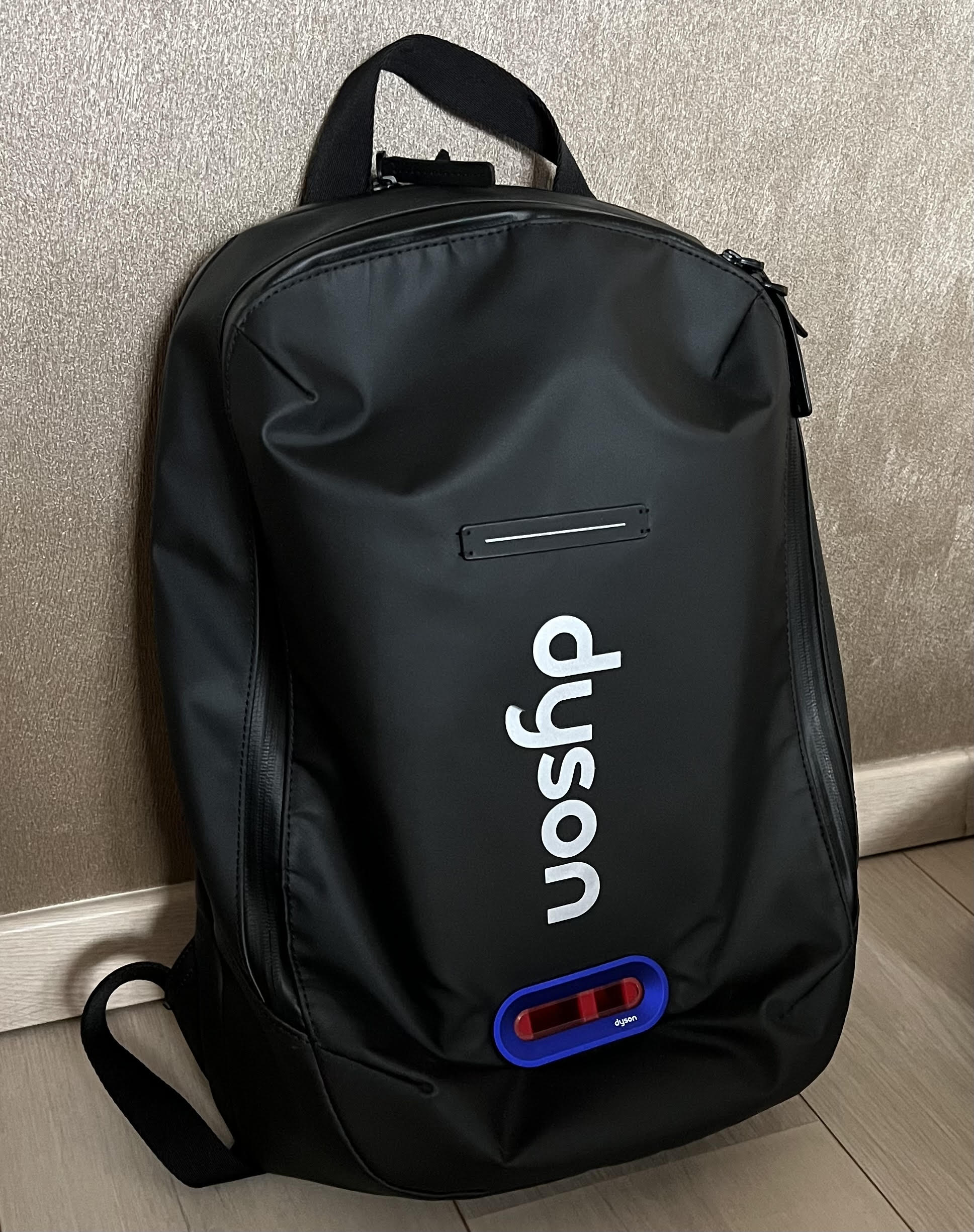
I don't think a week passes... since this discussion, when... I receive an invitation from Dyson to participate in an experiment. Namely, to test a backpack invented by their researchers that monitors air quality. Meaning, I get to walk for two days wherever I want, on my usual routes with this backpack, while it's connected to an application, so that the recorded data can be collected by them and used for a future study.
Say what? Does such a thing exist? Something I was wondering about 7 days ago, where could I find it? Of course, the first question I asked was if the backpack could also test the air inside the house or just outside. Not for any other reason, but besides my interest in testing purifiers, we already know how polluted the air is in Romania.
"Yes!" The Dyson people said. It can monitor air indoors too. And anywhere. And then, "Yes," with my whole mouth, I said too. I want to test the backpack.
Bedroom Experiment. First Night
So, I connected the backpack to a phone application, made all the settings, and turned it on on a Sunday evening. On May 14th. I left it overnight in the bedroom. Where I hadn't turned on any purification or ventilation devices.
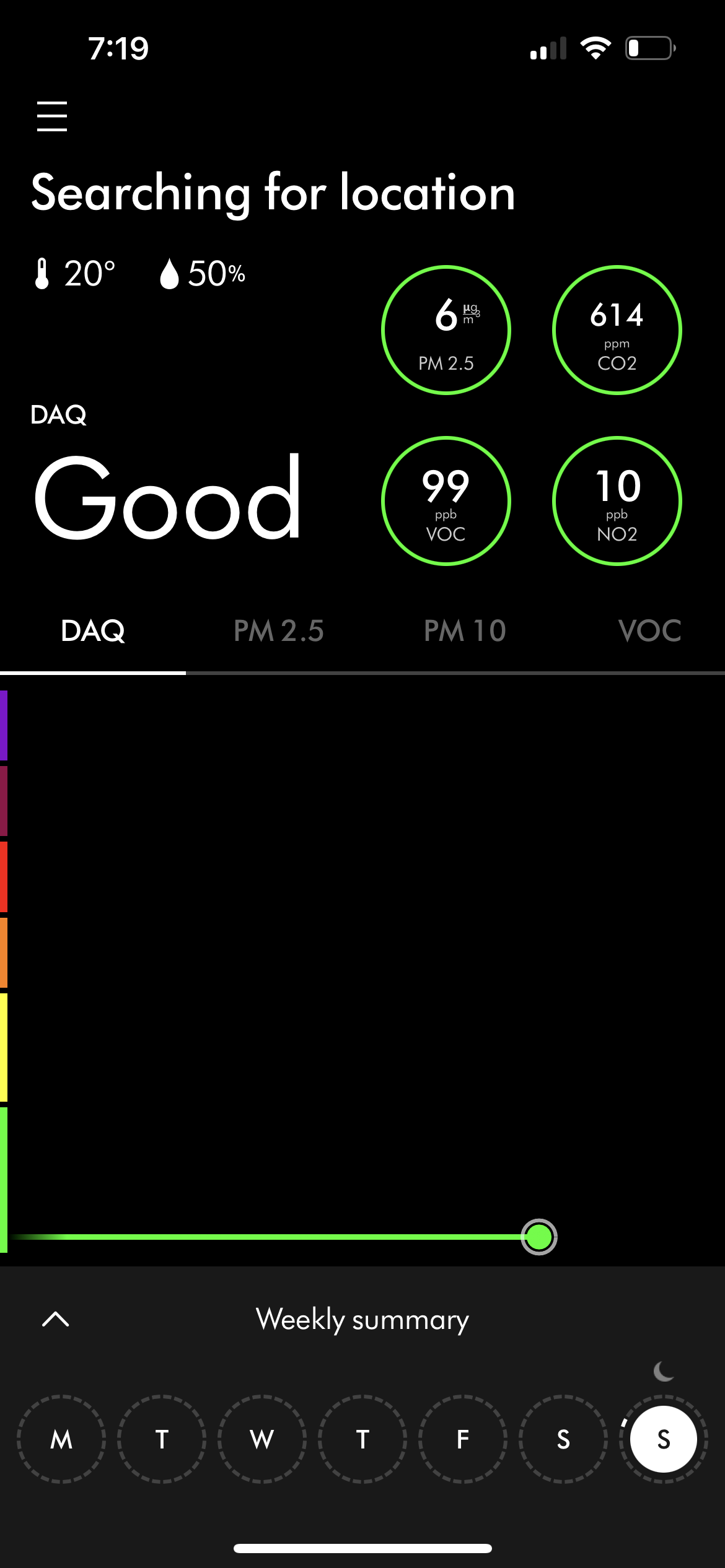
I took a photo at the start of the evening, at 7:20 PM. All values were okay. Specifically:
PM 2.5 - meaning "particulate matter" of extremely small sizes, 2.5 thousandths of a millimeter. So small that they pass through the respiratory tract, reach the lungs, and cause so many health problems. This is why over 20,000 people die prematurely in Romania every year. Most of these particles come from the exhaust pipes of gasoline and diesel cars, i.e., from traffic.
CO2 - a gas normally found in the atmosphere, as we learned in biology. Which is not toxic per se, but if it accumulates in large quantities and we are exposed to these large quantities for a long time, it can lead to health problems. Some even serious. From drowsiness, increased blood pressure, breathing difficulties, dizziness, confusion, headaches, to panic attacks, sweating, blurred vision, tremors, heart problems, and even loss of consciousness.
VOC - volatile organic compounds. That is, those chemical vapors that are most often emitted indoors from cleaning products that contain all sorts of toxic substances, from paint, carpets and other synthetic materials, furniture or even toys.
NO2 - nitrogen dioxide, which is usually emitted indoors by gas stoves, and outdoors by cars.
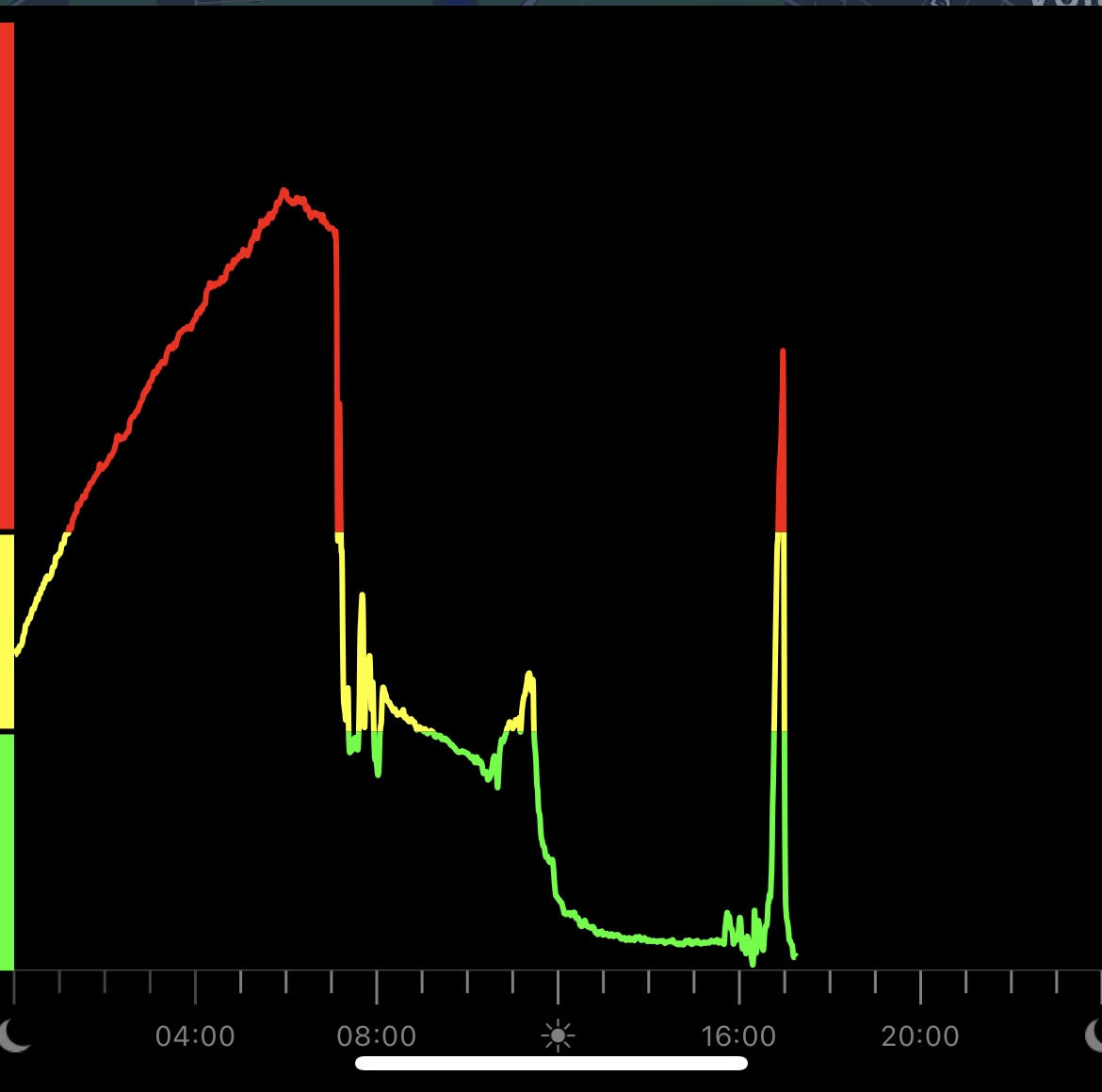
In the morning, I curiously look at the app connected to the backpack to see the values recorded overnight. And I'm horrified! Between 1 AM and 7 AM, when we woke up, the CO2 values turned red. Meaning they were above 1500 (missing unit of measurement), constantly, for 6 hours.
Oh my! What does this mean? I was expecting perhaps increases in PM 2.5, that maybe polluted air entered from outside and I slept with it in the room. Even increases in VOC, although I gave up regular, toxic household detergents a few years ago. But I had lit a candle that wasn't natural and I thought that might have influenced it.
But a lot of CO2? I didn't expect that.
It's true that that night the little one came into our bedroom and there were practically three people breathing instead of two. But anyway... To reach limits considered dangerous for health? Something was suspicious.
As someone who has suffered from migraines for at least 17 years and who has undergone numerous investigations to find their cause and who has received some answers from doctors over time, I certainly cannot suddenly attribute my headaches to carbon dioxide in the room. But I also cannot help but think that it might be a contributing factor. All my migraine apps ask about contributing factors. And I've always noted chocolate, coffee, lack of sleep, blue cheese, interrupted sleep, humidity, weather, etc. But never excess carbon dioxide. Maybe it should be included in these apps too?
As a mother of two children, one of whom is small, who, indeed, still wakes up at night and interrupts my sleep, I certainly cannot suddenly attribute my restless sleep of many years to excess CO2. I know where it comes from. I know the primary cause. But I also cannot help but think that this might be an additional cause, further aggravating the state of fatigue I feel.
I get over the shock, ponder all these questions during the day, and take the backpack for a walk in the afternoon when I pick up the children from school. To test the backpack in the city as well.
I get in the car in front of the house, put the backpack on the passenger seat, drive to a parking lot, then walk for about 10 minutes along a very busy street with heavy traffic. I expected the PM 2.5 sensors to explode. Nothing. They stayed green.
But I see another red sensor. The same CO2. During the time the backpack was in the car.
I ask Chat GPT what this means. Why do I have high CO2 emissions when getting into the car? The robot gives me four possible options:
- Inadequate car ventilation.
External source of CO2.
Exhaust system malfunctions.
Inaccurate measurements.
Option 2 doesn't hold up because the outdoor indicators were green. So there was no carbon dioxide to enter the car. Option 3 is not valid because my car is electric. So I don't have pipes from which CO2 comes out. Option 4 is worth considering. Option 1 is the most plausible. Obviously. When do I ventilate if I just got in the car? This reminded me of something I knew for a long time but had forgotten to do: open the windows as soon as I get in the car and drive like that for a good part of the journey. 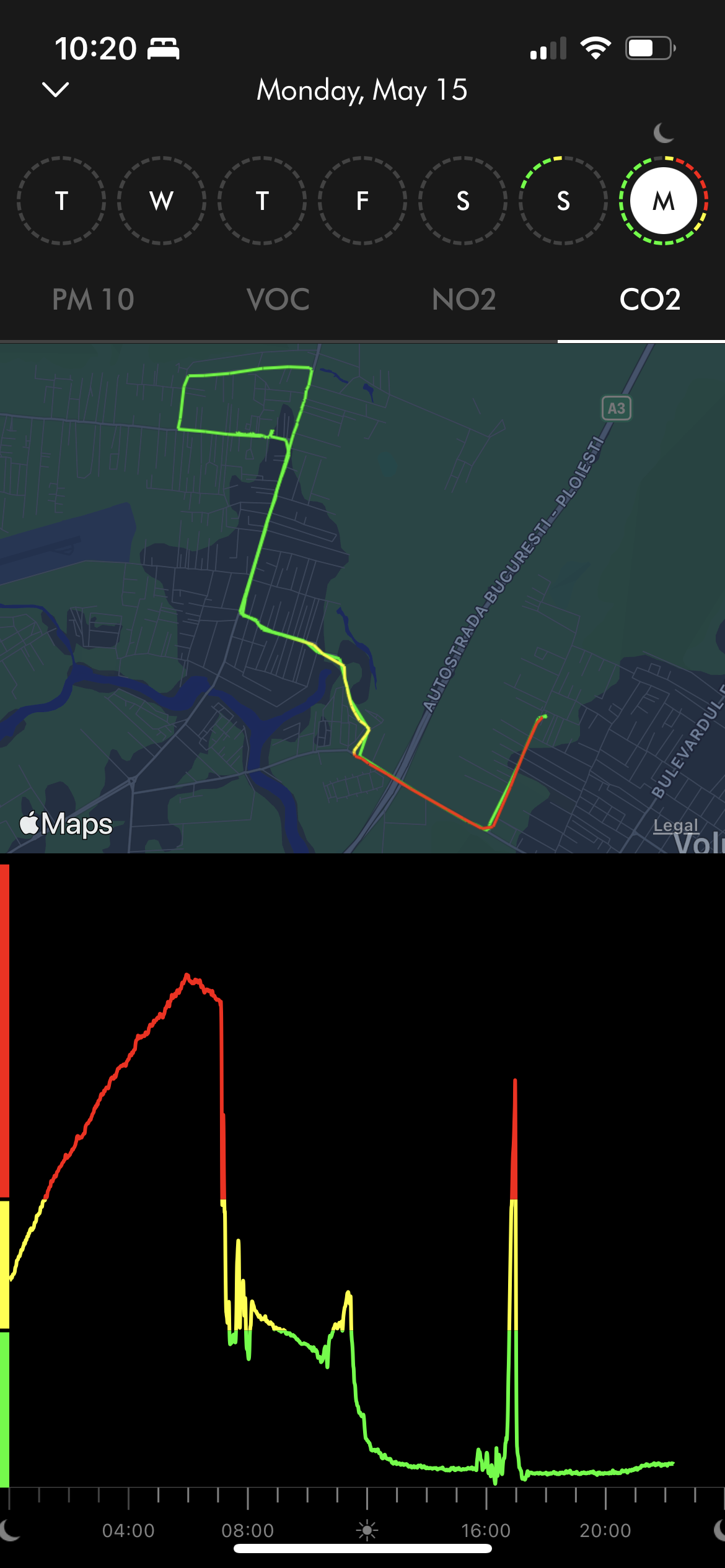
I pick up the kids from school, we get home, all indicators green, although I went through traffic again. The air in the car also cleared up because I kept the windows wide open. Evening falls.
Bedroom Experiment. Second Night
It's time to finally do the experiment I was actually interested in. To measure the air quality in the room, the same room, the bedroom, but this time with one of the purifiers on. The one we actually wanted to throw away.
So on Monday night, we sleep with the purifier on.
Tuesday morning, a double surprise:
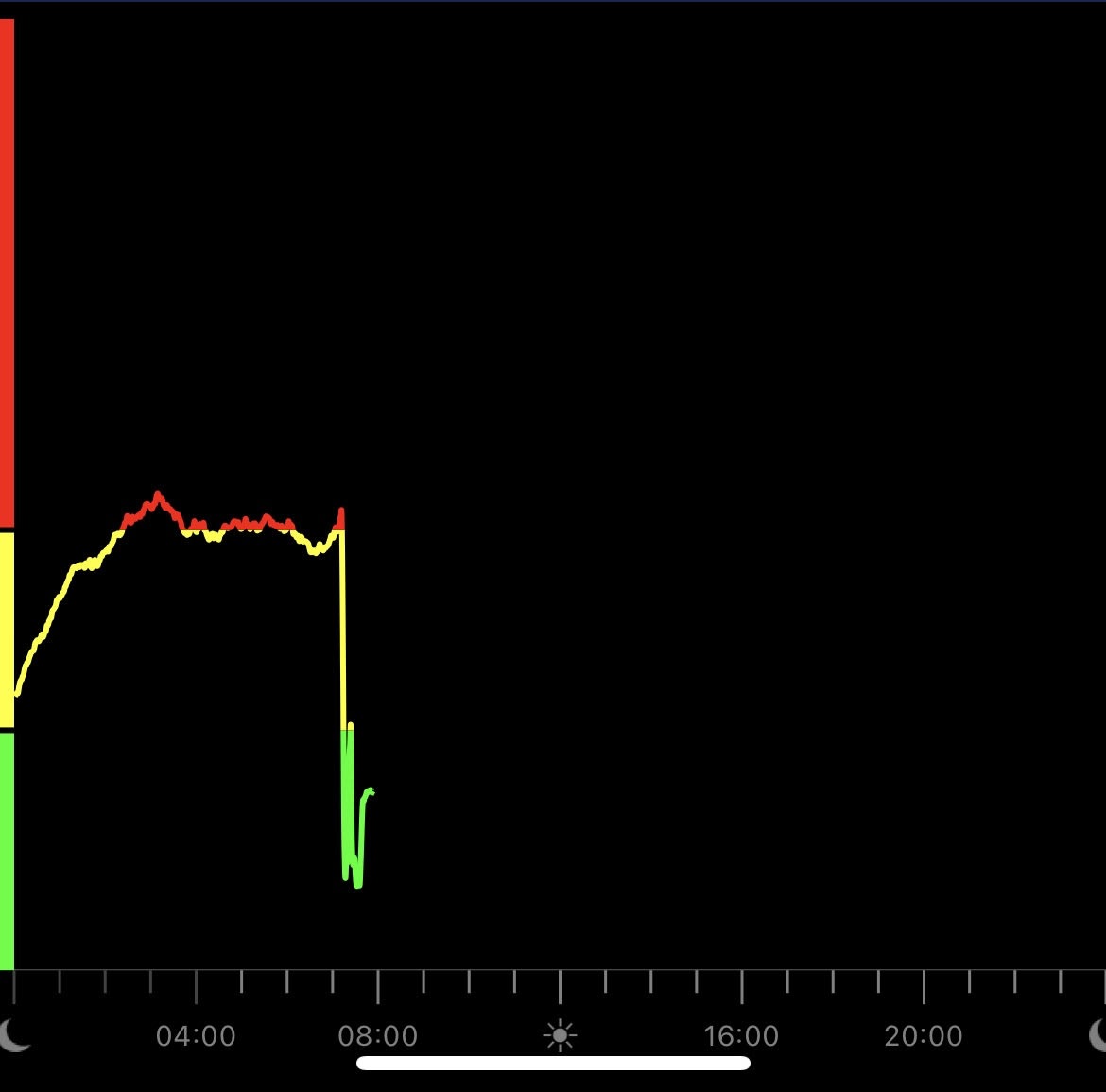
- The CO2 indicators improved significantly. So purifying the room works to some extent. It's not completely bullshit.
However, from 2 AM to 7 AM, the CO2 indicators were still red. On the border between yellow and red, but definitely not green.
So something is not right.
Conclusions
Of course, in my journalistic style, I would have done this experiment dozens more times, I would have talked to real specialists instead of Chat GPT, I would have compared, I would have... But, as much as I could observe in the two days I had this backpack for testing, without consulting experts, my conclusions are as follows:
- It was a good decision to move out of the city, to the outskirts, near the forest. Near the field, yes. With the risk of ragweed allergies, yes. But overall, the air seems to be cleaner here. Outdoors, the indicators were always green, even when I walked along the road.
- We are not throwing away the purifiers. We will continue to use them. Especially at night and especially during ragweed season. With the purifier on, I even had PM 2.5 values of zero. So if it purifies such small particles, it probably purifies some of that pollen too.
- We definitely need to continue investigating how our rooms are ventilated. Especially the bedrooms. Maybe the children aren't resting well either, maybe that's why they are sometimes so irritable? A lot of questions arose.
- The idea, "The air outside is polluted, the air inside is polluted, we don't even know what to do, should we open the windows to ventilate or are we making it worse?", has become clear for us. Not that I ever questioned ventilating. But I always wondered if I was doing more harm than good. In our case, the air inside proved to be more polluted than the air outside. So there is no option not to ventilate. Good or bad, the outdoor air is certainly better than the indoor air. At least in our case.
- This experiment/study is also done by a private entity. Like most air quality measurement initiatives I've seen in recent years. What is the state doing all this time? Can it concretely answer the question: How polluted is the air in Romania?
It cannot. Or maybe it can, but the statistics cannot be conclusive, since the air quality monitoring stations do not function for long periods. The European Commission has already sued us for not taking measures against air pollution, as repeatedly requested. Who else needs to sue us? Who else needs to fine us and how much, so that we can live peacefully in our country, breathing clean air?
Of course, these are more questions than conclusions. But I would like to end otherwise.
Do you know how the eEco vision begins? "Imagine a world where we can breathe clean air in cities. Which is felt immediately, as soon as we open the windows."
If you want to be part of this world, I invite you to create an account on the eEco.ro platform and thus join this community. Of people who want to breathe cleaner air. And who want to find out how we can achieve this.