Green Reusable Tableware
In the context of the European Union's efforts to reduce packaging waste and promote the circular economy, the European Commission recently adopted Regulation (EU) 2025/40, which imposes new obligations on the HoReCa (Hotels, Restaurants, Cafes) sector. These measures aim to encourage the use of reusable packaging and reduce reliance on single-use packaging.
What are the new obligations for HoReCa?
One of the measures stipulates that people will have the right not only to ask for leftover food from restaurants to be packed to go – which already happens – but they will also be allowed to bring their own containers from home for their food. This is not currently happening because Romanian legislation does not permit introducing foreign objects into restaurant kitchens.
Additionally, HoReCa operators must clearly inform consumers about this option through visible posters at points of sale. And the prices of products served in customer-brought containers cannot exceed the prices of those served in single-use packaging. In other words, this service cannot be charged.
The new regulation must be implemented by February 12, 2027. This means that by that date, the entire system must be built to allow for the implementation of the new rules.
After which, by February 12, 2028, traders must offer consumers the option to purchase products in reusable packaging, through an organized reuse system. This measure complements previous obligations and aims to reduce the volume of waste generated by packaging.
Thus, in a first phase, people are allowed to bring their own containers from home, but in parallel, restaurants and cafes must implement their own system to offer reusable packaging to customers.
Circular system for takeaway packaging
 To successfully introduce such a system, authorities, collection and recycling operators, HoReCa, and consumers in Romania must work together. Key steps for implementing a circular takeaway packaging system include:
1. Establishing a deposit-return system
Consumers should be able to borrow cups/containers/reusable dishes by leaving a certain amount of money as a guarantee, which they receive back upon returning the container. This encourages reuse and ensures the sustainability of the system. This is based on the principle used for the Guarantee-Return System for bottles, PETs, and aluminum cans.
2. Developing a collection and washing network
Cities need designated collection points where returned tableware can be cleaned and redistributed to HoReCa. Partnerships with recycling and waste management companies can facilitate this process.
3. HoReCa needs to be encouraged through incentives
Economic benefits, such as lower long-term costs and sustainable branding, can motivate companies to join the initiative.
4. Raising public awareness
A strong promotion and communication campaign highlighting the environmental and financial benefits of using reusable packaging can stimulate consumer participation. Educating people about how the system works and where to return items is crucial.
5. Ensuring regulatory support
Local administration must provide policies and incentives that support HoReCa in transitioning to reusable packaging. Tax benefits or grants for early adopters of the system could accelerate implementation.
Why Romania needs a reusable tableware system
Plastic waste is a serious problem in Romania; we have one of the lowest recycling rates in the EU. Every year, Romania generates large quantities of single-use plastic waste, much of which ends up in landfills or, simply, in fields and rivers.
Implementing a reusable tableware system would bring multiple advantages:
- Waste reduction
Reducing the amount of single-use packaging helps decrease pollution and protect ecosystems.
- Economic efficiency
In the long run, using reusable packaging can reduce costs for economic operators by decreasing the need to constantly purchase single-use packaging, and also for consumers.
- Improved public image
Companies that adopt eco-friendly practices can benefit from a better reputation among consumers, who are attracted by environmental responsibility.
- Compliance with EU regulations
These require HoReCa (Hotels, Restaurants, and Cafes) units to switch to reusable packaging by 2028.
- Increased awareness and involvement of people in sustainable practices
- Improved image of cities
A cleaner and greener city will attract more tourists and investors interested in sustainability.
The Copenhagen Model
The capital of Denmark, Copenhagen, has set a remarkable example in addressing plastic waste with its circular packaging system. It has already implemented a circular takeaway packaging system. This initiative has shown that cities can significantly reduce single-use plastics by introducing a structured and sustainable reuse system. But the process took two years. Discussions started in 2022, and the system was only implemented in 2024.
Bucharest, as the capital of Romania, could follow this model to address its growing waste problem and move towards a more circular economy. But it must start now, it cannot wait until 2027.
We have solutions
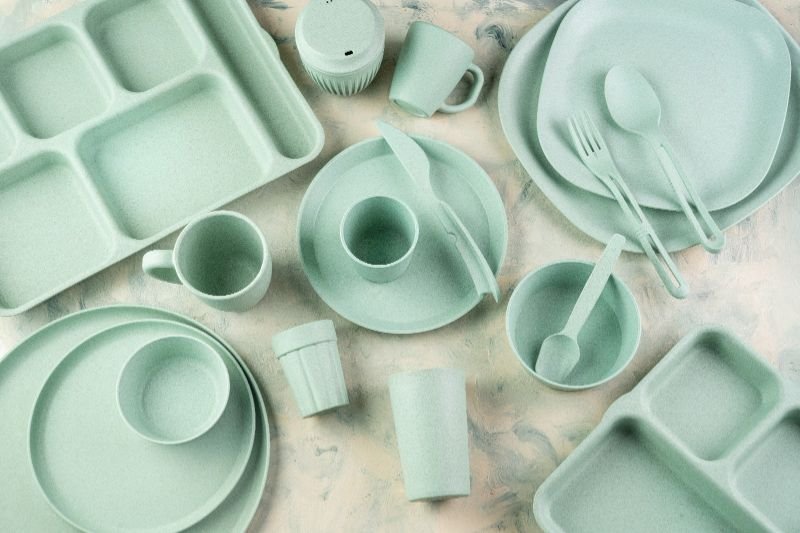
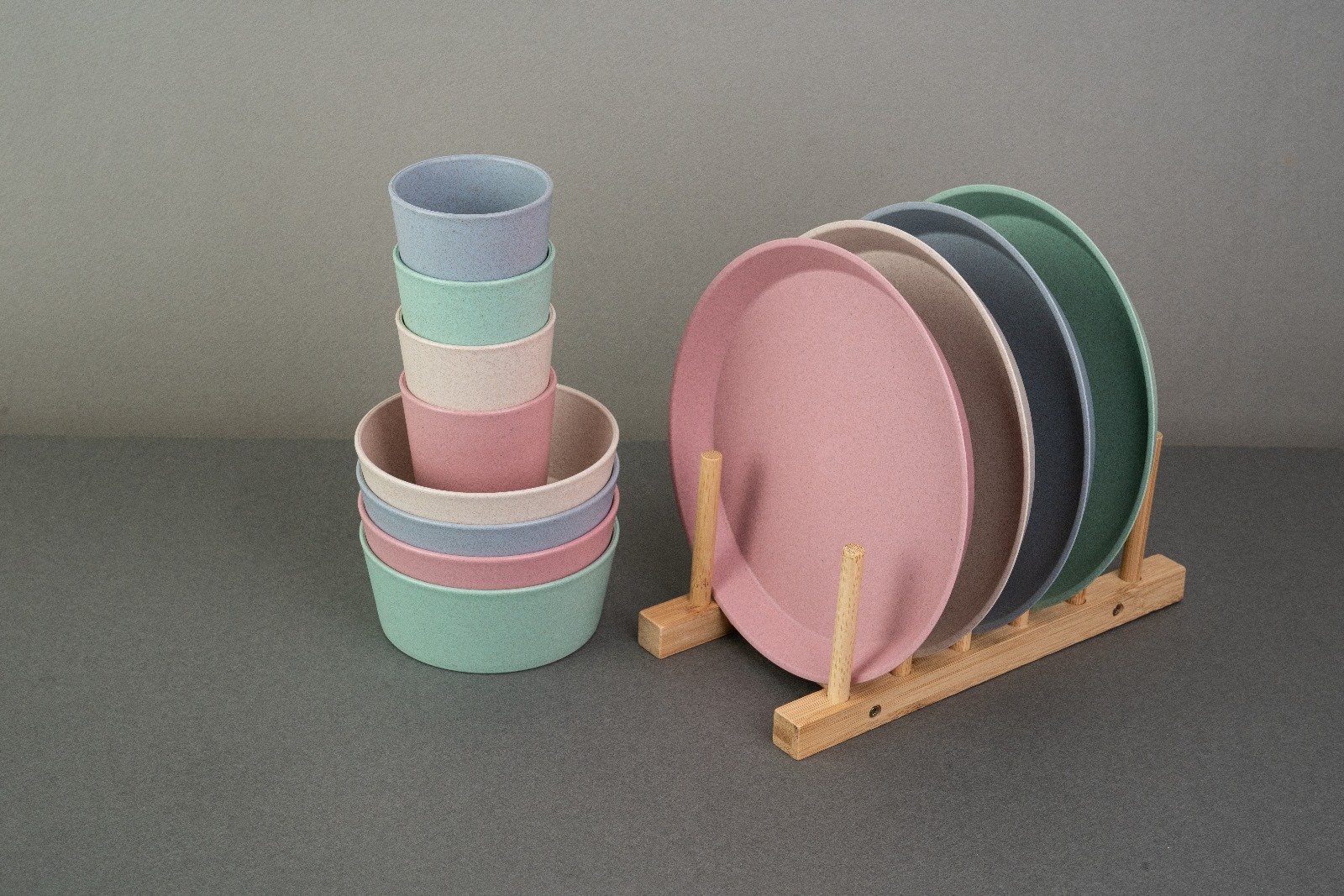 The good news is that we already have existing solutions on the Romanian market. Manufacturers of not only reusable, but also Zero Waste, innovative, sustainable tableware.
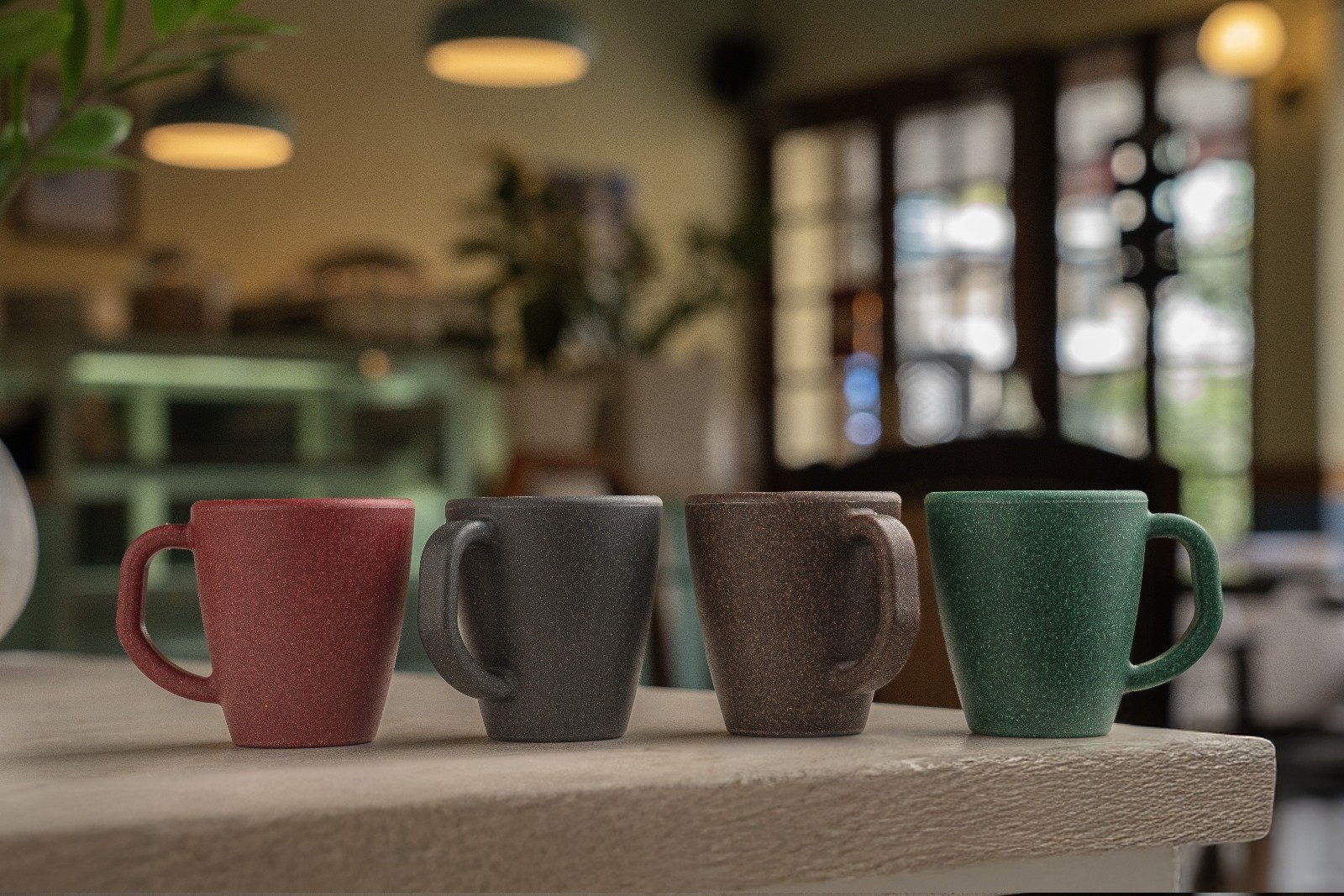
One such manufacturer already present here is FRENVI, an eEco supplier of reusable and compostable tableware solutions. The products are made from sustainable biocomposites, derived from agricultural residues, or from other residues such as coffee grounds or rice and coffee husks, being environmentally friendly and suitable for use in the HoReCa sector.
Moreover, the manufacturer understands the need for collaboration for the emergence of a circular packaging system in Romania and has already initiated the construction of a network to contribute to the implementation of such a system. HoReCa operators, recyclers, waste collectors, and local authorities are invited to this network.
If you want to be part of this network, contact us!