Skip to content
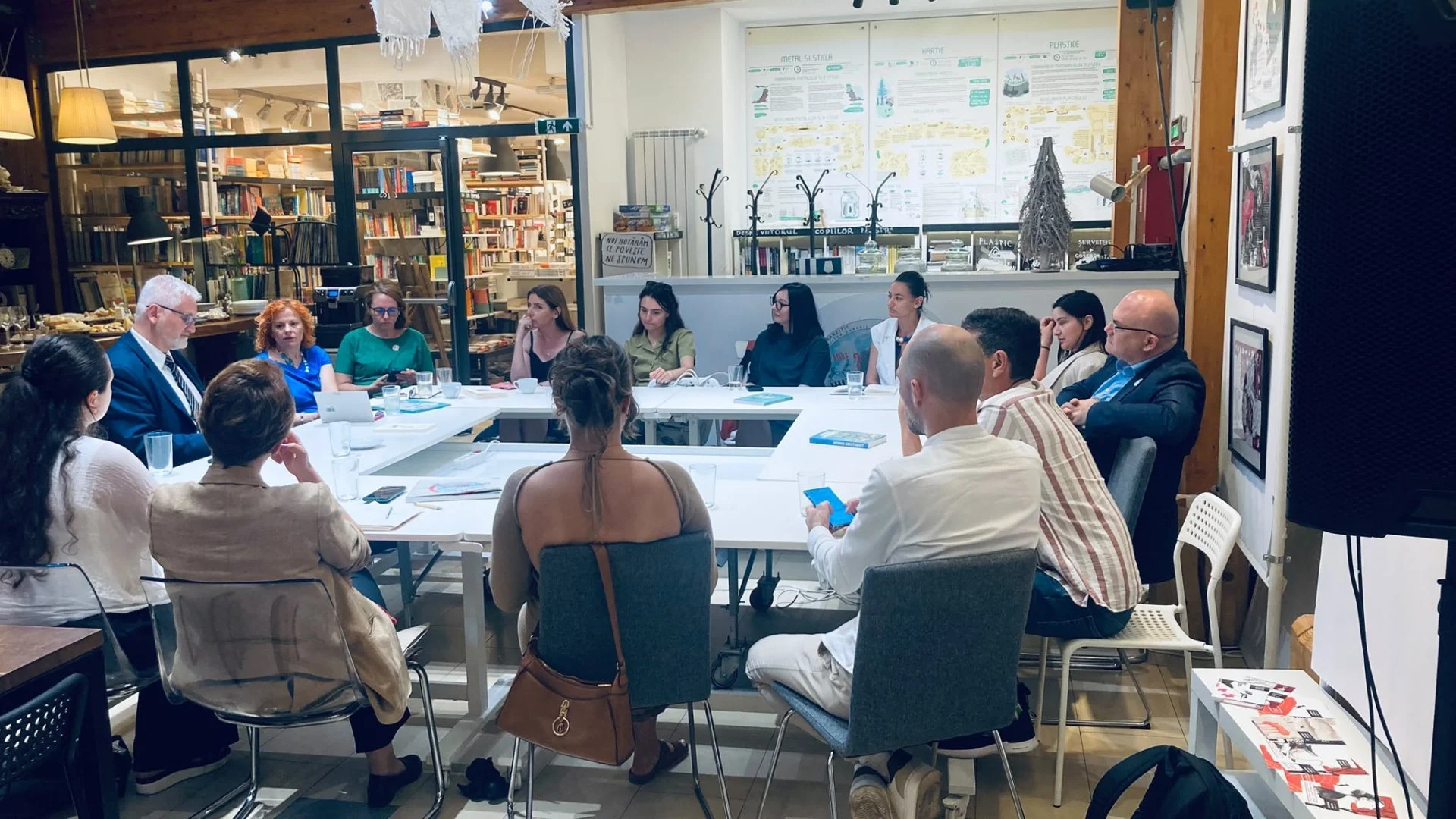
Meeting with Jan Dusik and ambassadors of the European Climate Pact discussing energy transition.

Jan Dusik, Deputy Director of DG Climate, meeting with ambassadors of the European Climate Pact

Discussions in preparation for legislative changes in energy through which the EC will accelerate the transition to renewable sources

15 June 2026 Alina Jantea

Meeting on Energy Transition

share

During his recent visit to Romania (June 9-10, 2026), Jan Dusik, Deputy Director of the Climate Directorate of the European Commission, met with several Romanian ambassadors of the European Climate Pact in the context of preparing legislative changes in the energy sector that the European Commission will make to accelerate the transition to renewable sources.

Organized as a debate of ideas among field specialists, the discussion was attended by a significant part of the Romanian community of European Climate Pact ambassadors, who thus had the opportunity to better understand Brussels' perspective and convey their messages to it: Sorin Cheval, Mihail Caradaica, Ana Maria Todoran, Teodora Ghenciu, Emil Zorila, Ioana Petrescu, Laura Petrescu, Laura Soroceanu, Cristina Baltoi, Alexandra Ghenea and Raul Pop (State Secretary at the Ministry of Environment, Waters and Forests, former Pact ambassador). Also, two valuable partners of the pact contributed with opinions to the debate: Ateliere Fără Frontiere and Seneca Anticafe.

Those present analyzed the evolution of how climate change is viewed: it is increasingly evident that climate policies can no longer be approached solely from the perspective of environmental arguments, as climate change affects multiple dimensions of people's lives: health, agriculture, food, water, transport, energy, security, and other elements that make up (or alter) quality of life. Therefore, there is a need for diversification and innovation in communicating the causes and implications of climate change to society. Discussions also covered misinformation on social media, difficulties in communicating certain overly specialized topics, and the risk associated with prioritizing competitiveness over cohesion and social justice.

Concrete aspects were reviewed, from the capacity to generate energy at the individual and local level (in the perspective of achieving energy security) to the gradual elimination of fossil fuel subsidies.

The conclusions emphasized how important it is for public investments to be aligned with long-term climate objectives and for society to find resources to seek and encourage the use of resilient alternatives.

The European Climate Pact is a framework for climate awareness and action for European citizens, with the perspective of transforming the European Union into a modern, competitive, and resource-efficient economy, where:

  • we reach net-zero greenhouse gas emissions by 2050;
  • economic growth is decoupled from resource use;
  • no person and no place are left behind.

The European Climate Pact Secretariat is coordinated at the European level by the Directorate-General for Climate of the European Commission and coordinated in Romania by REPER21. The activities of the European Climate Pact are communicated in Romania by DC Communication.

Additional details: ro@euclimatepact.eu

Frequently Asked Questions

Who is Jan Dusik and what role does he play in the European Climate Pact?

Jan Dusik is the Deputy Director of the Climate Directorate of the European Commission. He plays a key role in discussions and legislative changes aimed at accelerating the transition to renewable energy sources within the framework of the European Climate Pact.

What was the purpose of Jan Dusik's visit to Romania in June 2026?

The purpose of Jan Dusik's visit to Romania was to meet with ambassadors of the European Climate Pact to discuss upcoming legislative changes in the energy sector and to facilitate a dialogue on climate policies and their broader implications.

What topics were discussed during the meeting with Romanian ambassadors?

The meeting covered various topics, including the multifaceted impacts of climate change on health, agriculture, and energy, as well as the need for effective communication strategies to combat misinformation and prioritize social justice in climate policies.

Who participated in the discussions alongside Jan Dusik?

The discussions included several Romanian ambassadors of the European Climate Pact, such as Sorin Cheval and Mihail Caradaica, as well as representatives from partner organizations like Ateliere Fără Frontiere and Seneca Anticafe.

What are some key conclusions drawn from the discussions on climate change?

Key conclusions included the necessity for innovation in communicating climate change issues, the importance of addressing misinformation, and the need to balance competitiveness with social cohesion in climate policies.

Providers you might be interested in

Tangotangent logo featuring a heart symbol and the text 20 years of tanguedad. Video

Tangotangent

Tangotangent – ESG values and cultural impactVisionTangotangent promotes Argentinian tango as a form of living cultural heritage, a tool for personal development, and a catalyst for social connections within the community. Through artistic education and cultural events, the organization contributes to creating spaces where people can experience cultural dialogue, inclusion, and social well-being.ESG DimensionE – Environmental (Environmental Responsibility)Tangotangent promotes sustainable cultural practices through:organizing events with low environmental impactusing digital materials for communication and educationencouraging sustainable urban mobility for event participationcollaborations with local cultural spaces for the efficient use of existing infrastructureThrough these actions, cultural activity is integrated into a model of responsible and sustainable consumption.S – Social (Social and Community Impact)Tangotangent creates a framework for cultural participation that supports:Social InclusionClasses and events are open to people of all ages and backgrounds, encouraging diversity and access to culture.Community CohesionTango serves as a universal language that facilitates interaction and relationship building among people.Health and Well-beingThe practice of dance contributes to:stress reductionimproved physical healthdevelopment of emotional intelligencecombating social isolationIntercultural DialogueThrough international collaborations with tango artists and teachers, Tangotangent facilitates cultural exchange between communities.G – Governance (Cultural Governance and Responsibility)Tangotangent operates based on principles of:transparency in organizing cultural activitiescollaboration with cultural institutions and civic organizationspromoting ethics and respect within the communitydeveloping a sustainable cultural ecosystemThe organization contributes to strengthening a local cultural infrastructure based on collaboration and active participation.Cultural ImpactConservation of Cultural HeritageTangotangent contributes to the transmission of Argentinian tango, recognized by UNESCO as a intangible cultural heritage of humanity.Through classes, events, and educational programs, the organization supports the continuity of this cultural tradition in a contemporary context.Cultural EducationTangotangent's activities provide participants with:access to tango cultureunderstanding of tango music and historydevelopment of artistic sensitivityThese experiences contribute to the formation of an active cultural audience.Development of the Artistic EcosystemBy organizing performances, workshops, and collaborations with international artists, Tangotangent:stimulates artists' mobilitysupports the local cultural economycreates opportunities for artists and educatorsResults and ImpactTangotangent's activities generate:increased cultural participation in the communitydevelopment of an active community around the art of dancepromotion of values of respect, cooperation, and creativityconnecting the local public with the global network of tango culture

Subscribe to our newsletter

Be the first to learn about the latest sustainability news