Circular Economy Models - Episode 1
When I discovered the FabBrick project from France, a start-up that transforms textile waste into bricks for interior design projects, I thought, "How wonderful it would be to have something similar in Romania!"
The good news is that it can be done. The technology, science, and environmental engineers exist to give new life to various types of waste, not just textiles.
The bad news is that it isn't happening beyond university laboratories because there isn't yet a businessperson or investor to turn this know-how into a business.
Let's start with the positive side. With science. At the Technical University of Cluj-Napoca, Faculty of Materials and Environmental Engineering, I had the pleasure of meeting Ancuța Tiuc in the Noise Control laboratory. A researcher who has won four patents for transforming different wastes into acoustic panels, as effective as conventional panels made from virgin materials.
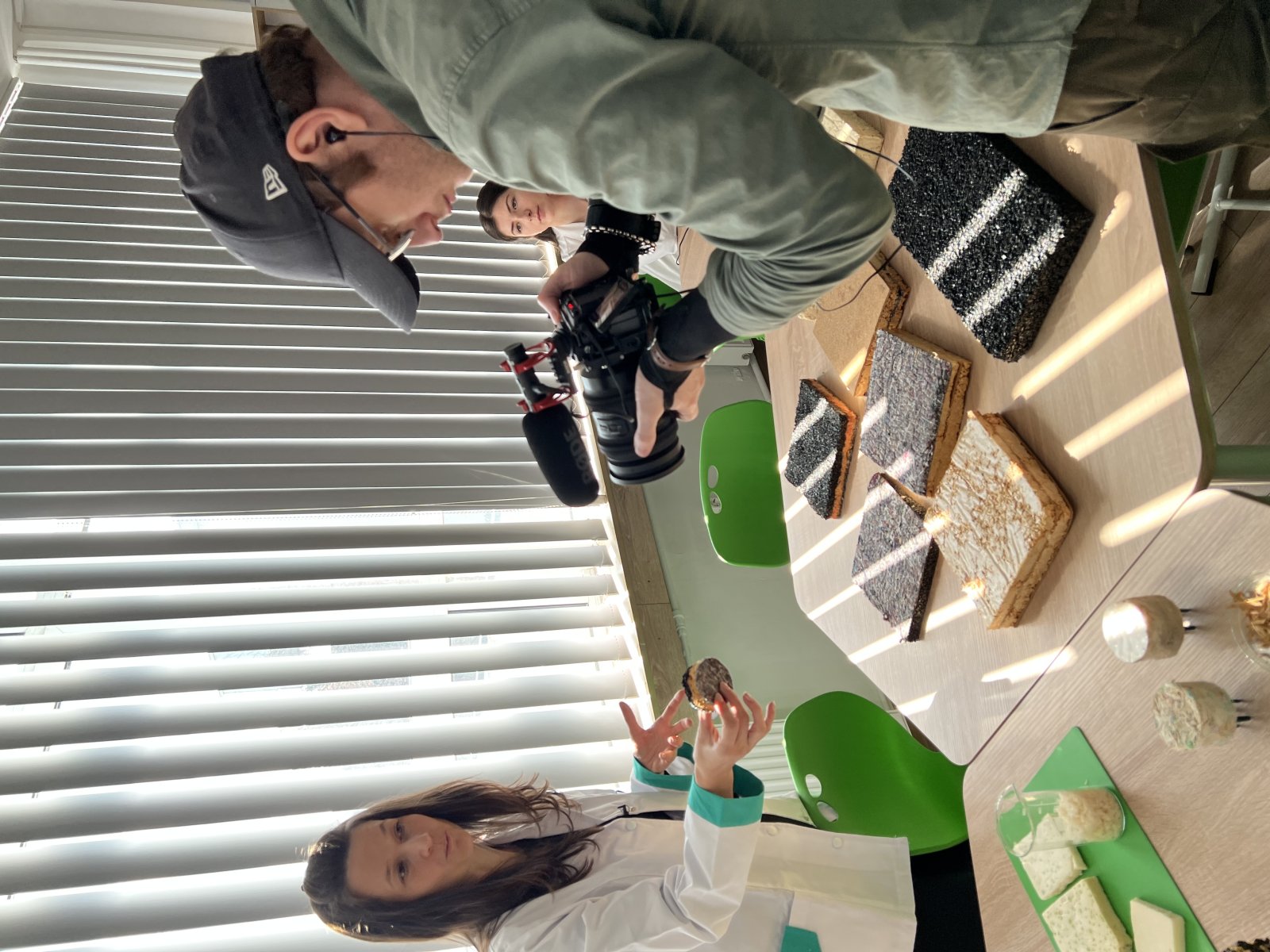

Ancuța Tiuc had the ambition to show that leftovers from clothing factories, sawdust from wood furniture processing, used tires, or corn stalks can become raw materials for noise-absorbing panels. An unseen environmental issue that kills 12,000 Europeans every year.
Where acoustic panels can be used
Road traffic, for example, is the main source of noise pollution in Europe, affecting 113 million people. The panels invented by Ancuța, made from tire remnants, could successfully replace the panels installed on highways, protecting nearby residents from car noise.
However, depending on the material they are made from and how well they can absorb vibrations and loud sounds, acoustic panels can have many other uses.
Conf.dr.ing. Ancuța Elena Tiuc: “They could be used in industry, mainly as mats for reducing vibrations and impact noise. In any type of industry where such damping mats are needed.
Those materials based on sawdust and polyurethane foams could be used both indoors and outdoors. We could use them for insulating the walls in industrial halls or for casing certain equipment, again, in the industrial environment. But we could also successfully use them in our homes, in civil constructions. And for improving the acoustics of halls, amphitheaters, lecture rooms.”
Why all the effort
Besides noise pollution, acoustic panels made from material waste solve two other environmental issues: reducing waste and protecting natural resources.
All at lower costs. Because the raw material can be purchased at reduced prices compared to new materials or even obtained for free. Instead of paying to dispose of waste, factories could get rid of it by donating it to a new factory where this waste could be processed.
However, the new factory does not yet exist. To see these inventions put into practice in everyday life, the next step must come from the industry. The academic environment has done its part. It has shown that it is possible. The ball is now in the business environment's court.
A business environment facing unprecedented pressures to transition to a circular economy and which now has the opportunity to turn challenges into business opportunities.
You can follow the entire story of waste transformed into objects that make our lives easier in the video report. The first episode of the campaign “A Second Life. Circular Economy Models,” created by Sustainable Solutions Association with the support of Stratos and Eco Synergy, aims to inspire companies to transition more easily and quickly from a linear economy to a circular economy.