The Universe Cube
You've probably already heard that Bucharest opened Romania's first immersive art museum this summer, the largest in Southeast Europe. The Museum of Immersive New Art, or MINA for short.
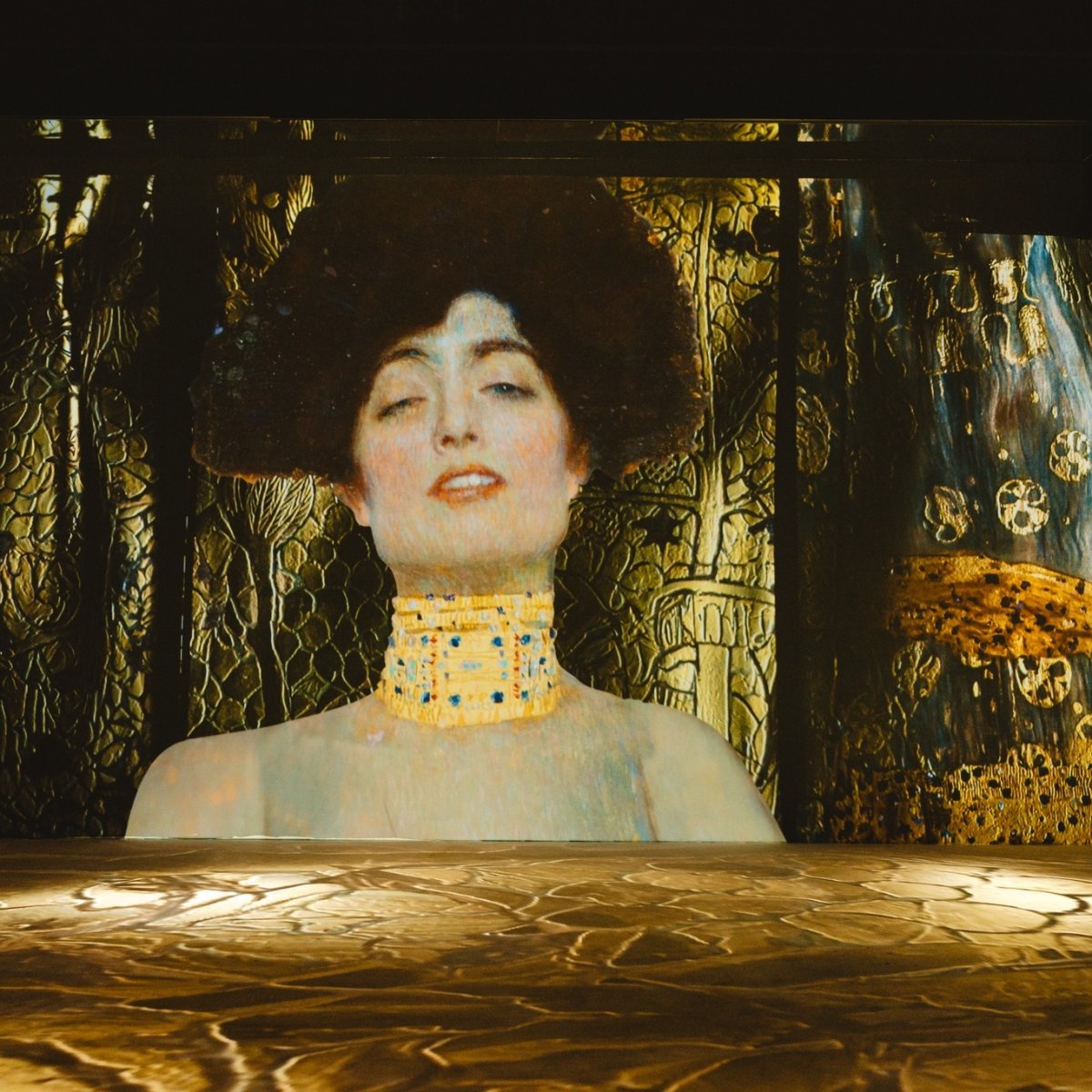 Photo source: Facebook/MINA
Immersive art is difficult to explain in words. It must be experienced. But in short, compared to a regular painting exhibition, say, in a classic museum, in such an immersive space, the works take on other dimensions, can be projected on huge screens, sometimes animated, other times they can be shows in themselves, lasting fifteen minutes or more. It's a different kind of experience, where the viewer enters into a different relationship with the work or the author, can see previously unnoticed details or discover previously undiscovered feelings in relation to art.
An intersection between art and technology, in short. New media.
Add two more ingredients to this combination: science and design. And imagine the following scenario: you visit an immersive art museum, like MINA, and you see a cube similar to the one in the picture.
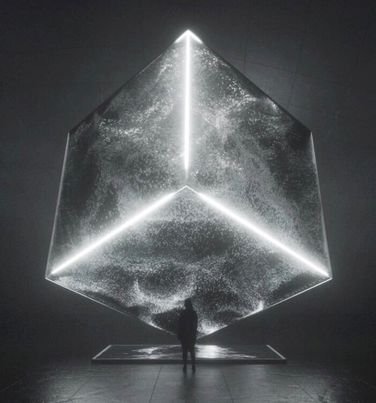 Photo source: The Point Labs
It is explained to you that inside this cube is all the information humanity currently possesses about cosmic space, kilometer-long databases taken from NASA and transposed, in a language accessible to the public, through design, into an art form. Through the simplest geometric form we have and "the most perfect," the cube.
Then, you are invited to touch this cube, to manipulate it as you please, to make it smaller, larger, and to discover information about the Universe through experience, not through reading, not through teaching, not through theory, as we have been taught until now.
Gradually, in the combination of art, technology, science, and design, another term is introduced: AI. Artificial Intelligence. Thus, the information offered by this cube is not always the same. And it doesn't always look the same. The information differs depending on the user. On how the person manipulates the cube and how the person reacts to the information received. Art interacts with the viewer. It is no longer static, inert.
You already know that this cube you "hold" in your hand is a projection, from the moment you put on VR glasses, like those used in computer games. But, to confuse you even more, know that this projection you're staring at is actually a representation of a real cube that you can touch in reality. And which, at some point, may even be launched into space.
What if people could interact, from here on Earth, with an artifact located somewhere in the Universe? It would be a cosmic experience, wouldn't it?
And whether it is launched or not, the artistic act remains revolutionary, transcending the boundaries of art.
When Timmy Ghiurau said these things on stage at the CuriosITy 2023 event, you couldn't hear a pin drop in the room where hundreds of people were gathered.
I don't know how many conferences you've attended so far, but as a journalist, I can tell you that in my 13 years of working in the press, I've probably been to hundreds. Unfortunately, conferences in our country are, in 90% of cases, boring. People go there more for networking, for visibility, less for the conference content. But we can talk more about that another time.
What I want to say is that moments like these, where the person on stage silences the audience with what they present, are rare.
And the most interesting, yet at the same time saddest, part is that the man on stage is Romanian.
Interesting, because, you see, Romanians are capable of extraordinary things.
Two Romanians, Timmy and his partner from The Point Labs, Denisa Osacenco, managed to bring together innovators from all over Europe and made this exceptional collaboration possible, between NASA, CERN, one of the most important scientific research organizations in the world, the visionary artists from Ouchhh, and the innovators who created the VR headset from Varjo.
The sad part is that such Romanians and such projects are unknown in the country.
This artistic project was awarded at CannesNext, a conference promoting innovation in the entertainment sector, part of the famous Cannes Film Festival.
This project impressed senior officials from the European Commission, who saw in it the possibility of adopting the methodology and solving major community problems.
Timmy is being courted for his ingenuity by multinationals like Apple and Facebook. But in Romania, almost no one knows him. It's true that Timmy no longer lives in Romania. He works in Sweden for Volvo, where he leads an innovation team. But it's also true that if he had stayed, I don't think he would have been more well-known. Unfortunately.
Can you imagine the current Prime Minister of Romania, Marcel Ciolacu, impressed by such projects? Trying to see how he could use such innovations to solve the problems of Romanians?
There are still many questions to be asked about this project. But much information is currently confidential. Timmy promised me, however, that we will stay in touch and as we can reveal more, we will come back with other articles.
Connection to sustainability
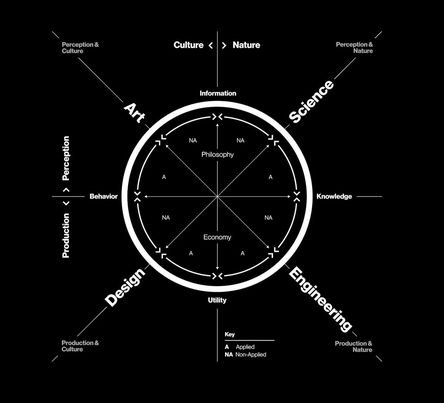 Photo source: The Point Labs
And now the million-dollar question: Why did I choose to talk about this project on a platform dedicated to sustainability?
For several reasons:
- It is innovative.
It is disruptive.
It is interdisciplinary. It is at the intersection of art, technology, design, and science.
It is collaborative. The art was created by a studio in Istanbul, the VR headset was made by a company in Finland, and the entire experience was created by two Romanians.
We need such tools and methodologies to overcome the climate crisis we are facing. They bring together people, institutions, private companies, artists, engineers, capable of collaborating, putting all their expertise together for a common purpose. Because that's what Sustainable Development Goal 17 is all about, isn't it? Partnerships for achieving sustainable development targets.
We need such solutions that combine innovation, creativity, technology, design, and science. Because the challenges are also at an intersection: between people, planet, and profit.
This is the greatest curiosity I learned at the CuriosITy Summit. An event organized offline for the first time, after the well-known online technology podcast of the same name, CURIOSITY, hosted by George Buhnici.
The eEco community had free access to this event. So, if you're interested in attending such meetings in the future and you're not already a member, I invite you to create an account right now.