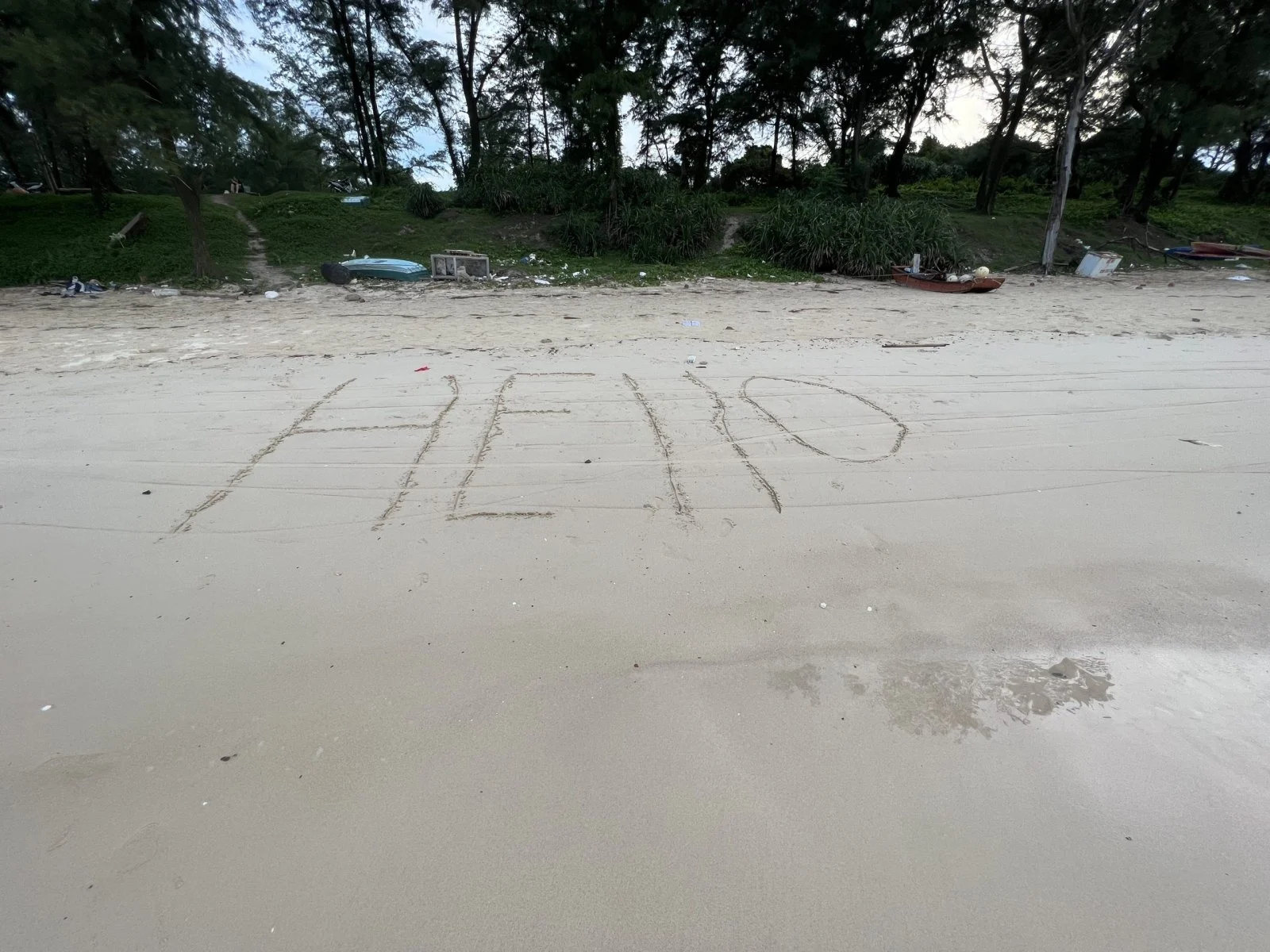
Message on the Beach
Our month-long adventure in Vietnam last year, about which I wrote a little here, we decided to conclude spectacularly on an island straight out of a movie. With fine golden sand beaches and turquoise waters.
We chose the perfect place for it. Or so it seemed. An area in the north of the country, called Halong Bay, a UNESCO heritage site for its beauty and uniqueness. A bay with 1600 islands and islets, most of them uninhabited and untouched by human presence because they are very steep. Small limestone mountains, covered with tropical forests, rising from blue waters. A superb landscape.
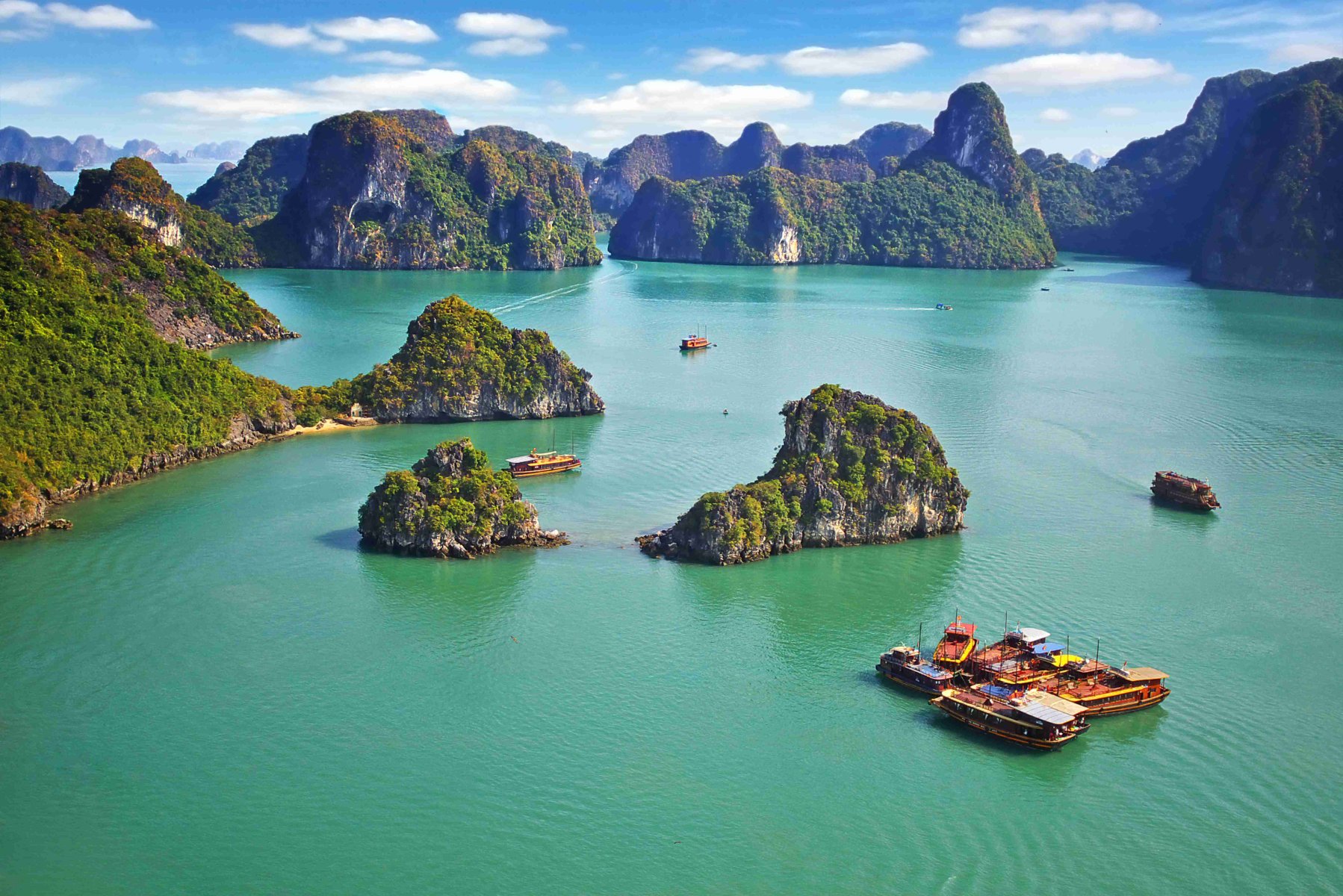 Photo source: hanoidiscovery.com
I investigated a bit about what people do in this wonderful area and saw that 2-3 day cruises are very popular, where you can sail among these natural wonders and occasionally stop on an island for a beach day or an authentic culinary experience. But after a month in Vietnam, we were already tired of authentic experiences, both culinary and otherwise; we just wanted to rest, relax, before the long journey home. With our two children, one of whom was young.
So, going on a cruise ship, which pollutes extremely much, and me also getting seasick, with a fixed schedule for waking up, eating, and recreation, didn't seem like the ideal way to end this vacation. So we looked for alternatives.
Why should we go on excursions where everyone else goes? No, we try to be sustainable tourists, we don't go where it's crowded, we do something different. Out of 1600 islands, can't we go to any of them? Just to lie around, relax on the beach for three days? On fine sand, gazing at the blue water? And apparently, there were.
One of them, quite large, Co To Island, seemed to be the place we dreamed of. I found it on many websites, the photos were superb, travel blogs seemingly written by mothers also seeking zen recommended it warmly, "highly recommended" or "on your bucket list" in all descriptions, so we couldn't not go to Paradise. It seemed like a place you must visit at least once in your life.
And perhaps it is. But for entirely different reasons. As we were about to discover.
To get to the island, we had to take a boat. Not a large one, like those used for cruises, but polluting nonetheless, like any other means of transport, yet the only possible option. We had arranged for someone from the hotel on the island to meet us and help with transport to our accommodation, and we were pleasantly surprised to see that we, and other tourists, were picked up by an electric buggy.
"How wonderful! These people are really making an effort to pollute less!" I thought then.
The island with no cars, but a ton of garbage
The first shock came on the way to the hotel. An eco-lodge. Which I chose for sustainability reasons, as I mentioned earlier. But it wasn't the hotel itself that shocked us, although it wasn't quite what it should have been either, but the surroundings. Left, right, wherever you looked, it was pretty much like the picture below. As if the Vietnam War had just ended.
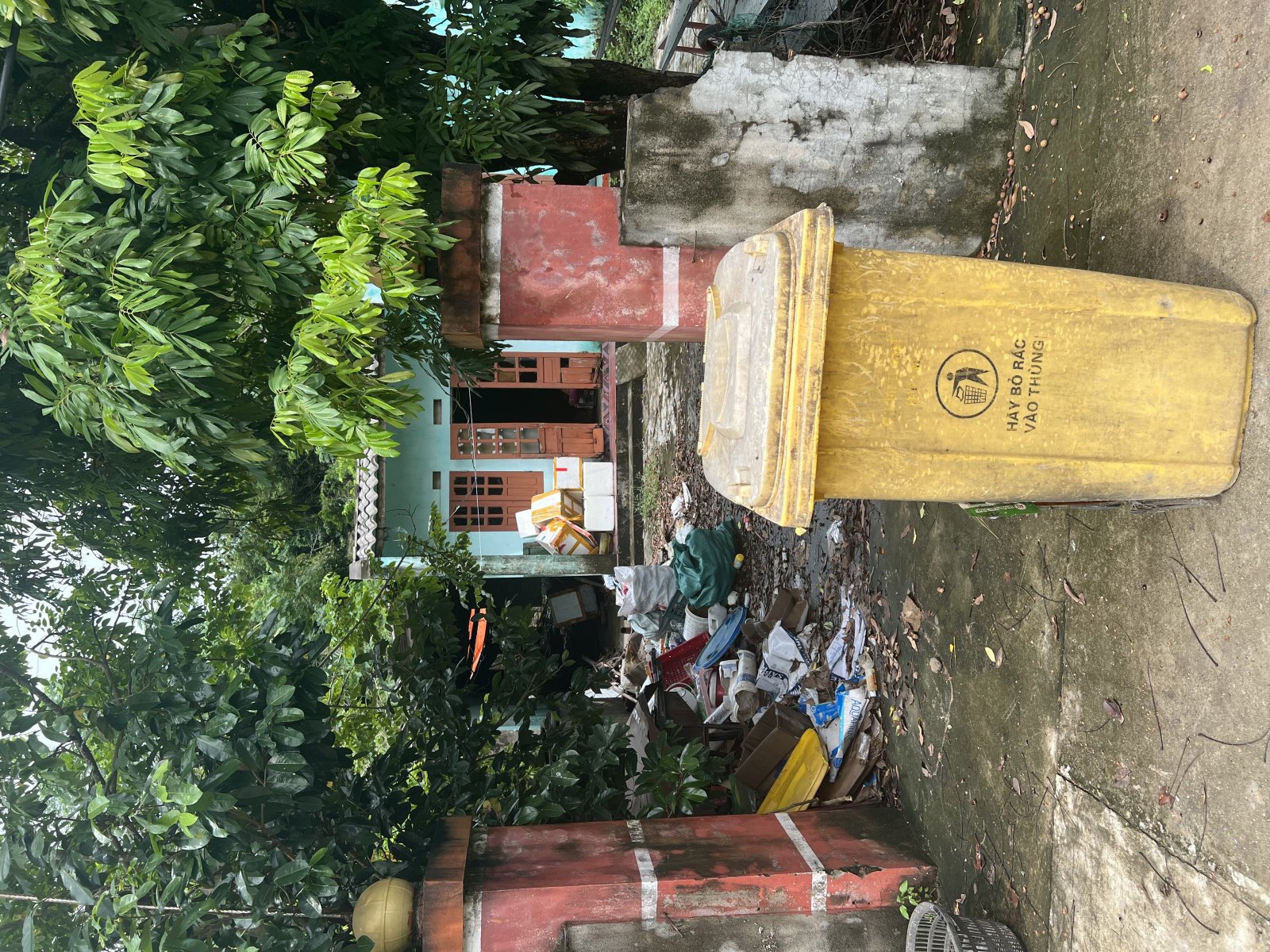
I told myself we just happened upon a bad area - although it was among the top-rated - and anyway, we'd only be staying three nights, and ultimately, it didn't matter much what the island was like, as we'd be spending all day at the beach, where we knew it was paradise… Oh dear! How did we know it was paradise? From pictures! From the internet! What if the beach was the same? It couldn't be! No way! The pictures were truly superb. I even read blogs. Written by mothers, as the saying goes. So at least two types of sources confirmed it. Well, shouldn't there be three sources, Teodora? Do you think life is any different than journalism?
So let's go to the beach! The third and most conclusive source. We'll see with our own eyes. And then decide what to do.
The beach, a disaster too. Fine sand, true. Azure waters, indeed. But garbage... as far as the eye could see.
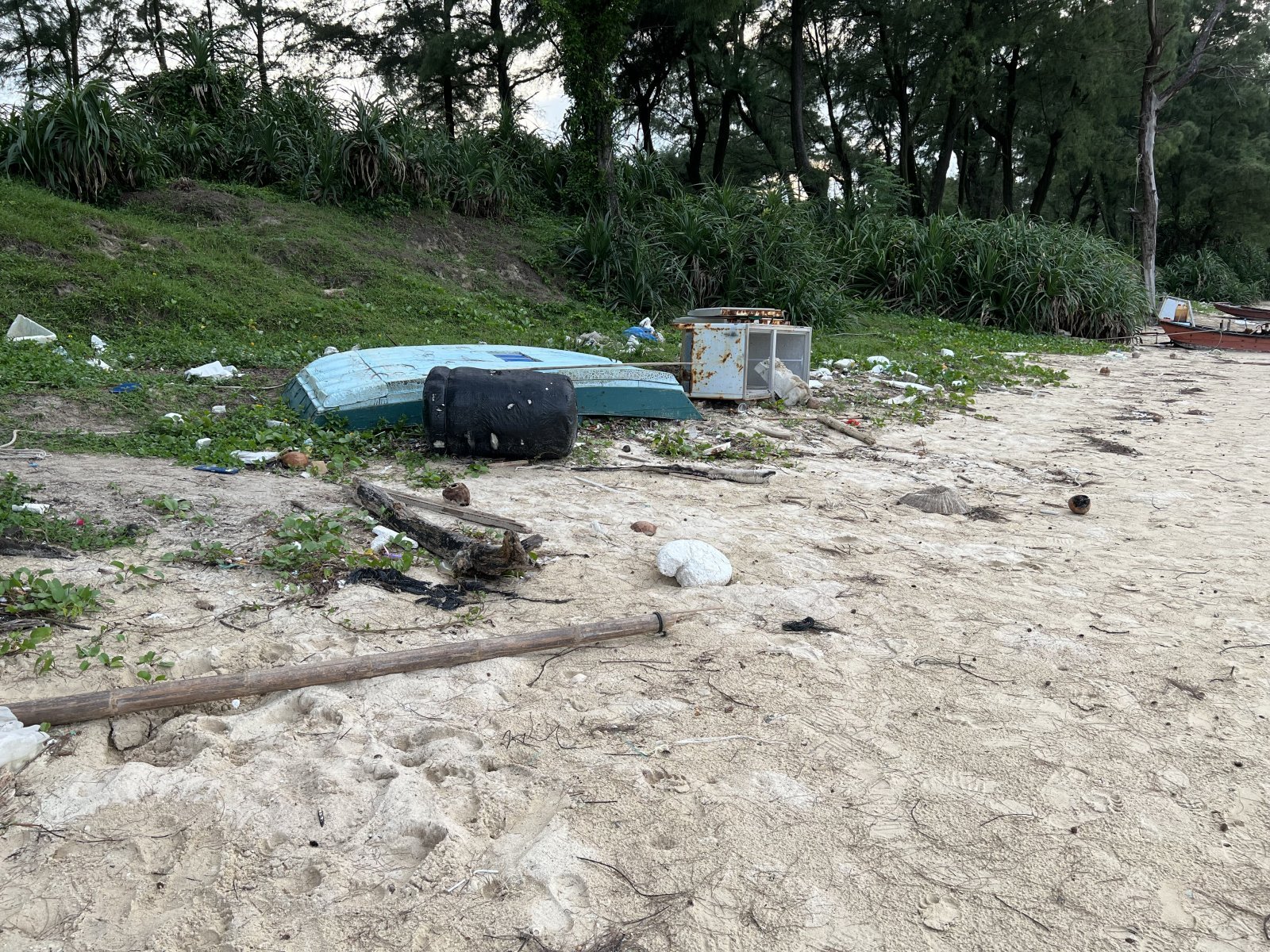
Our first thoughts were, of course, self-pity for our wonderful vacation about to end terribly and for our lost time on the road.
But after a little reflection, after we got over the shock and managed to set our ego aside a bit, we decided to stay there anyway. It was more complicated to leave than to stay. We had to take a specific boat, at a specific time, we were too tired and didn't want to tire the children more before the long journey home. And then, we also didn't want to send them the message "When we don't like it, we leave." For the simple reason that you don't always have a place to go. Sometimes, you have to cope with discomfort. Plus, they didn't seem bothered by anything. Yet.
So let's not indoctrinate the children and try to enjoy what we have! That was the plan. We were still on a tropical island!
We'll walk around, we'll look for other beaches. It has to be better than this. It can't be that bad!
The discrepancy between online photos and reality
The next day we set off on foot. And we truly found another superb beach. Without any restaurant, no sun loungers, just azure water and fine sand, exactly like in the movies and in pictures. If we only looked with our left eye. If we also looked with our right eye, we'd start crying. These people who drive electric buggies were no longer as aware of the garbage around them.
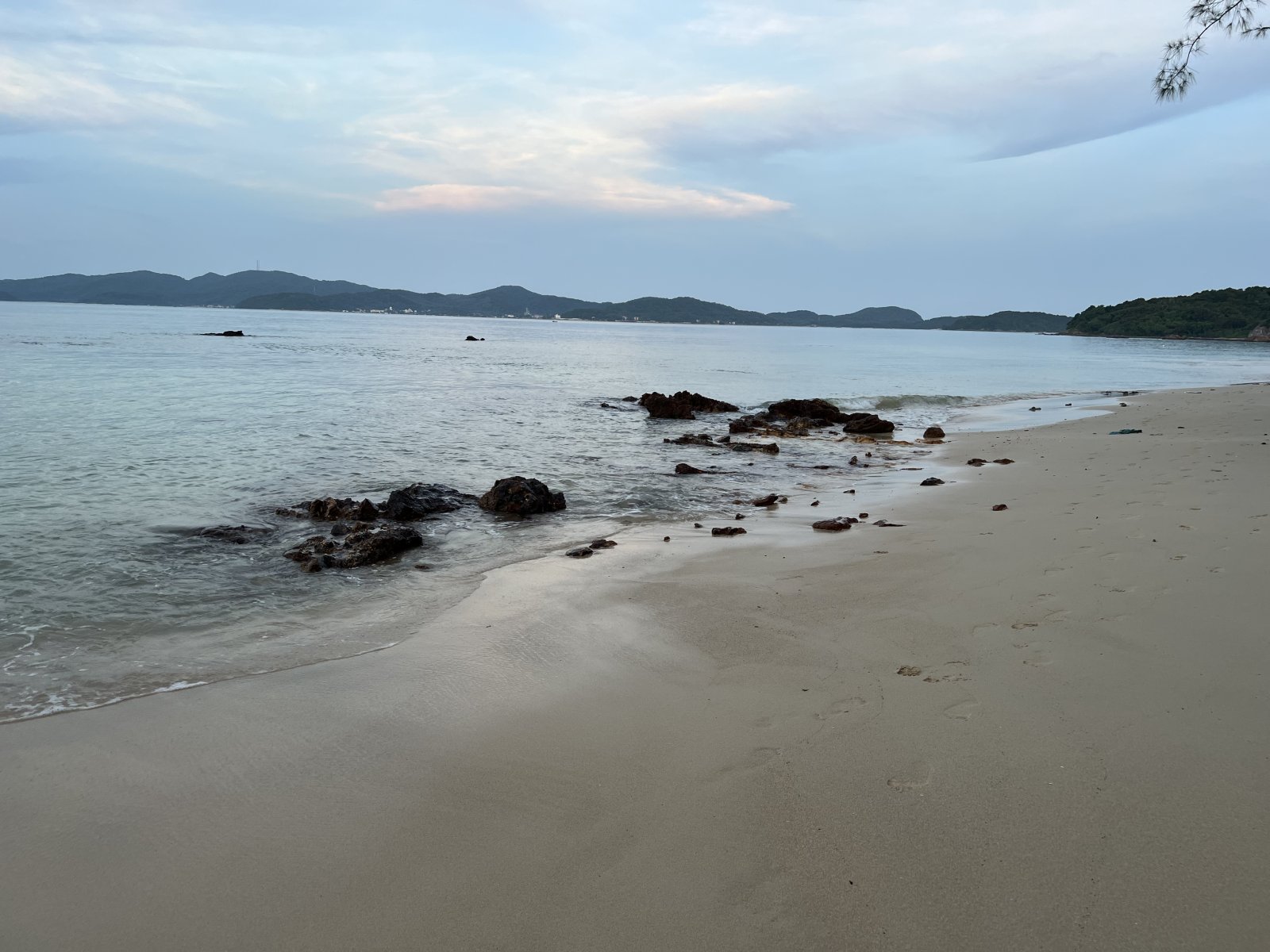
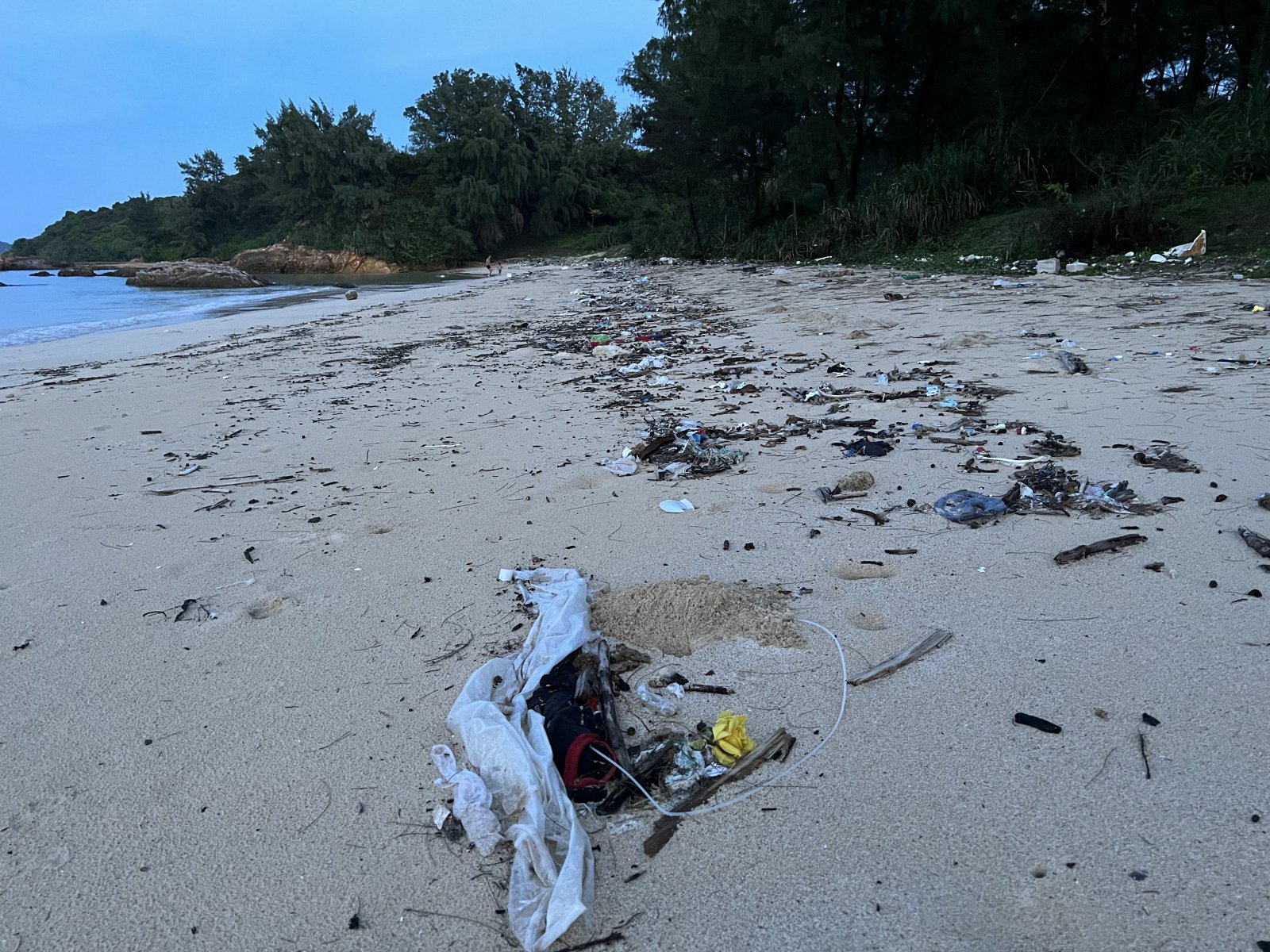 The same beach, viewed left and right
And that's pretty much how I felt while we were there. Despair, sadness, anger, revolt, disappointment, and hopelessness. I got over the self-pity for my own vacation. For better or worse, we were going to leave there. And go home. We had already had many beautiful days with many wonderful landscapes. Our cup of tourism was full.
But I wanted to cry for what remains. For how we arrived. We, humanity. For what we do to this natural wonder. For the ten million tons of plastic we send into the oceans every year. And which I now saw closer than ever. Not on TV, not in pictures on the internet, not in studies and articles. The feeling is much more overwhelming.
Why? How did we, humans, part of nature and the environment, not only become the cause of the problem but also no longer wish to find a solution, no longer care to fix anything?
How come those people, the authorities, the terrace owners, the locals, no one questioned cleaning that beach? It's hard for me to believe that all that garbage accumulated there in a day or two. It probably was brought by the water over several months. At least. So there would have been time for reaction and action. If anyone was interested...
These were the thoughts then, in the heat of the moment.
Now, in hindsight, several months later, when emotions have faded, more optimistic thoughts also come to me. We were still there in the rainy season, in August. When it's not really tourist season. Rains usually bring a lot of garbage to the shore. There's the famous case in Bali a few years ago when authorities collected 30 tons of waste from a beach, and the next day the waves brought double the amount to the same shore, 60 tons of garbage. Maybe it was the same there. Maybe it was useless for anyone to clean the beaches then, in the middle of the rainy season, because the next day, the day after, it would have been just as miserable. And maybe the "strategy" was to wait until the rains ended and only then clean the place…
Wishful thinking? Possibly. But to move forward and not feel that everything I try to do in the direction of sustainability, personally and professionally, is in vain, I sometimes allow such thoughts to flood me.
Otherwise, I would remain stuck in the others: Why didn't these people see the garbage anymore? What if for them, the filth simply ceased to exist? What if over time they became "immunized" to garbage, just because they saw it so often? What if this is what awaits all of us, in fact?
All plastic ever produced is still among us, since it takes between 500 and 1000 years to degrade. And even then, it actually turns into microplastic.
What if this plastic crisis we are experiencing will actually bring us all to this situation? To live among mountains of garbage? Which we no longer notice, which no longer bother us...
How to find a clean island again
Under these conditions, where beach degradation due to waste is a reality, and this, along with climate change itself, will affect tourism, I would dwell a little on one of my vexing questions, namely:
Why did I only find positive reviews about this place? Sure, it's naturally beautiful, but made grotesque by man.
The answer to this question, in fact, holds my lesson regarding postcard-perfect islands. Which might also be useful to you if you ever plan to visit an island.
Perhaps I only found positive reviews simply because I didn't search enough. And I stopped when I found what I actually wanted to find.
What I've learned from this is that I need to apply the rule of three sources to confirm something in life, not just in journalism.
And in this case, the third source - which, if I had discovered it in time, I probably wouldn't have had anything to tell - is an application that lists beaches and also gives them a score, based on several indicators, including cleanliness.
And since this beach, where we felt sorry for ourselves, had a cleanliness rating of 6 out of 10, I concluded that the information is quite credible. And worth considering for our next island getaway.
Well... if I can still find that app.
I didn't save it then, and I can't find it now, from Romania. It probably only had beaches from Vietnam and Google showed it to me then because the GPS detected me there...
Anyway... while searching for the app again, I came across other sites that can be useful if you're planning an idyllic island getaway, especially without the help of an agency, as we tried:
- For Europe, the European Environment Agency's website seems good to consult, as it presents the water quality of over 20,000 beaches.
For the whole globe, the data provided by Our World in Data, about how dirty bathing waters are with all sorts of litter, also seems interesting.
Something similar to the app I can't find now seems to be this one, with information on 10,000 beaches worldwide.
And the website 1001beach also seems worth considering.
Because, of course, many brave souls appear after the war. And I found all this after the deed.
But you get the idea, don't rely only on tourism websites and blogs, as I did, because they can contain unmarked paid articles (this is why it's important to know when content is paid) or simply very old ones, which don't have a date and we can't tell that they no longer correspond to reality.
So if I were to draw a conclusion, before choosing the perfect island to visit in the future, it might not be a bad idea to search for three different categories of sources:
- Tourism websites
As authentic and current blogs as possible
Platforms with the most updated reviews
If you don't want to end up like us!
Although, between us, many of the most memorable memories I've gathered so far are not wrapped only in fluff; quite the contrary. They contain many moments of discomfort, despair, non-acceptance, denial. Before becoming delightful. But that's another topic altogether…