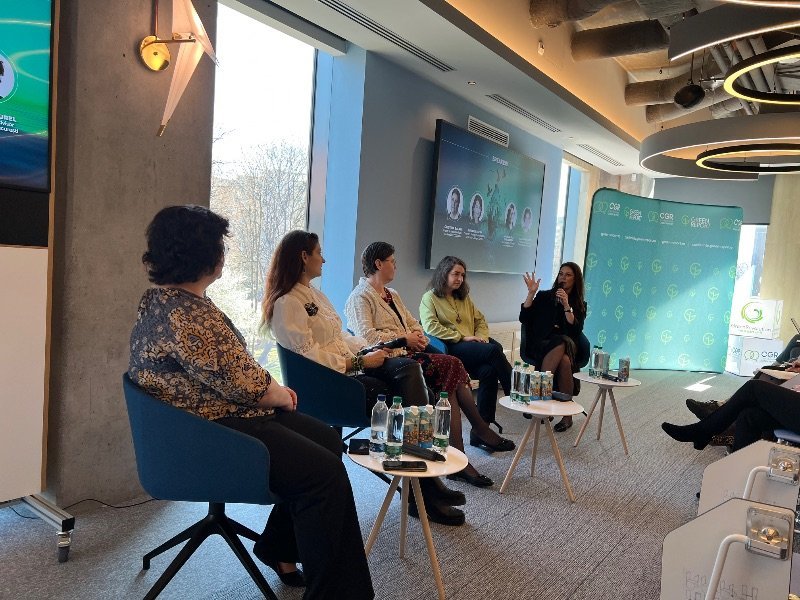
Sustainability Event with Experts
The beginning of the year was filled with commotion among professionals dealing with sustainability, whether consultants, auditors, or company directors involved in the reporting process. The reason? The package of laws called Omnibus, through which the European Commission proposed to relax sustainability reporting to help companies become more competitive.
Although all those working in the field agree that often sustainability reporting itself has meant more paper-shuffling between offices than a real transformation of companies, there are also fears regarding the effects of this legislative relaxation, which could slow down all efforts made so far and, implicitly, the transition to a greener, more sustainable economy, with fewer carbon emissions.
What the experts say
What would the entry into force of the Omnibus package in its current form mean, whether for good or bad, we asked Alina Vasile-Floroaie, Board of Advisors member eEco.ro, a consultant specialized in sustainability strategy and founder of The Climate School.
Here is her opinion:
“The Omnibus proposal comes with the clear intention of reducing the administrative burden for companies, especially SMEs—and that, in principle, is a good thing. It is a recognition of the need for proportionality and feasibility in applying sustainability regulations, which can become a competitive advantage, not just a bureaucratic obligation.
However, the moment chosen for this legislative exercise created a lot of uncertainty. Many companies were already in full preparation, in a relatively unstable economic and political context. This reopening can demotivate some organizations and risks slowing down progress.
In conclusion: Yes, it’s good that it's simplifying. The initial framework was very complex. But we must be careful not to lose sight of the bigger goal: economic transformation and increasing resilience in the face of climate and social crises.”
Luminița Roșca, General Director Stratos, who has also closely followed the topic, emphasizes this uncertainty that comes with the Omnibus proposal, considering that “international financial audit and accounting standardization organizations have already developed standards to align the accounting profession with sustainability principles, and banks and investment funds have already built risk and decision models based on CSRD reporting."
And she also draws attention to the mistrust generated by this change:
“The initial idea of simplifying reporting, reducing the ‘bureaucratic burden’ for SMEs, using simplified standards, is a good idea, especially for the first year of reporting. The fact that 25% of the requested data points are being eliminated—indicators such as how salaries and bonuses are linked to ESG objectives, mapping the entire supply chain, the exact volume of water used in production—is understandable; it might be too much for a first exercise.
The idea is, however, that better data is needed, not necessarily less. When I say better, it means well-documented, with good traceability, which, yes, can be a challenge, but it is necessary because, following the principle of ‘you cannot manage what you do not measure,’ companies can make incorrect decisions, losing money, image, and clients if they start from incorrect data.
The problem I see with this major change is, besides the current uncertainty, the mistrust generated by the regulatory authority. How can I continue to apply a law when it can change significantly in a short period? I remind you that the CSRD directive was published in December 2022 and the reporting standards in December 2023.”
Nevertheless, relaxing reporting does not mean that sustainability is over, as Cristina Bălan, sustainability expert, co-founder CO2Later, very well stated at the Green Report conference " CSRD & Taxonomy, from theory to practice":
“It’s a trick. It’s not deregulation, but one less law. Because many of the requirements in the package of laws are found anyway in other laws, other directives. Whether we are talking about Waste, Governance, or the Social Area – where we have specific legislation. So don’t think that you’re done with reporting! Don’t fall for the trick! You still have to collect data for different institutions, ITM, Ministry of Labor, Environment Fund, etc. The Digital Passport is also coming soon...”
Also present at the same conference, Roxana Suciu, Energy, Sustainability & Climate Change Director at KPMG, says that the eventual two-year postponement of regulations for smaller companies would still be a positive thing:
“Sustainability is good business sense; it’s not something we do for reports. But there’s also a good part in the proposal to postpone regulation for smaller companies. A so-called STOP allows for better preparation of specialists.”
What is changing
Yet what is the big change? What relaxations are we talking about? The legislative proposals published by the European Commission on February 26, 2025, indeed bring four major changes to the current legislation on sustainable development.
1. CSRD Reporting. 80% of companies would be exempted from sustainability reporting. 2. Taxonomy. 70% of the requested data would no longer be mandatory. 3. Sustainability Due Diligence (CSDDD). Reporting requirements would remain only for direct business partners instead of the entire value chain. 4. Carbon Border Adjustment Mechanism (CBAM). 90% of companies would be exempt from taxes. Those importing under 50 tons per year of steel and iron, cement, aluminum, fertilizers, hydrogen, and electricity. Among all four changes, the biggest concern is the first one, regarding the change in reporting.
Currently, in Romania, companies that meet two of the following three criteria are obliged to prepare a sustainability report for 2025, with publication in 2026: - over 50 employees - turnover over 35 million Lei - total assets over 17.5 million Lei
If the European Commission's proposal comes into force, reporting will remain mandatory only for companies that have: - over 1000 employees - turnover over 50 million Euro - total assets over 25 million Euro
It should be noted that in the first case, concerning the already existing legislation in Romania, we are talking about values in Lei, significantly smaller than the values in Euros in the second case, which refers to a proposed European legislation.
Why is this important? Because after a directive is issued, member countries are obliged to transpose that directive into national legislation but can adapt it according to local context. This is not the case, for example, with European regulations, which apply everywhere, in all countries, exactly as they were issued.
And sustainability reporting is the perfect example to illustrate this adaptability. The CSRD directive sets mandatory thresholds of 50 million euros for turnover and 25 million euros for assets. However, Romanian legislation, Ministry of Finance Order 85/2024, which transposed this directive, stipulated much lower thresholds, specifically those mentioned above: a turnover of 7 million euros (35 million lei) and assets of 3.5 million euros (17.5 million lei).
Why? Probably because in Romania, we do not have such large companies, and a transposition that would have strictly followed the values in the directive would have resulted in a law practically made for only a few companies.
Returning to the relevance of this clarification, two aspects are worth noting:
1. The Commission's proposal is not yet a directive. It is a proposal. This proposal will then go to the European Council and the European Parliament; after consensus, the final version will be voted, and only then will that version become a mandatory directive for member countries.
2. Even if the current proposal is maintained and becomes a directive, the directive will then have to be transposed into a national law, which may be slightly different from the initial directive. As we have shown above, this happened with the transposition of the CSRD.
What companies need to do
“So what do we do now? Do we continue reporting or pause?” These are the questions most frequently received by consultants from companies in recent weeks. And rightly so.
In this context of uncertainty, where we do not know what the final form of the directive will look like, let alone the final form of the Romanian law that will transpose the directive, the unanimous recommendation from all the specialists we spoke with is:
“Keep going!”
This recommendation applies to all companies, even those with fewer than 1,000 employees and a turnover under 50 million euros.
For companies that have already started the reporting process, Alina Vasile-Floroaie has a simple message:
“Continue! In most cases I know, there are already budgets, dedicated people, and a clear commitment from leadership. Regardless of the final form of the regulations, you will be better prepared – not just for reporting, but also for relationships with investors, clients, employees, and especially for risk management.”
But for companies that have not yet started the process? But intended to start reporting this year?
“For them, it’s an opportunity to start in a more accessible and realistic way. The voluntary reporting option for SMEs (VSME) is a good starting point. Begin with relevant data, monitor legislative developments, and build gradually. ESG remains a useful exercise and a healthy business practice.” (Alina Vasile-Floroaie, consultant)
Autonom, a company that has had fewer than 500 employees in recent years, is a concrete example of a company that was not obliged to report until now but understood the benefits and reported voluntarily three times. And it will continue to do so and publish sustainability reports, regardless of how the European directive turns out.
Magdalena Caramilea, the company's sustainability director, explained at the same Green Report conference that management saw the value of these reports:
“It’s a fabulous learning exercise. How do we shift the paradigm from a chore to a business tool? This is the challenge.”
Thus, despite the uncertainty and legitimate questions that almost all companies are asking, the trend does not seem to be one of abandonment.
Alina Vasile-Floroaie: “Not only do they not stop the process, but they focus on introducing ESG KPIs in each department, proving that they have understood not only the advantages of reporting but also of transforming the business model and transitioning to sustainable practices.”
Roxana Suciu from KPMG also confirms that none of her clients have withdrawn from the reporting process, but she has encountered three types of attitudes:
“Those who have already allocated budget and resources, I tell them to move forward, because it is a useful exercise.
If you choose to do nothing, in December you might find yourself with a fine.
And there's also the middle category, those who want to wait and see how the new legislation turns out, but who continue with double materiality.”
What is double materiality
Double materiality is the essential step in sustainability reporting because it involves assessing a company's impact from two perspectives:
1. External, impact analysis: How the company's activities affect the environment and society. For example, what carbon emissions a company has, how much it pollutes, how much water it uses, what impact it has on a population or society as a whole, etc.
2. Internal, financial analysis: How sustainability aspects affect the company's financial performance. For example, climate change can influence production costs or supply chains.
“It’s a lens through which you look at the organization to see what impact you are creating, what comes from outside, where you want to go. A moment where everyone sits at the same table.” (Roxana Suciu, KPMG)
”In practice, however, “double materiality is, in fact, triple. Because in addition to impact analysis and financial analysis, you also have a composite analysis.” (Cristina Bălan, CO2later)
“Double Materiality is an in-depth risk management process, a process that any company, even before CSRD, should have undergone.” (Luminita Roșca, Stratos)
Another example of such a strategic tool provided by Luminița Roșca is the calculation of the carbon footprint, which is directly linked to tax and commercial obligations, including carbon taxes, and becomes essential for estimating and managing these costs.
"More and more countries and regions are introducing emissions pricing mechanisms, such as the EU ETS (EU Emissions Trading System) or CBAM (Carbon Border Adjustment Mechanism, a carbon tariff for products imported into the EU).
Through the ETS mechanisms, companies in regulated sectors (energy, heavy industry, aviation, etc.) must accurately monitor emissions and purchase emission allowances for each ton of CO₂ emitted (with prices that can exceed €80–100/tCO₂ and are estimated to double by 2030).
Therefore, accurate footprint calculation leads to the optimization of tax and operational costs.
The EU is discussing extending CBAM to new sectors (e.g., chemicals, plastics, transport) and possible internal carbon taxes for SMEs and companies not yet in the EU ETS." (Luminița Roșca)
And so, a seemingly trivial calculation of CO₂ footprint becomes a strategic planning tool and protection against fiscal risks.
There are examples of companies in the steel production industry that managed to save millions of euros just by doing this calculation. They demonstrated that actual emissions were 1.2 tCO₂/ton of steel and paid the corresponding value, which was lower than the tax that European authorities would have applied ex officio, of 2.3 tCO₂/ton of steel.
What about sustainability
If reporting is relaxed, does it still make sense to talk about sustainability? This might be another fair question from companies.
In short, the answer is YES, it makes sense. The fact that reporting becomes easier does not mean that sustainability becomes optional.
On one hand, many legal provisions remain in force that will continue to oblige companies to be more responsible, provisions related to emissions, waste, packaging, plastic elimination, etc. These overlapped with the CSRD directive, which is being amended, but they do not disappear.
On the other hand, we must not ignore the aspect of competitiveness that comes with applying sustainability principles. We have risks, but also opportunities.
Let's take them one by one.
Legal obligations
“We still have regulations such as:
Clean industrial Deal (which will impose green public procurement and Made in Europe products), Packaging and Packaging Waste Regulation, The Critical Raw Materials Act, Ecodesign, Fair Pay, Women on boards, Deforestation Law, EU Green Claims, new Circular Economy Act, etc.
Moreover, access to finance is increasingly linked to non-financial performance (Green Bonds, EU funds, InvestEU, etc.). Less bureaucracy does not mean less responsibility." (Alina Vasile-Floroaie)
“SFDR – Sustainable Finance Disclosure Regulation is an obligation for investment funds and financial institutions to declare how they integrate ESG risks into decisions. Many companies receive ESG questionnaires from investors because they need to report their exposure to sustainable risks. Thus, even companies not directly covered by CSRD will be ‘scrutinized’ by investors.
Directives and regulations on waste, circular economy, energy efficiency, packaging, plastic tax, sectoral and thematic regulations that impose waste reduction and recycling reporting, energy labels, compliance with efficiency and emissions standards. Many of these obligations are already transposed into national legislation and do not depend on CSRD.
Regulation (EU) 2024/3015 on prohibiting products made with forced labor, published in 2024, which directly takes effect in all EU member states from December 14, 2027, without the need for transposition into national laws.
We must not omit the Digital Product Passport (DPP), the Ecodesign Directive (revised), and the European Green Deal, the strategic framework for climate neutrality by 2050.
In addition, Romanian companies must also consider national strategies and policies that transpose and support the implementation of ESG objectives, such as:
- National Climate Change Strategy 2023–2030, with a vision until 2050 - PNRR, the National Recovery and Resilience Plan, which includes ESG milestones (green energy, circular economy, green digitalization) - National Circular Economy Strategy - Romania’s Energy Strategy 2020–2030, with a 2050 perspective - Decarbonization Law (Law no. 155/2023) and other regulations on industrial emissions" (Luminița Roșca)
Competitiveness. Risks and opportunities
Although the multitude of laws aimed at making the business environment more sustainable may seem overwhelming, there is a major financial advantage that should not be forgotten.
The "Better Business, Better World" report published in 2017 by the Business & Sustainable Development Commission has become a reference for all high-level economic meetings because it shows that achieving the Sustainable Development Goals generates business opportunities of over $12 trillion per year by 2030.
So, here’s how applying sustainability principles goes beyond the legal aspect and becomes a competitive advantage, as Luminița Roșca also emphasizes:
"Voluntary reporting becomes a differentiation by significantly reducing the effort of companies in rapidly adapting to current or future requirements, creating an asset for companies in relation to investors and clients; companies can more easily control and influence the value chain, create or increase company value."
And if you still don't see the opportunity, let's look at the risks!
2024 was one of the most expensive years for the insurance industry since the 2017 hurricanes.
According to a report by the reinsurance company Munich Re, natural disasters in 2024 caused global losses of $320 billion, up a third from the previous year. And about $140 billion of these losses were covered by insurance.
Who pays for all these losses? asks Luminița, who adds:
"The European Central Bank emphasizes that climate change affects macroeconomic indicators such as inflation, economic growth, and financial stability. For example, physical risks, such as floods and droughts, can disrupt economic activities and negatively influence price stability.
Moreover, we need to think about ourselves, as people; we must be aware of the risks we are exposed to, risks related to health, well-being, social safety. It is evident that we are vulnerable, we see it almost every day in the news."
What smaller suppliers should expect
All the experts we spoke with agree that suppliers will continue to be pressured by large companies they deliver products and services to, which have serious sustainability standards. Regardless of whether they are legally obliged or see the advantages mentioned above, related to competitiveness.
However, the biggest pressure comes when small suppliers need money from financial institutions that should lend to them, whether national or international, banks, public funds, European funds, investment funds, etc. And let's not forget public tenders, Cristina Bălan warns us, because there, too, there will be such sustainability requirements to be considered.
What can be asked of suppliers is explained by Alina Vasile-Floroaie from The Climate School:
“Energy and water consumption, waste management; Anti-corruption policies, diversity, fair wages; Social and environmental risks in their own activities or in the value chain.
My recommendation for SMEs: start simply, with what you have. Build a mini-ESG database — even if it's not complete, it will become a competitive advantage in relations with major partners.” Luminița Roșca, Stratos:
“I believe it is easier for a smaller company or one at the beginning of its journey to create a strategy based on sustainability principles than it is for large, conservative companies, shall we say, to ‘reconfigure the path.’
They may still be asked for data regarding:
- emissions by the large companies they supply
climate risk analysis
energy transition
consumption
ESG framework implementation, by banks
compliance with environmental policies (ISO)
compliance with labor law
compliance with environmental law. For example: In packaging, recycled material content
digital passport for certain sectors
repairability (ecodesign)
anti-discrimination measures, equal opportunities
ethical business conduct code, anti-fraud
These are frequently required by international partners or in funded projects.”
Conclusions
The conclusion seems quite evident: reporting should not be seen as an end in itself, but as a business tool. A strategy. Through which you can become aware of both the company's value and how to increase it, as well as business risks.
Those who use these reports simply make better decisions, have more opportunities, and build more resilient organizations that are better prepared for any change that might come, whether related to new legislation, a new consumer trend, or climate change.
Of course, most sustainability leaders know this; their main challenge is to make management understand it too.
The only way to make leadership grasp the importance of sustainable practices is through education, as Mariana Ciurel, from the Bucharest Stock Exchange, highlighted at the Green Report sustainability conference:
“It is an obligation and a responsibility of a company’s Board of Directors to be trained and prepared regarding sustainability.”