Launch of the Scientific Advisory Council for Climate Change
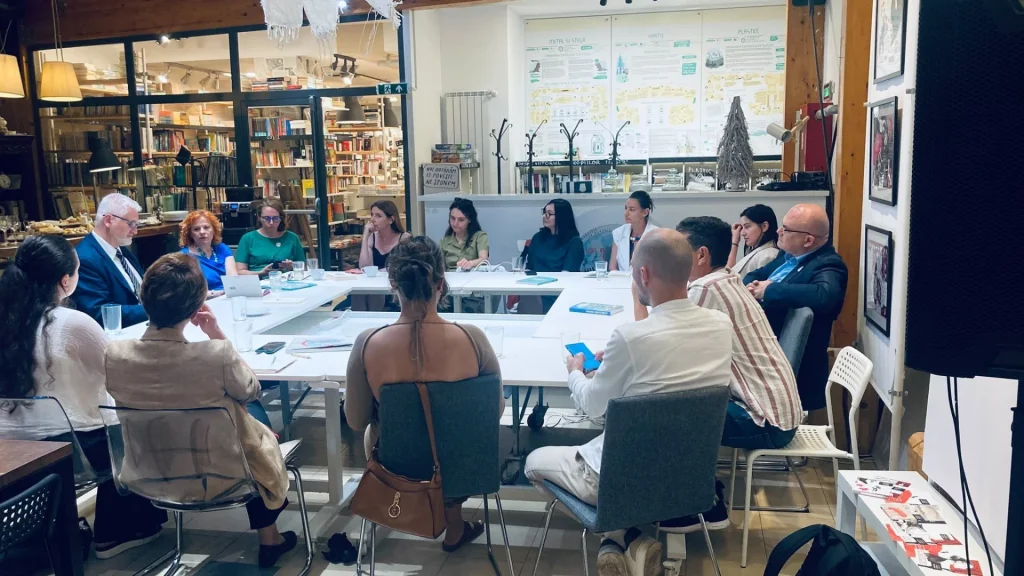
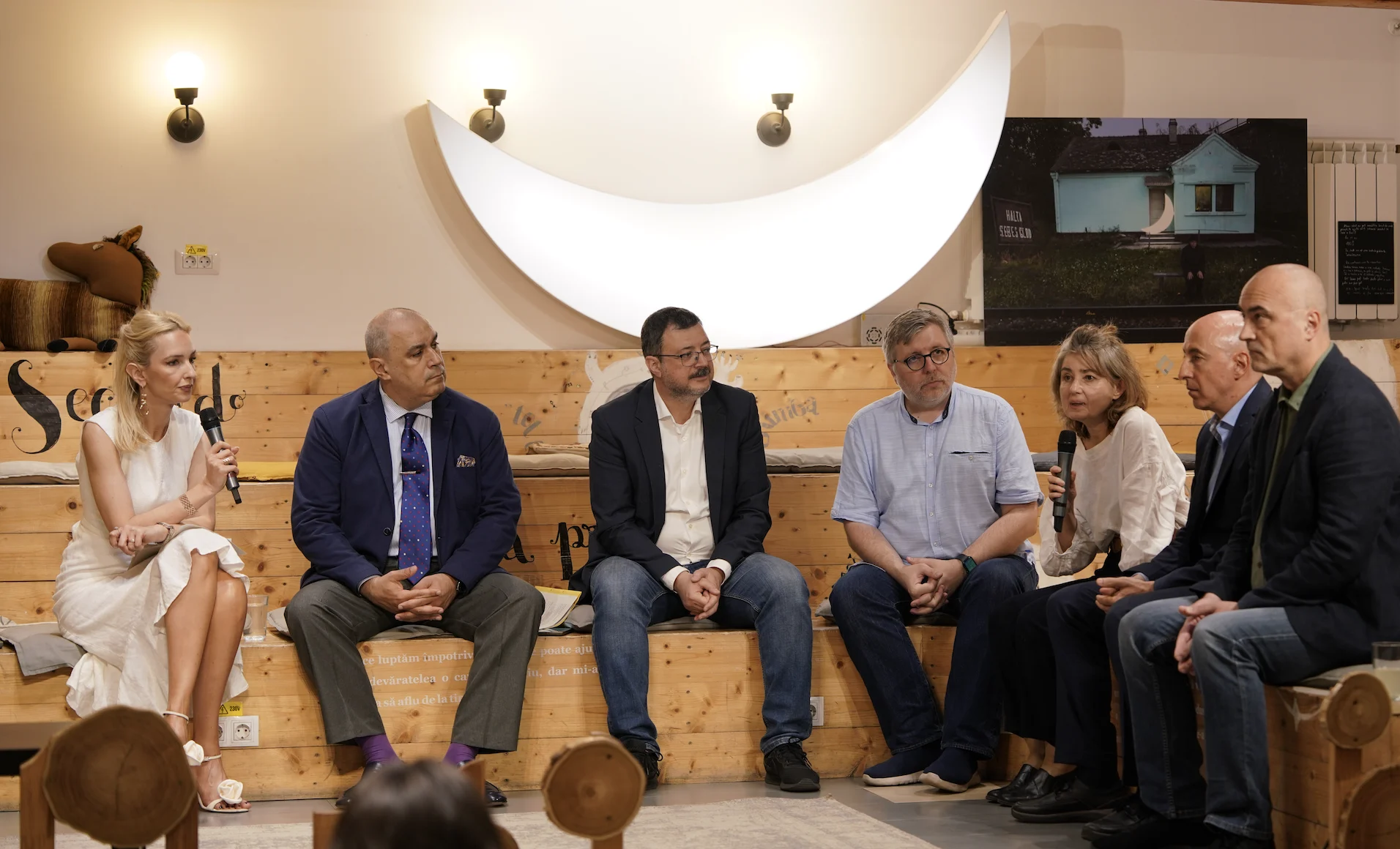
Yesterday, June 3, 2026, the Scientific Advisory Council for Climate Change was launched, an independent body composed of renowned researchers and climate and environmental experts. Its role is to provide scientific expertise to understand climate change, its causes and developments, but especially its associated impacts and risks. The Council's analyses and recommendations will serve as scientifically documented sources in the adoption of public policies for mitigating and adapting to climate change.
Two ambassadors of the European Climate Pact (Adina-Eliza Croitoru and Sorin Cheval) are part of the Council, and the launch took place at Seneca Anticafe, a partner of the Pact.
The Council brings together researchers and experts in climatology, meteorology, agriculture, energy policies, medical anthropology, and biodiversity: Dr. Mihai Adamescu, Dr. Bogdan Antonescu, Dr. Gabriel Bădescu, Dr. Mihaela Caian, Dr. Mihnea Cătuți, Dr. Sorin Cheval, Prof. Dr. Adina-Eliza Croitoru, Prof. Dr. Mihai Dima, Dr. Radu Dudău, Dr. Monica Ioniță, and Dr. Valentin-Veron Toma.
Over time, Council members have participated in the national reports State of the Climate, which confirm with precise measurements what we all have observed lately, namely the increasingly visible effects of climate change: more frequent and intense heatwaves, prolonged drought periods, extreme weather events, and ecosystem degradation.
The Council's first document, presented at yesterday's launch, contains public policy recommendations regarding city preparedness, considering that in urban areas of Romania, the average summer temperature has increased by up to 2.1°C compared to the 1961–1990 period, and the number of days with intense thermal stress has doubled or tripled in certain cities.
Climate change is a cross-disciplinary field, both in terms of its causes and the areas already massively affected (e.g., agriculture, water resources, public health, biodiversity, energy and transport infrastructure, construction, tourism, etc.). This complexity makes it difficult to fully track and understand. Therefore, such a body, which brings scientific authority to the "public debate table," will help the entire society advance towards a level of understanding that allows for effective action. This level of understanding can be achieved through close collaboration between researchers, decision-makers, the business community, civil society organizations, educational entities, and, of course, media institutions. Details here: https://www.stareaclimei.ro/consiliu
The European Climate Pact is a framework for climate awareness and action for European citizens, aiming to transform the European Union into a modern, competitive, and resource-efficient economy, where:
- we achieve net-zero greenhouse gas emissions by 2050;
- economic growth is decoupled from resource use;
- no person and no place is left behind.
More about the European Climate Pact: https://climate-pact.europa.eu/index_en
The Secretariat of the European Climate Pact is coordinated at the European level by the Directorate-General for Climate Action of the European Commission and coordinated in Romania by REPER21. The activities of the European Climate Pact are communicated in Romania by DC Communication.
Additional details: ro@euclimatepact.eu