Effects of Climate Change
In collaboration with Pro Tv Digital, we have launched a new show dedicated to sustainability. It's called PRO VERDE and airs every Friday on stirileprotv.ro, protv.ro, and Voyo.
And since sustainability or sustainable development is, in fact, the solution to the bigger problem called climate change, we dedicated the first edition of the show precisely to this topic: climate change and global warming. Because before we can start talking about solutions, we must first understand the problem.
What is the difference between the two concepts, climate change and global warming;
How Romania will look in 10 years from a climate perspective;
What scenarios climatologists are considering;
What to expect, how to adapt;
What is and what is not true about global warming,
We sought answers to all these questions with Bogdan Antonescu, a researcher at the National Institute for Earth Physics, where he studies atmospheric physics and climate change.
And from him, we learned that **global warming is the phenomenon that leads to climate change**.
And that throughout Earth's history, these climate changes had only natural causes, such as variations in greenhouse gas concentrations from volcanic activity, the Earth's movement around the Sun, etc. What is different now is that the climate changes we are witnessing today are human-made.
"Now we have a change that has been occurring for a little over 100 years, and the increase is sudden. We know very clearly that we have contributed to this change. It's true; it adds to natural changes," says Bogdan Antonescu.
The impact of global warming in Romania
Perhaps we don't realize it, but a seemingly insignificant 1.5-degree temperature increase leads to major changes and disturbances in the atmosphere. For Romania, specialists are considering several scenarios.
Bogdan Antonescu: "The simplest thing is to expect more heat waves. Because this is the clearest consequence, both from a scientific perspective and from daily life. And it's clear that this trend of the global average temperature will continue to rise.
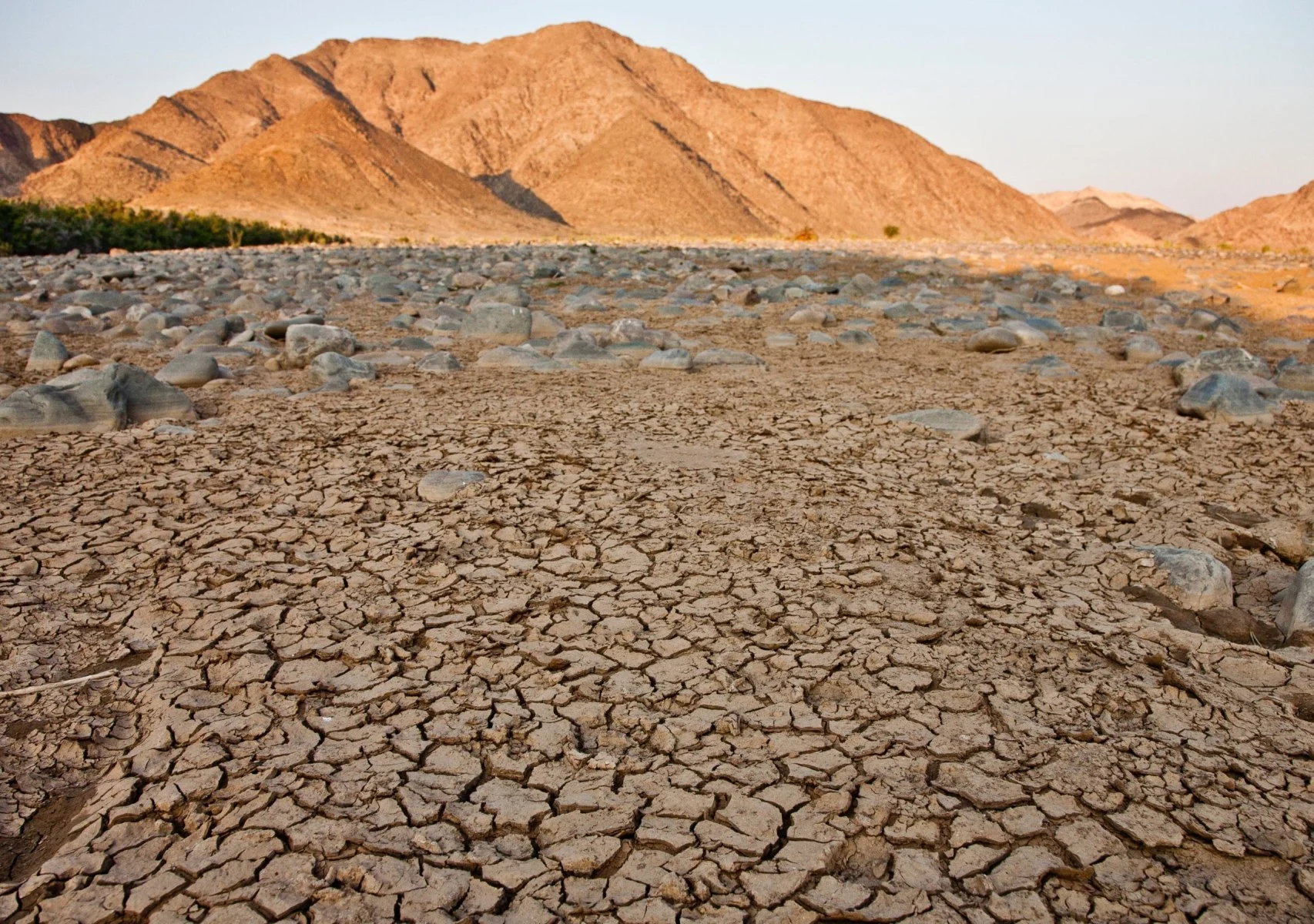
(...) Then there are changes in precipitation patterns. There are studies at the European level that divide Romania into two zones: the southern part, with less precipitation, and the northern part, with more precipitation. This means that in the south, we will more often have conditions for drought, and in the north, rapid floods."
Physical problems. Mortality increases
We, humans, will fully feel the atmospheric disturbances. Especially those living in cities. And especially those already suffering from certain chronic diseases, such as those related to heart conditions or blood pressure.
"There will be an impact on daily life. For example, mortality caused by rising temperatures, by heat waves, will increase. And these heat waves, in turn, are greatly exacerbated in urban areas.
And if we consider that the urban population tends to grow, then it is clear that the impact will be very significant in the future, even solely from heat waves.
Then, drought and rapid floods have a direct impact, for example, on agriculture. And, again, it's a pretty big problem: you change the temperature regime in a certain region, and then you can have an impact on biodiversity. You have animals or plants that are not accustomed to that range of values that we are now changing due to climate change," explained researcher Bogdan Antonescu.
Psychological problems. Suicide rates increase
Prolonged heat over several days - which is what heat waves mean - has effects not only on physical health but also on mental health. An aspect little studied until now, the connection between rising temperatures and the alteration of psychological well-being, is beginning to be examined more and more closely by researchers. And the results indicate a direct link between heat waves and various mental health problems.
Bogdan Antonescu: "There were studies before that raised this issue - higher temperatures lead to increased aggression. But now they are strictly linked to climate change.
There are studies, for example, for the United States, that link increased temperature and the occurrence of heat waves to an increase in suicide rates, for example. And from there, all this mental health aspect, which is somewhat ignored and doesn't initially seem related to climate change."
Myths about climate change
In each edition of the PRO VERDE show, I aimed to bring up some myths widespread among Romanians and beyond. In this case, about climate change and global warming.
Such as, for example:
Myth no. 1: Carbon dioxide is a gas normally present in the atmosphere. It is essential for life on Earth. So it cannot harm us. It cannot be toxic. We don't need to try to get rid of it.
Bogdan Antonescu: "Greenhouse gases - or the greenhouse effect itself - is a beneficial thing, as long as you maintain a balance in the atmosphere. (..) Now the increase is accelerated. This is important to point out because increases in carbon dioxide levels, for example, have occurred before throughout Earth's history."
Myth no. 2: We cannot say we are experiencing global warming when last year we had a record of -32 degrees in Maramureș.
Bogdan Antonescu: "If there is global warming, it doesn't mean we'll be walking around in shorts all year. Here it's about the difference between *weather* and *climate*.
Weather is what we experience in our daily lives, and climate is, in a way, what we experience in our daily lives, averaged over a very long term. When we have an event like this, a period of low temperatures, a blizzard, these things are about weather.
If we have climate change, if the global average temperature increases, it doesn't mean we won't have winter weather anymore. It's true, the frequency of extreme winter phenomena will decrease, but when they do occur, they seem to be much more intense than at present."
Myth no. 3: The climate is always changing. It has changed before. So what we are experiencing now, these climate changes, are part of a natural, normal cycle of the planet. There's no reason to worry.
Myth no. 4: There is no consensus. Why do even scientists still contradict each other on this subject? Doesn't that mean things are still unclear?
Myth no. 5: Climatologists cannot estimate what the climate will be like in 20 years, since the weather forecast for the coming week is uncertain.
You can watch the complete answers to all the myths and the full show in the video.