Sustainability Awareness Program
In many large companies, sustainability has already become part of the strategy. There are objectives, internal policies, reports, plans to reduce environmental impact, and increasingly, public commitments related to the green transition.
Yet, for many employees, terms frequently used in the ESG area - decarbonization, circular economy, or carbon footprint - remain abstract and difficult to connect to everyday reality.
ESG stands for Environmental, Social, and Governance, the main standards by which an organization's impact on the environment and society can be measured.
This is where the idea for the "What’s in it for me" program originated, launched by the Sustainable Solutions Association and implemented, in a first phase, together with CEC Bank, in a partnership lasting 12 months.
The program aims to transform sustainability from an abstract and technical concept into an accessible, relevant, and easy-to-understand topic for employees, using microlearning tools, storytelling, and continuous engagement.
How do you translate sustainability into accessible language?
In recent years, as organizations have increasingly invested in sustainability policies, reporting, and climate goals, it has become increasingly clear, in parallel, that the mere existence of a strategy does not automatically guarantee employee engagement.
In a context where people are already constantly exposed to training, procedures, and internal communications, sustainability topics risk being perceived as yet another corporate obligation or a generic message, with no direct connection to their daily activities, at home and at work.
The "What’s in it for me" program tries to function exactly like a translator between companies' sustainability goals and people's everyday experiences, using concrete examples, familiar contexts, and accessible language.
From "we have to do" to "I understand why it matters"
It's pointless to have everything perfectly documented if the people who need to implement those measures don't understand why. Or they understand why theoretically, but intrinsically have no drive to do something that's not necessarily in their job description.
Thus, the constant concern of the Sustainable Solutions Association, since it began its activity in sustainable development, has been to find formulas, to seek the appropriate language, that does more than explain the theory. Everyone knows the theory. We are in a climate crisis. Companies have to do something about it too.
Through this program, the association tries rather to reach people's hearts. Their conscience. To raise more awareness than to inform or educate.
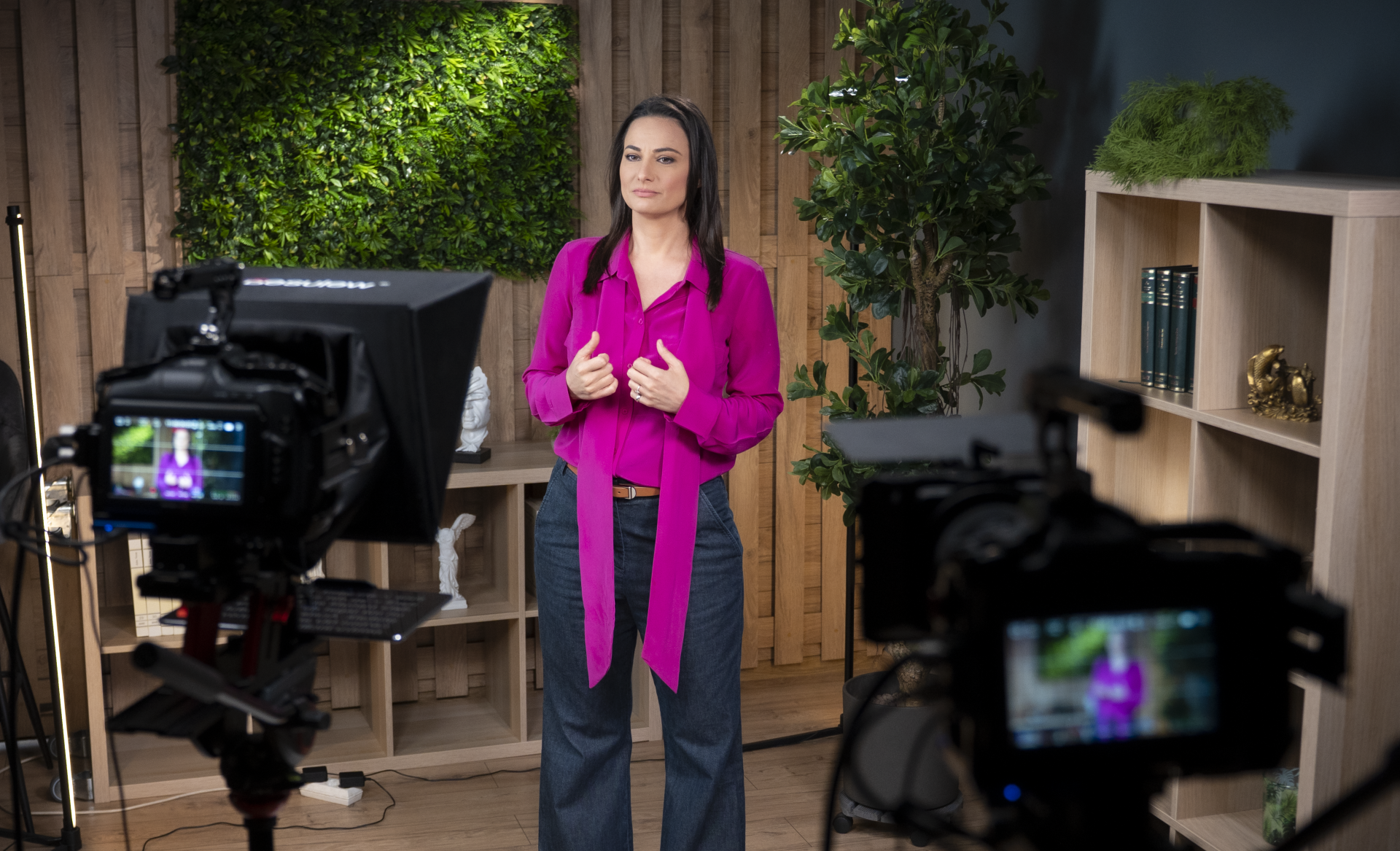
The program does not function as a classic, one-time training but is built as a long-term learning and engagement process. Participants periodically receive video episodes, reflection exercises, and invitations to interactive sessions, all constructed in accessible language and close to employees' usual experiences.
The topics covered range from climate change and responsible consumption to energy, mobility, biodiversity, or circular economy.
The program also includes a gamification and internal recognition component.
The goal is not just to convey information but to build a more personal and conscious relationship with sustainability topics.
Behavior change doesn't happen overnight
One of the most unrealistic expectations in sustainability projects I've seen is that of quick results, after a single internal campaign or one training session.
After laying the theoretical foundations - which yes, are important, so everyone speaks the same language and the information we work with is science-based, not myth-based - the biggest challenge is to transform this information into personal motivation and behavior change. Ideally, one that also lasts over time.
For this reason, the program is built over a year and uses constant interactions instead of a one-time intervention.
Those who work in sustainability know that behavior change doesn't come overnight. Sometimes you manage to plant an idea that stays with people and makes them act differently later. Other times, not. But real change needs time, consistency, and repeated exposure.
CEC Bank: real change cannot happen without people's involvement
CEC Bank is the first organization to implement the program and says the initiative is part of a broader approach regarding responsibility and the transition to a more sustainable economy.
"Companies have an important role in supporting the transition to a more sustainable economy, but real change cannot happen without people's involvement. By implementing the 'What’s in it for me' program, we aim to contribute to the development of an organizational culture based on responsibility, awareness, and involvement, providing employees with accessible tools to better understand the impact of sustainability on professional activities and daily life," stated Cătălina Roman, Identity & Strategic Communication Director at CEC Bank.
The program can be adapted and implemented in organizations from different fields, depending on the needs and maturity level of each company regarding sustainability and internal engagement.