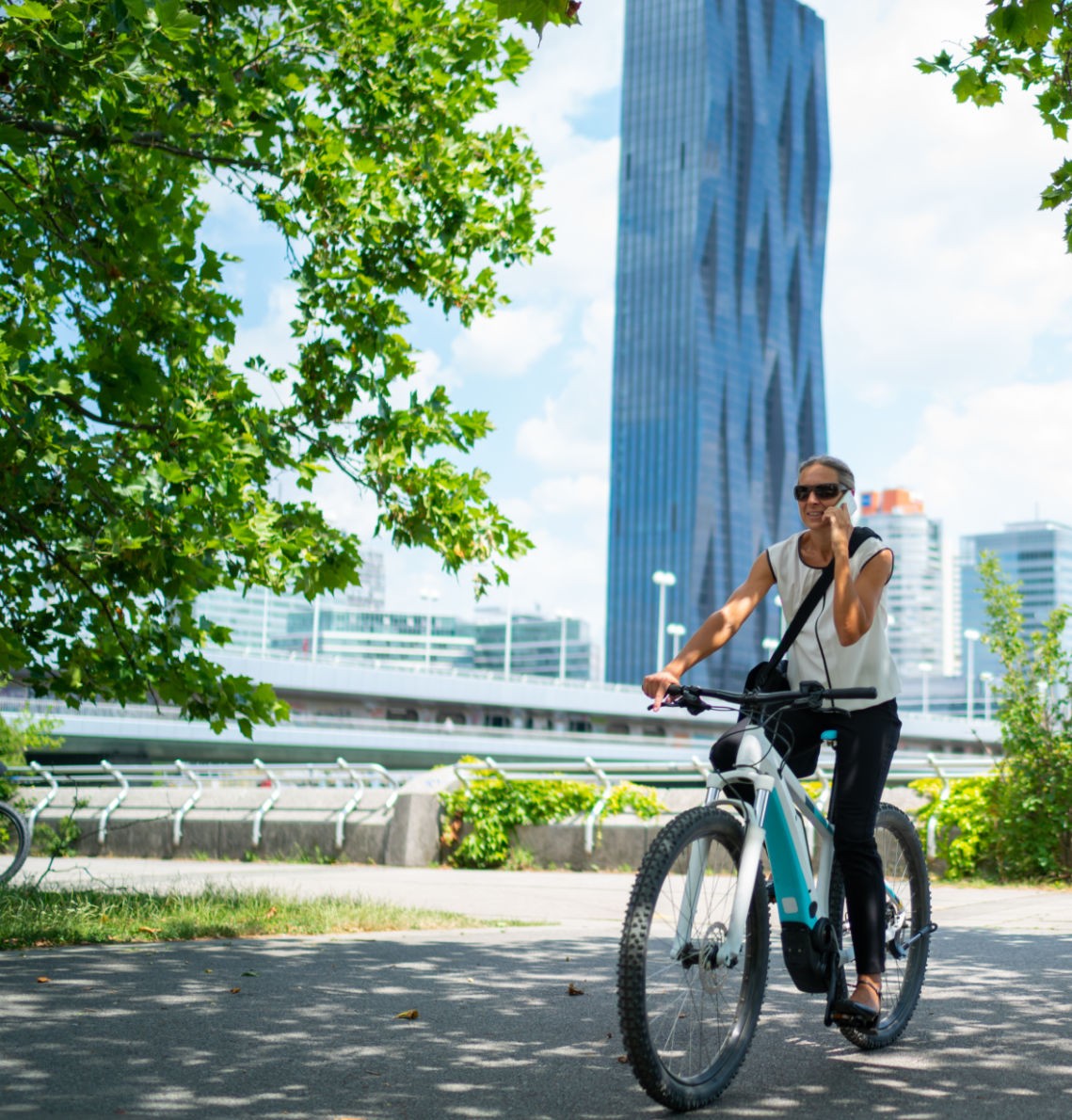
People don't really drive cars anymore. Many don't even have cars in front of their houses. Not because they don't have money. But they don't need them anymore. They walk a lot. Everything is close by. Shops with fresh, locally grown, chemical-free vegetables and fruits, healthy, unpackaged food, organic detergents and cosmetics not tested on animals, clothes made from natural fibers, manufactured without exploiting workers, furniture and decorations produced without deforestation.
For long distances, we use public transport. Decent. Electric. Hydrogen-powered. Or with any other technology that no longer uses petrol and diesel. Fossil fuels.
We no longer pay for electricity. We use the energy of the sun, wind, and water.
There are many spaces that help community development. Green spaces. Trees, plants, colorful and fragrant flowers. People with the same values can meet and exchange ideas on how to live a simpler, yet richer life, with fewer resources consumed and more free time. Where sustainability can be discussed without being put on the spot, blamed, or judged for doing too little, too late, or too slowly.
On the streets, we no longer see advertisements everywhere; no one is trying to convince us that we need product X to be more beautiful, happier, or calmer.
Marketing specialists, journalists, use their power and talent to try to convince people to change their lifestyle and eat healthier, consume fewer products, and experience more.
Leaders in organizations are also united in a sustainable business community, partner companies, suppliers, NGOs, research institutions. They participate in events, conferences, and meetings on environmental and social responsibility themes. They feel they are all pulling in the same direction.
There is a carbon tax, and those who offer eco-friendly products and services are rewarded. By the state and by consumers.
There are CSR projects with measurable impact, good consultants to help companies starting out, and effective tools to create a sustainable culture within experienced companies. There are plenty of good practice examples. We learn from each other. We collaborate.
What is eEco
eECO.ro is a platform created for individuals and companies who want to be part of this world. To be more responsible. With themselves, with people, and with nature. Who want to reduce their carbon footprint. To contribute as little as possible to pollution and destruction. And as much as possible to change. Towards a new lifestyle, towards a new way of doing business. Circular. Ecological.