KLM Airplane on Runway
The practice of greenwashing, through which companies try to appear more sustainable than they are, has become a widespread phenomenon. A study by the European Commission in 2020 shows that 53% of environmental claims were found to be vague, misleading, or unsubstantiated, and 40% were truly unfounded. So, they had no connection to reality.
That's why the Commission proposed a directive to penalize such claims, with enormous fines for large companies.
However, even before the European directive comes into effect, there are other ways companies can be held accountable for making misleading sustainability claims, such as consumer protection laws.
A famous greenwashing lawsuit, the first in the aviation industry, is related to KLM's Fly Responsibly campaign. You can see the advertisement in the video interview.
Vasile Lazăr, sustainability consultant: "There, we're dealing with greenwashing through offsetting. The customer was led to believe that if they buy an airplane ticket along with some carbon credits that offset their emissions, their flight would genuinely be neutral. In reality, it has been proven – at least so far – that those carbon credits were actually used by the company to purchase biofuel, not to offset actual emissions."
The discussion is still pending in court, no final decision has been made, but the company has already withdrawn the advertisement from the media, following numerous complaints from people.
Offsetting the carbon footprint through certificates
The KLM case also highlights the practice of several airlines in recent years, which offer the option to pay extra money to offset the carbon footprint for a particular flight when purchasing an airplane ticket. However, these certificates are controversial because their impact is difficult to quantify.
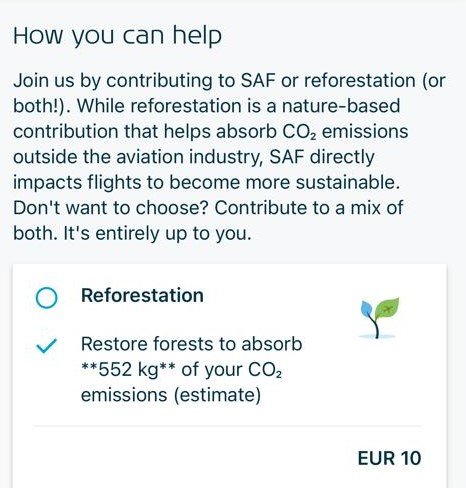
Opponents of these carbon credits say they were conceived more as a counter-offensive to the global "flight-shame" movement, which shames people for choosing airplanes for short flights and flying too often in general. This is considering that flights are responsible for at least 3% of the global warming we are experiencing.
In other words, carbon credits would primarily make people feel less guilty and continue to fly at least as often, rather than truly offsetting the carbon emissions of those flights and thus contributing to the decarbonization of the aviation industry.
The KLM campaign is the second case study I've conducted with sustainability consultant Vasile Lazăr, out of a total of six concrete greenwashing examples. The first case study was about the Kaufland Zero Waste campaign. The rest will be published in the coming days here on eEco, followed by the full interview.
The purpose of this endeavor is to explain the phenomenon of greenwashing as clearly as possible, so that companies no longer engage in it and risk losing their reputation and incurring fines, and so that people are no longer misled.