NET ZERO Goal at Rossmann Romania
What is NET ZERO
The NET ZERO target is an important strategy for combating global warming. And since global warming is caused by the excessive amount of greenhouse gases that humanity emits into the atmosphere, such as carbon dioxide, but not only, scientists have concluded that the solution is to balance this amount to zero. That is, to measure all the CO2 we send into the air and then find a way to absorb exactly the same amount. Zero sum. What you put in, you take out. This is what the "net zero" concept refers to.
For states, this objective is mandatory. Governments worldwide have committed to achieving NET ZERO by 2050, as part of the Paris Agreement.
For companies, this objective is, most often, voluntary. Many large companies set such targets as part of their sustainability strategies. These strategies, however, have already become mandatory for many firms and will gradually become mandatory for even more. This probably explains why 37% of the world's largest companies have such targets by 2050, according to a study by Accenture.
Obviously, the largest greenhouse gas emissions come from industry. And there are two main ways industry can achieve the NET ZERO target:
- Reducing emissions
- Offsetting emissions
Reducing emissions is the first and most important step. And it can be done through all sorts of methods, from reducing waste of all kinds, reducing consumption of all kinds, to switching to renewable energy.
If, after taking all emission reduction measures, companies find that a significant amount of greenhouse gases are still being emitted into the atmosphere, directly or through the products and services they use, then they move to step 2: offsetting. This should therefore only refer to unavoidable emissions.
Carbon footprint offsetting is a sensitive topic, however, because some companies are accused of moving directly to this step or too quickly, before even trying to reduce what they can. And then the basic problem is not actually solved. If we continue to emit the same enormous quantities of CO2, we cannot expect to combat climate change.
Offsetting can mean:
- Buying carbon certificates
- Carbon capture
How the carbon market works
The purchase of carbon certificates is also done in two ways: mandatorily, on a regulated market. And voluntarily, on an unregulated market.
Mandatory market - quotas
In Europe, the mandatory market is regulated by the Emissions Trading System or EU ETS. An instrument established by the European Union in 2005 with the aim of helping to achieve CO2 emission reduction targets. An instrument that, in practice, obliges certain companies to hold a permit for each ton of CO2 they emit. Companies must buy these permits through auctions, and the price is influenced by supply and demand.
Specifically, authorities have set a cap on greenhouse gases that large polluters are allowed to emit annually. And emission allowances are allocated for approximately ten thousand factories in the energy sector, manufacturing industry, and aircraft operators flying in the EU, Switzerland, and the United Kingdom.
If, after measuring its carbon footprint, a company finds that it does not have enough allocated quotas, it has two options: reduce its emissions or buy more quotas. Over time, the cap itself decreases, and fewer and fewer quotas are issued, so that the pressure on companies will at some point be sufficient to reduce total emissions.
Voluntary market - credits
The voluntary market involves buying carbon credits or certificates to offset emissions. These credits are essentially generated by other companies, who somehow prove that their projects effectively reduce or absorb greenhouse gases.
Such a purchased certificate practically gives you the right to emit one ton of carbon dioxide. And it is issued for projects such as:
- power plants that have switched from fossil fuels to renewable energy;
- forest protection or reforestation projects
The quality of carbon credits and their effectiveness are also controversial. Being an unregulated market, without clear rules, there are concerns that these credits do not genuinely contribute to combating global warming.
Concrete example
Romcarton & Ambro, part of the Rossmann group, is a leader in the production of paper for corrugated cardboard. And it is one of the companies that has set out to reduce its carbon footprint by 50% by 2030, compared to 2020. So I was curious to find out how things work in practice in Romania. I asked the company's director how they intend to achieve this goal.
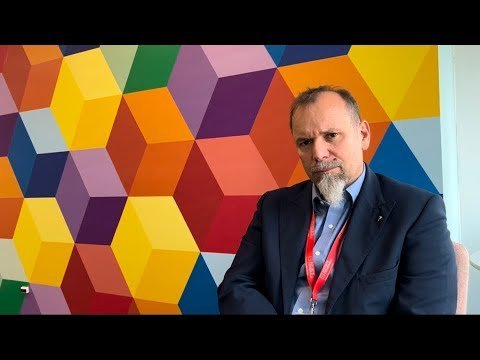
Paul-Henri Kohler, CEO Romcarton Groupe Rossmann: "As large energy consumers and large CO2 emitters, we currently receive some free certificates. At the end of the year, we tally how many CO2 emissions we have emitted and we have to hand back this permit. If we don't have enough, we can buy some permits. If we have too many, we can sell them.
Over time, these permits will decrease. There are already reduction programs for the period 2025-2030 and after 2030. And eventually we will no longer receive these certificates for free, so we are more or less obligated, so as not to pay the carbon tax - which is quite expensive now - 80-85 euros/ton of carbon. We invest to reduce the emissions we produce.
As for types of investments: on the efficiency side, meaning using less energy to make the same product. Then, many investments we can make on the energy side, to switch to green energy, as they say.
Then, we can support carbon capture actions. Carbon sequestration. This can mean natural capture - the best example is forests.
Or industrial capture. There are studies on new technologies that can capture this carbon and then store it."
When to offset
Meaning that compensation. When do you buy certificates? After you've taken all the reduction measures? Is it a matter of ethics? Which is more about volunteering? I asked the CEO of Romcarton Groupe Rossmann.
Here's how Paul-Henri Kohler sees things: "It's simultaneous. We can act directly, we can work to reduce the emissions we generate. And concurrently, we can already join carbon sequestration projects.
For both factories, we have defined a very clear strategy for reducing carbon emissions. There are milestones until 2030, investments we are making, a program we are following, to be able to reduce carbon emissions. And in this program, we are now buying green energy. That is, our energy supplier assures us that the energy it sells us comes from renewable sources."
So these are the reduction measures. But the question was, after taking all these measures and finding that you still have significant quantities to reach the NET ZERO target, what do you do? Do you buy certificates?
Paul-Henri Kohler: "At the moment, in Romania it's not working very well yet. But I think that would be the solution.
We can do this voluntarily, that's what we do in Bucharest. Meaning our energy supplier gives us certificates that the energy comes from renewable sources. But it's voluntary.
Europe seems to be acting quite well. Through this ETS, they will reduce emissions in Europe, but in addition to that, with CBAM (Carbon Border Adjustment Mechanism), they will also force other companies from other countries that want to export to Europe to pay this carbon tax."
CBAM (Carbon Border Adjustment Mechanism)
The Carbon Border Adjustment Mechanism (CBAM) came into force on October 1, 2023, across Europe and obliges companies, including those in Romania, that import certain products from non-EU countries, to report data on the carbon footprint of those products.
In an initial phase, until 2026, the most polluting goods are targeted: cement, iron and steel, aluminum, fertilizers, polymer-based products, hydrogen, or ammonia. Following this transition phase, any importer of any goods from outside the EU will be required to declare the quantity of goods and the associated emissions.
The first report was due by January 31, 2024. However, the European Commission then postponed the obligation by 30 days.