Circular Initiatives in Romania
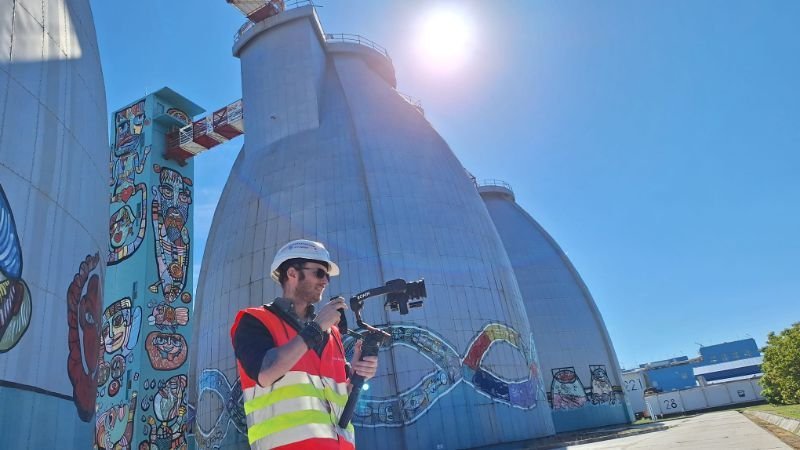
The Sustainable Solutions Association, together with Stratos, continues its information campaign “A Second Life. Circular Economy Models”, a series of video reports that will present good practice examples of transitioning from a linear to a circular business model.
The campaign launches on April 29th and is primarily aimed at the business community. Each episode will feature one or more circularity initiatives implemented within companies, with the goal of inspiring the business sector to transition more quickly and easily to a less polluting business model with the lowest possible negative impact.
This year's edition will include six episodes, which will be broadcast in spring and autumn, on the sustainability platform eEco.ro, the association's main awareness project, as well as on the social media platforms of the project partners.
What's New
The reports will emphasize the idea of competitiveness, given that this year the European Union redefined its strategy for transitioning to a green economy through measures such as the "Omnibus" package, which aimed to simplify administrative requirements to increase companies' competitiveness. However, these measures also raised concerns from some specialists and civil society regarding the possible weakening of sustainability standards and corporate transparency.
"In the second year of the campaign, we are even more determined to show that circular economy practices that significantly activate sustainability are not 'nice to have,' but bring a real competitive advantage.
We believe that a business's relevance should not depend on how strict the regulations are, but on how prepared it is to innovate, optimize, and adapt in a changing economy. The circular economy is one of the most powerful ways to do just that – from eco-design and digitalization to efficiency in resource consumption and waste minimization.
Thus, businesses that choose action become examples of good practices that inspire,"
said Luminița Roșca, General Manager of Stratos.
What is the Circular Economy?
Our economic model is predominantly linear, based on the "Produce-Consume-Discard" principle. This is how most products are used. This translates into enormous amounts of waste, pollution, many resources consumed, and ultimately, the risk for companies of not being able to continue their activity due to lack of resources. Annually, we consume more than the planet can regenerate.
The circular approach involves decoupling economic growth from the use of raw material resources by extending the product lifecycle, whether we are talking about sharing, renting, reusing, repairing, renovating, or recycling items.
Only 1.3% of Romania's economy is circular, the lowest rate in the EU, where the average is 11.8%. However, the European objective is for the entire economy to become circular by 2050, precisely to reduce dependence on resources, combat climate change, stimulate innovation and green jobs, increase economic resilience, and meet global sustainability commitments.
Teodora Ghenciu, President of the Sustainable Solutions Association:
“European institutions that measure the circular economy, such as EUROSTAT or the European Environment Agency, have observed several positive trends in recent years: more and more states have public policies in this direction – including Romania – companies are increasingly focusing on the topic, and the level of public information and even involvement is growing. However, all of this is not reflected in the most important figures: the degree of material circularity. Why? Specialists ask.
We believe that one of the answers lies in the lack of good practice models. Those that have yielded good results. And we set out to fill this gap. To seek out those examples that can be replicated and bring them to the forefront. Whether it's a lot or a little, time will tell. But at least we are building a valuable database, not only for Romania, but even at a European level. If not worldwide.”
Context
The video report campaign "A Second Life" began in 2024 as a pilot project, with a format focused on concrete solutions and local case studies, and has brought into focus businesses, initiatives, and leaders who are transforming how we produce, consume, and conceive resources.
Circularity measures for the sectors with the greatest economic impact were presented in an accessible and original way: Agriculture, Automotive Industry, Construction, Food and Beverages, Packaging, Textiles, Electrical Equipment, Waste, Wastewater. This aligns with how they were described in the Action Plan for the National Strategy on Circular Economy.
With an emphasis on necessary investments, resources used, benefits gained, and challenges encountered, the pilot project was a success.
The campaign garnered over 100,000 organic online views. Specialist media, business events organized by various organizations and embassies have picked up the examples provided by this project and presented them to their business communities.
This showed us that there is interest in this type of communication and that such a project was needed, one that visually answers the question of how we move from theory to practice when we talk about sustainability in general, and circularity in particular.
Therefore, in 2025, the campaign continues with a second edition, with the intention of transforming the project into a benchmark for Romania and beyond.
Who are the initiators of the campaign?
The Sustainable Solutions Association is an environmental NGO created with the aim of raising awareness about climate change among companies, authorities, and citizens, by presenting solutions that inspire action. The main tool used is imagery. Video campaigns conceived by specialists in directing, documentary film, and communication, designed to touch those sensitive points that motivate people to change.
Stratos is an environmental consulting company with over 10 years of experience in the market, which supports and guides Romanian businesses to contribute proactively and responsibly to a sustainable future. The company contributed, as a consultant, to the development of Romania's Circular Economy Strategy and the Action Plan for its implementation.