Sustainability Analysis with Solar Panels
In the EU, 230 different sustainability labels and 100 green energy labels are currently in use. However, half of these labels are questionable because they cannot be proven.
For this reason, on March 22, 2023, the European Commission published a directive proposal to clarify when and how a product or service can be presented as "green," "eco," "bio," "eco-friendly," "natural," etc., as well as penalties for companies that make misleading claims and say they sell or are themselves greener than they actually are.
The directive aims to protect consumers from false advertising. But at the same time, it is designed to help genuinely sustainable companies that make efforts to survive in a market where everyone sells something "green," as well as investors who choose to put money into one company or another.
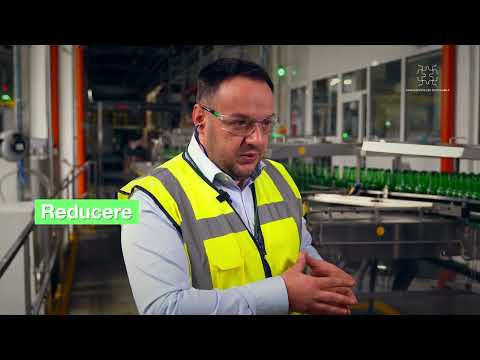
Vasile Lazăr, sustainability consultant: "What is very important to know is that behind this directive lies more the interest from the investor community than from civil society. It's a very interesting thing to observe.
Because investors have been heavily attacked lately for selling green investments that aren't actually that green. That their portfolio contains investments in companies that are partly in this eco-tech area, but at the same time there is a portfolio of large investments in companies from the fossil fuel sector, in energy produced using fossil fuels. And the pressure from pension funds and private investors on lawmakers, their lobbying has become stronger than the lobbying of companies that, according to the taxonomy, would fall into this grey or black area."
The problem with "green" claims is that they are not always overt, as is the case with products offered to consumers, for example. Sometimes, they are hidden in documents that only specialists look at and understand. Such as non-financial reports, which large companies with over 500 employees must produce, and soon also medium-sized companies with over 250 employees.
Vasile Lazăr, sustainability consultant: "Recently, the OMV Petrom sustainability report was published. And in the achievements section for 2022, some photovoltaic power plants, of about 400-something megawatts, were listed. For the uninitiated, this might seem like a fact supported by reality. In fact, it's just a contract signed by the company and Complexul Energetic Oltenia, regarding the intention to build some photovoltaic parks.
The intention is very good, commendable, all our applause. But as long as it's not translated into reality, we're only talking about desires, objectives, plans. When we talk about environmental concerns, we are more interested in action than words."
This is the sixth case study we've done with sustainability consultant Vasile Lazar on greenwashing, a phenomenon that is gaining increasing momentum and has now caught the attention of the European Commission. The Commission concluded that 93% of "green" claims do not hold up. They are too vague, misleading, unfounded, or cannot be supported by evidence.
The first case study was about the Kaufland Zero Waste campaign.
The second case study was about the KLM Fly Responsibly campaign.
The third case study was about the TotalEnergies Net Zero campaign.
The fourth case study was about the partnership between WWF and Coca-Cola, called Together for the Danube.
The fifth case study was about Coca-Cola, sponsor at COP27.
In the coming days, the full interview will also be published here, on eEco, presenting all six examples, as well as other contextual elements.