Wastewater Treatment Plant for Biogas
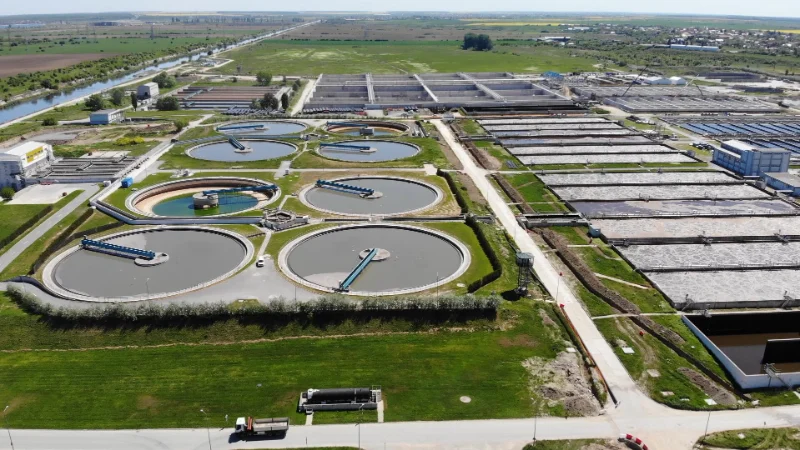
At the Glina wastewater treatment plant, all the water used in Bucharest and several communes in Ilfov arrives. Domestic, industrial, and rainwater. Almost 8 cubic meters of water every second.
As a result of the water treatment process, 300 tons of sludge are produced daily. A waste for many treatment plants in the country is seen here as a resource. Instead of discarding the sludge, Apa Nova Bucharest, part of the Veolia group, recovers it, lets it ferment, and then obtains biogas from it. And because this biogas contains 64% methane, which gives it calorific power, it is burned and actually used as a source of electrical and thermal energy.
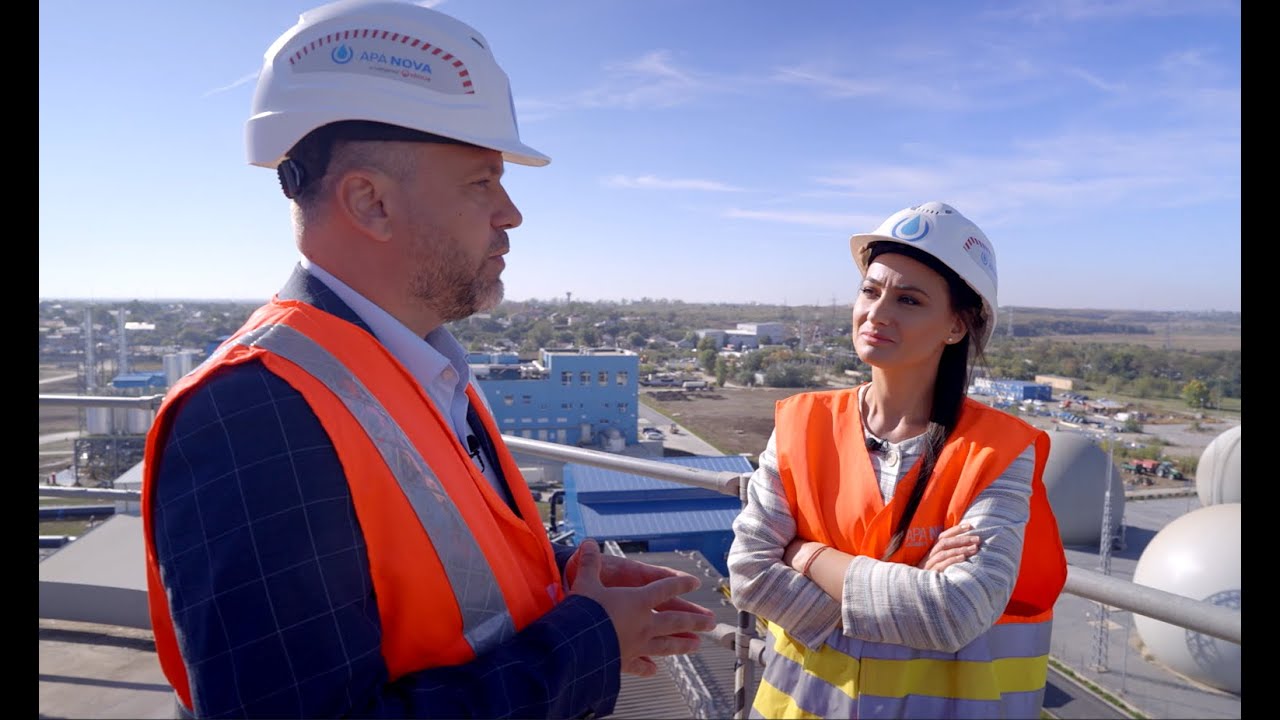
Alex Vasilescu, Director of Wastewater Treatment, Apa Nova/Veolia Romania: "With the help of biogas and its use in the energy production process, the Glina treatment plant is currently the largest producer of green energy in the metropolitan area of the capital. Practically, this means that we are completely independent in terms of ensuring the thermal energy needed for the proper conduct of the processes that take place here at the plant."
Biogas from sludge
Since 2011, when Veolia took over the operation of the Glina treatment plant, the company's main objective has been to become energy self-sufficient, Valentin Zaharia, the company's technical director, confides in us. Therefore, biogas production was the first and most important measure to achieve this objective. But not the only one.
"Secondly, energy recovery from discharge into the natural emissary through a micro-hydropower plant. Another important source of electrical energy. Thus, with the two measures (ed: biogas plus hydropower plant), we ensure approximately 80% of energy self-sufficiency until the incinerator and new biological lines are put into operation." (Valentin Zaharia, Technical and Performance Director, Veolia Romania)
This energy and thermal independence cost the company 6 million euros. However, the investment was recovered in about 3 years because the company practically no longer paid for the thermal and electrical energy needed for its own installations.
Most treatment plants do not have such funds. Nor do they try to obtain European or national funds made available for this purpose. And because of this, they directly send 56% of the sludge they generate to waste.
However, biogas could be obtained not only by companies dealing with wastewater treatment but by any company managing municipal waste.
"On the one hand, it offers you a competitive advantage over other market players. But it also represents an extremely profitable source of income in the long term.
The environmental component is obviously very important. Because, practically, by obtaining this biogas from waste, whatever its nature, you contribute significantly to decarbonization, reducing carbon emissions into the atmosphere by using, obviously, green energy from renewable sources", says Alex Vasilescu, Director of the Wastewater Treatment Department at Apa Nova.
Fertilizer for agriculture
After extracting the biogas, the sludge is once again valorized at Glina. It is dehydrated and becomes fertilizer for industrial agriculture. That is, for hemp, soy, or other crops that do not go directly for human consumption.
Only 24% of the treatment sludge produced in Romania is valorized in agriculture. Hundreds of thousands of tons of sludge are considered just waste and end up suffocating landfills. And they are already too few, too full, non-compliant.
The video report on how Wastewater can be valorized is episode 7 of the campaign "A Second Life. Circular Economy Models," initiated by Sustainable Solutions Association, with the support of Stratos and Eco Synergy, aiming to inspire the business environment to transition from a linear business model to a circular one, as quickly and easily as possible.
Here you can watch episode 1, about Waste: From Waste to Raw Material, through Innovation
Here you can see episode 2, dedicated to Construction: Profit from Rubble
Here, episode 3, dedicated to Packaging: Goodbye Single-Use Packaging
Here, episode 4, dedicated to the Textile Industry: Better Designed Clothes, Less Discarded
Here, episode 5, about Sustainable Agriculture: Hemp, a Strategic Crop
Here, episode 6, about Electrical and Electronic Equipment: The New Eco Design