Photo Gallery
An organized wardrobe is not just a matter of aesthetics, but also a more conscious daily choice that helps us shop more mindfully and wear the clothes we have more often and with greater care. In other words, a small gesture with a real impact on textile waste.
This connection between organization and sustainability was recently discussed in a workshop of the Humana Hub series, where the guests explored how we can rethink our relationship with clothing starting from our own wardrobes. The discussion was guided by Diana Mihăilă, a journalist and the first Master Professional Organizer in Romania, who showed that order is not about perfection but about balance and functionality.
Order helps us consume less
When we clearly see what we have, we are less tempted to overbuy. Given that approximately 160,000 tons of textiles are thrown away annually in Romania, and less than 10% are reused or recycled, the decision to extend the life of our wardrobe’s clothes matters.
The first step recommended by Diana is to group clothes by type – t-shirts with t-shirts, dresses with dresses, pants with pants. Although it may seem simple, many of us have chaotic closets. This organization provides a clear picture of the actual volume of clothing and reduces the temptation to buy similar items. “We cannot wear 40 t-shirts in a month,” Diana says. Furthermore, it will be easier for you to find what you need and wear more often what you already have.
Simple steps for a more sustainable wardrobe
A first step is to organize clothes by categories. T-shirts with t-shirts, pants with pants, dresses with dresses. This method gives a real picture of the volume of clothes and highlights unnecessary duplicates.
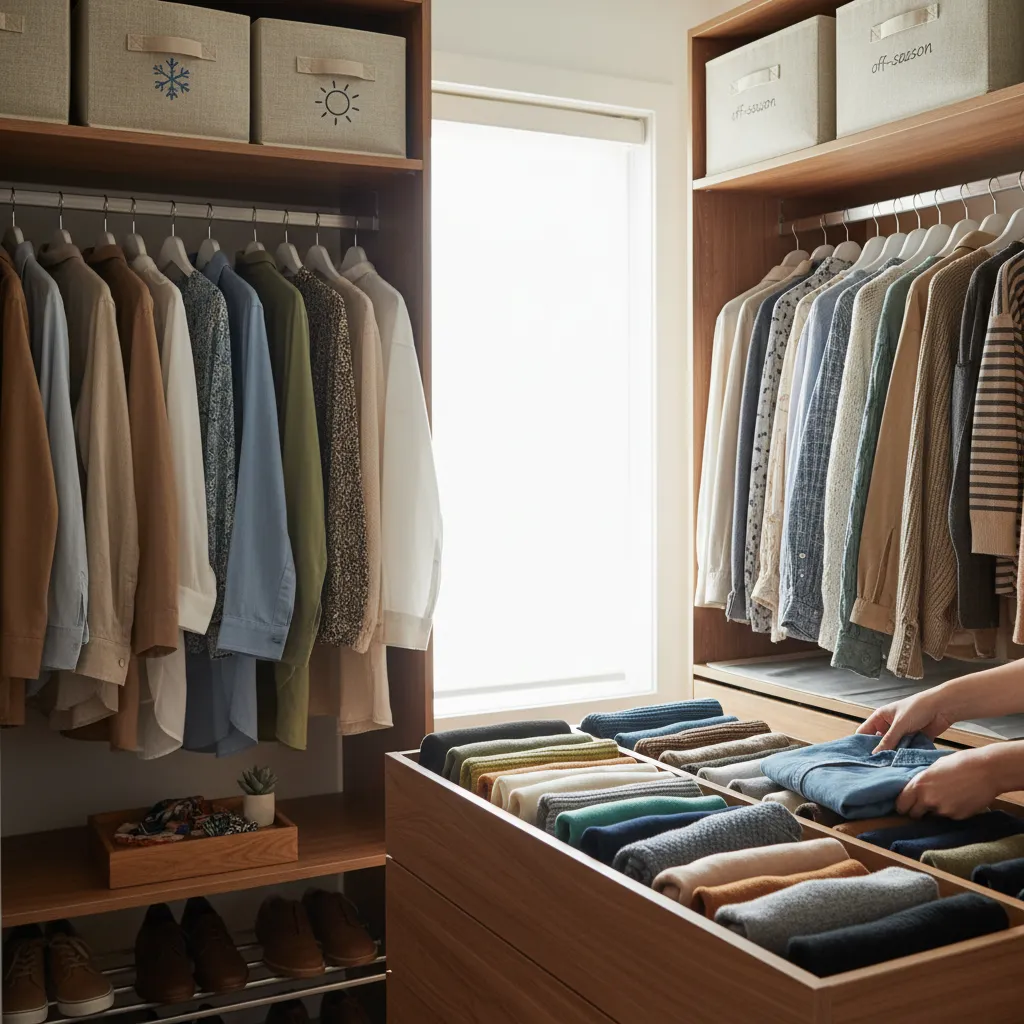
Next is organizing by colors. Beyond aesthetics, chromatic order helps us combine pieces more easily and see what shades we have in excess. A coherent palette means more outfits from fewer items.
Preparing outfits in advance is another useful habit. Choosing outfits for a few days reduces daily stress and, more importantly, decreases the impulse to buy “something new” for a specific occasion.
When the season changes, clothes that are unsuitable for the period can be moved from the main area of the closet. This way, only relevant pieces remain at hand, and the space becomes more airy and easier to manage.
Smart storage, without unnecessary consumption
The way of storage should take material into account. Delicate pieces are better kept on hangers, while knits or denim can be folded.
Sustainable organization also means using what we already have. Shoe boxes, baskets, or fabric bags can become effective storage solutions. Folding clothes vertically, not in stacks, aids visibility and effective use of space.
“One in, one out”, the rule that ensures long-term balance
The “one in, one out” principle helps maintain a balanced wardrobe. When we bring in a new piece, it's time to ask ourselves if there is another one we no longer wear. This can be donated, sold, altered, or creatively transformed.
“Every item must have a place and a role in our lives. When the role disappears, the garment can start another story in someone else’s wardrobe”, emphasizes Diana Mihăilă.
Pre-loved fashion, part of the solution
The most sustainable clothes are those that already exist. Pre-loved fashion extends the life of garments and reduces pressure on natural resources.
“I've made it a habit to reorganize my wardrobe at the start of the season. What I no longer wear goes to the tailor or to someone who really needs it”, says Mădălina Corciu, PR and CSR manager at Humana People to People and the moderator of the event. “I believe that if we all took a closer look in our closets, we would discover how many valuable clothes we already have. We don’t have to be perfect, but it’s important to be more aware,” she concluded.