Presentation on the Circular Economy
What circular economy means. And the shift from linear to circular
Currently, our economic model is based on the "Produce-Consume-Dispose" principle. This is generally how we use all products. That's why we call it a linear model. The circular approach, however, involves extending the product life cycle through several methods, such as:
- sharing objects (everyone using the same vehicle, instead of each buying a car),
- renting products instead of always buying new ones,
- reuse,
- repair,
- renovation
- and recycling materials, for as long as possible.
That's what the circular economy refers to. A new model of production and consumption. This is what the eEco platform proposes from the outset, through all its sections Reuse, Repair, Recycle and more.
By changing the linear economic model to a circular one, we actually significantly reduce waste. Without ever being able to hope to reduce it to zero, but keeping in mind this ideal goal, called Zero Waste.
Basically, when a product reaches the end of its life cycle, instead of being discarded, it can become raw material for another industry. Waste thus becomes a resource.
Bricks made from old clothes
Such an ingenious idea, to transform textile waste into raw material, was also had by a start-up from France. The company, which appeared five years ago, aims to combat pollution from two major industries: the textile industry and the construction industry.
Specifically, the French make bricks from textile materials. From textile waste. Clothes that otherwise would have ended up in the garbage.
Two representatives of this start-up, called FabBrick, came to Bucharest for the Climate Change Summit, one of the largest events dedicated to climate change. And I had the chance to talk to them in an interview for the show Pro Verde on stirileprotv.ro. And to hold a brick made from four t-shirts, weighing 400 grams.
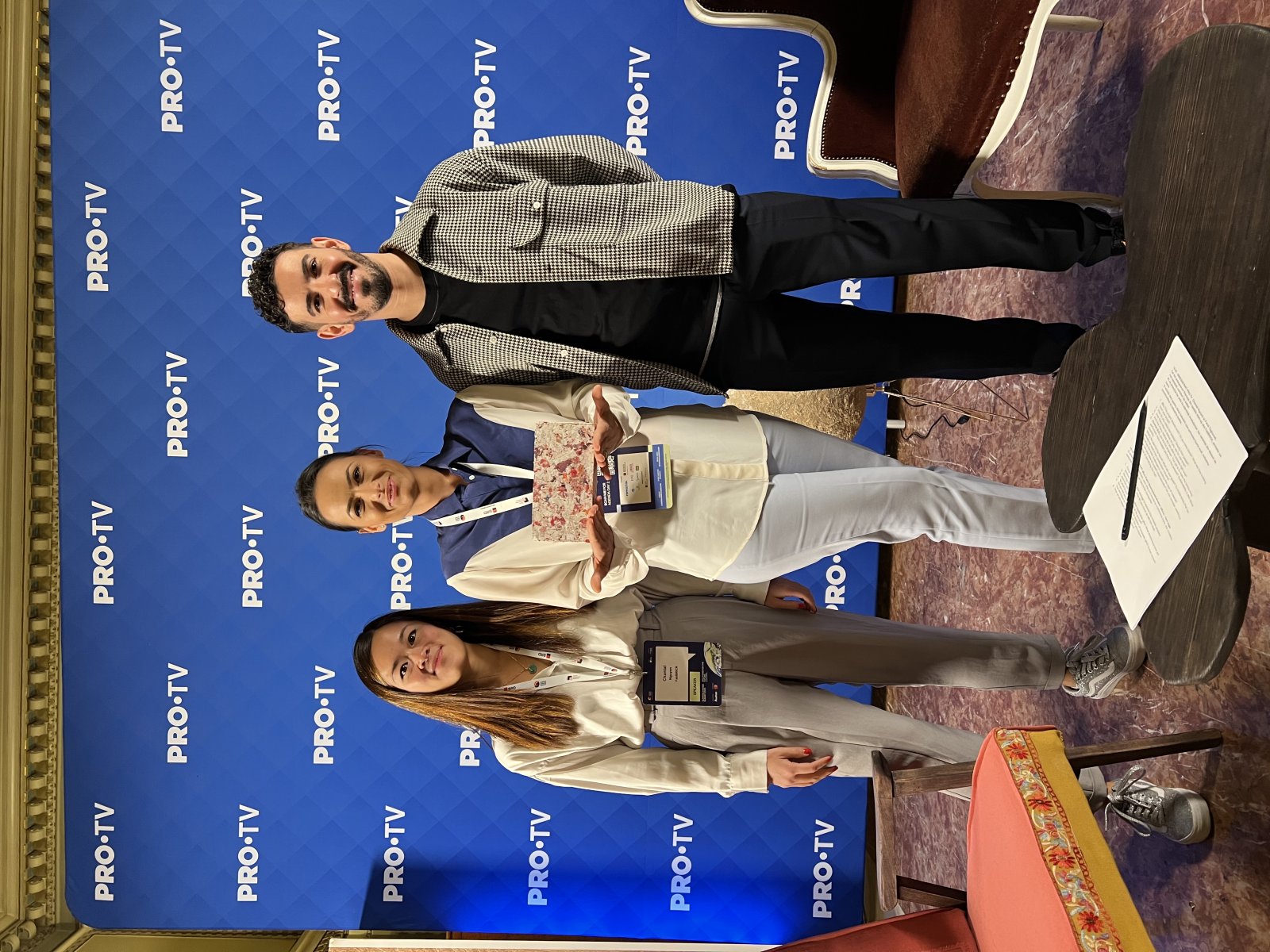
FabBrick currently manages to recycle 10 tons of textiles per year. But their ambitions for the future are great. Not only to increase this quantity, but especially to succeed in making these bricks so resistant that they can be successfully used in wall construction, not just in design and decoration, as is currently the case.
Chantal Nguyen, the company's engineer, says: "We do a lot of tests. I know this brick is tough. We've done a lot of mechanical tests. It's more resistant than some concrete ones. There are concrete blocks that have a resistance of 4 megapascals. This one has nine megapascals. It's tough. We've done tests, we don't know if we're crazy or not. I don't think we are, we can do something. It's a matter of time. We're still at the beginning. We need time to test, to learn, to create something similar to a concrete brick."
Of course, the circular economy means more than just reusing waste. Before waste, the circular economy begins with product design and a rethinking of production, so that we can do more with fewer resources.
So, believing that the circular economy is limited to recycling is a mistake. As Vojtech Vosecky, a circular economy expert based in the Czech Republic, who helped the capital Prague's transition to a circular model, explained to us at the same climate event.
"Many believe it's about recycling. Recycling is not enough. We need to be more innovative. The best waste is the waste that doesn't exist. When you recycle something, it means it has already become waste. It's not optimal. Not everything can be recycled. Not everything is recycled. There's no market for many things we think we recycle."
How circular is the economy currently
Globally, the situation is disastrous. According to the Circularity Gap Report, in 2023 we only managed to reuse 7.2% of products at the end of their life cycle. Even less than in 2018, when the world's circularity rate was 9.1%.
At the European Union level, things are slightly better, with a circularity rate of 11.7%. But still bad, considering that the EU's target is to achieve a fully circular economy by 2050. Because only then can it achieve the larger goal of net-zero emissions, also by then.
In Romania... it's even worse. Only 1.3% of the economy is circular, according to the latest data provided by the European Court of Auditors.
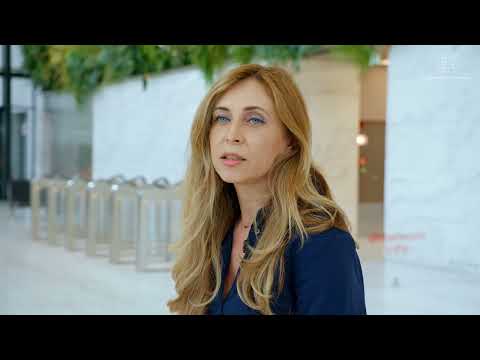
The good news is that we also have a Circular Economy Strategy, launched in 2022, and starting this year we also have an Action Plan for this strategy. So, at least in theory, we know what needs to be done. How we move from theory to practice was explained by Luminița Roșca, General Director of Stratos, an environmental consulting company that worked on the creation of this strategy.
"Seven sectors were chosen, those with the highest potential for circularity and the largest percentage in Romania's GDP. Agriculture, Beverages and food, Automotive industry, Electrical and electronic equipment industry, Construction, Textiles and Packaging. For each sector, 5 priority actions were selected. The Action Plan proposes actions starting in 2024. There are 52 actions. 90 percent of them must be completed by 2029."
Specifically, what are the first steps anyone who wants to switch from a linear to a circular business model should take, whether it's a company, NGO, city, or country, you can find out in the Pro Verde show, which you can watch in the video.