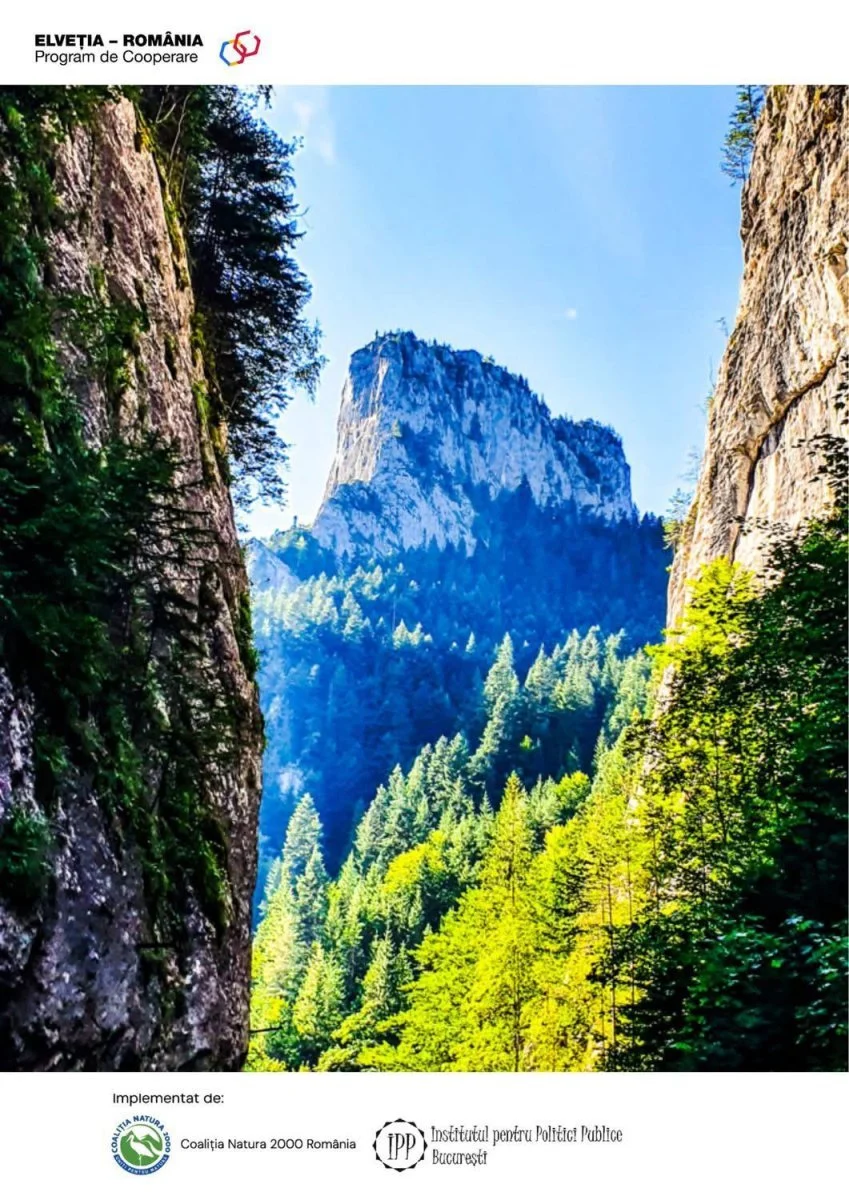
Mountain Landscape and Nature Conservation
The media plays an essential role in shaping perceptions about nature, conservation, and development, and the way these subjects are presented can directly influence: the general public opinion and the level of acceptance towards conservation, public policy decisions, the activity of governmental or non-governmental organizations, sustainable development processes and sustainable resource management, and not least, the way natural and cultural values of protected areas are affected.
Simplified, polarizing, or incomplete narratives, the spread of misinformation or half-truths, as well as political and economic pressures on public discourse, can contribute to blocking or diluting essential initiatives for biodiversity conservation. In this context, the relationship between journalists, civil society organizations, public institutions, and other relevant actors becomes critical for the efficient functioning of the nature protection system.
Event Concept
The event proposes a debate that brings to the forefront the connection between how nature is represented in the media and society's ability to build and implement effective conservation policies.
The starting point is a fundamental question: how do dominant narratives about nature influence the success or failure of conservation initiatives?
The debate will bring together journalists, environmental organization representatives, protected area managers, experts, and potentially public decision-makers, in a dialogue that aims to go beyond the general level of discussions and explore concrete experiences, real tensions, and collaboration opportunities.
Instead of a unilateral approach, the event creates a space where each actor can reflect on their own role: how they contribute to shaping public perceptions, what constraints they face, and what they could do differently to support a more nuanced and constructive discourse about biodiversity.
Additionally, common problems that would benefit from common solutions may be identified. We aim not just for a discussion but for alignment of perspectives and the generation of a set of useful viewpoints for the next stages – ideas generated and proposals will be noted, so that in the end, we have some solution proposals.